This week, military unmanned systems moved further from isolated demonstrations toward force structures, procurement channels and operational concepts designed to make them routine. The clearest example was the U.S. Navy’s establishment of the Robotic and Autonomous Systems Warfighting Development Center (RASWDC), a fleet-facing organization intended to connect testing, doctrine, training, fielding and operator feedback across air, surface and undersea systems.
Maritime autonomy was especially active. The United States and United Kingdom tested a Mk 48 heavyweight torpedo launch from Britain’s Excalibur extra-large UUV; a U.S. special-operations Chinook landed and replenished from an autonomous barge; and the Navy opened its next search for production-ready medium unmanned surface vessels. These events address different missions, but together show work moving beyond sensing alone toward payload employment, logistics and scalable acquisition.
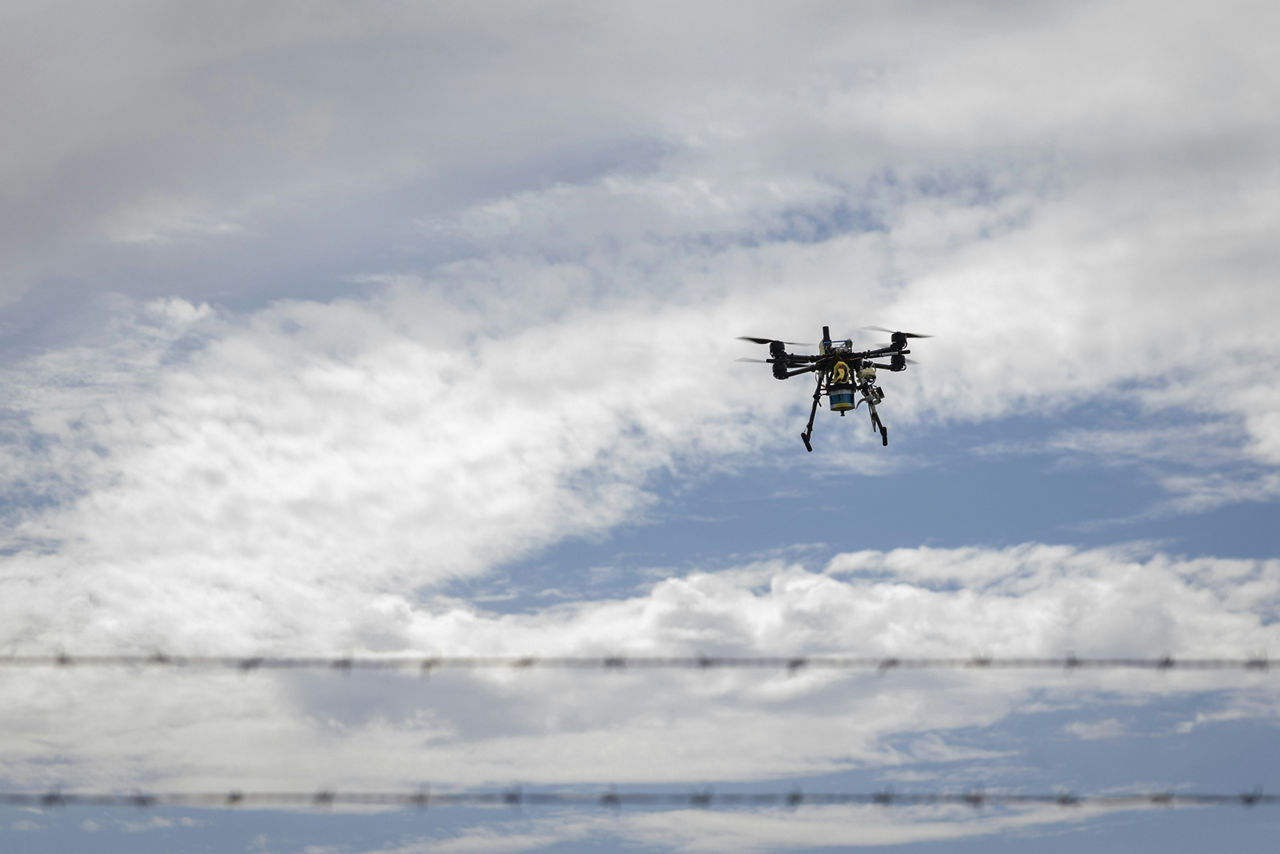
The operational pressure from small drones also continued to drive action at both tactical and infrastructure levels. The Marine Corps placed an urgent order for vehicle-mounted electronic-warfare jammers, while Space Launch Delta 45 told The War Zone that directed-energy systems will be part of a broader modernization effort against drone incursions at Cape Canaveral Space Force Station. In Ukraine, reported battlefield operations again highlighted the importance of locating launch crews and logistics, rather than only intercepting drones in flight.
WHAT CHANGED
- The U.S. Navy created a dedicated warfighting-development center for robotic and autonomous systems. RASWDC is intended to turn fragmented activity into fleet-level practice by developing tactics, training sailors, coordinating tests and feeding operational experience into acquisition. Its creation is an organizational change, not evidence that particular systems are ready for broad deployment.
- Unmanned maritime platforms were tested in roles closer to combat support and weapon employment. The Excalibur trial validated mechanical, electrical and software integration for an externally carried Mk 48; the autonomous-barge demonstration paired a crewed MH-47G with an uncrewed logistics platform. Both remain demonstrations, but they expand the set of operational interfaces being tested.
- The Navy’s MUSV effort entered Phase II with explicit maturity and payload requirements. The solicitation seeks vessels able to operate unmanned for at least 10 days and carry two 20-foot-container-equivalent payloads, followed by at-sea demonstrations. This is a practical filter for procurement, though it is not yet a production award.
- Counter-drone protection shifted toward organic, mobile defense. The Marine Corps’ $15.7 million sole-source Pulsar-L contract is intended to put soft-kill protection on Amphibious Combat Vehicles, responding to what the service calls an urgent gap in forward-deployed self-defense against small UAS.
- Crewed-uncrewed air combat experimentation gained another visible testing node. General Atomics delivered an FQ-42 Vengeance to Creech Air Force Base after the aircraft flew alongside F-35A and F-15E fighters, according to the company. The delivery supports continued evaluation, rather than operational fielding.
- Ukraine and the United Kingdom opened a controlled pathway for British industry to work with battlefield-derived AI training infrastructure. The arrangement gives up to 12 companies a secure environment for proposed applications without transferring the underlying operational dataset. Separately, Ukraine’s Third Army Corps reported using a surveillance-and-strike system to target Russian drone crews and logistics in Operation Vivaldi; battlefield claims remain difficult to independently verify.
MARITIME / UNDERWATER
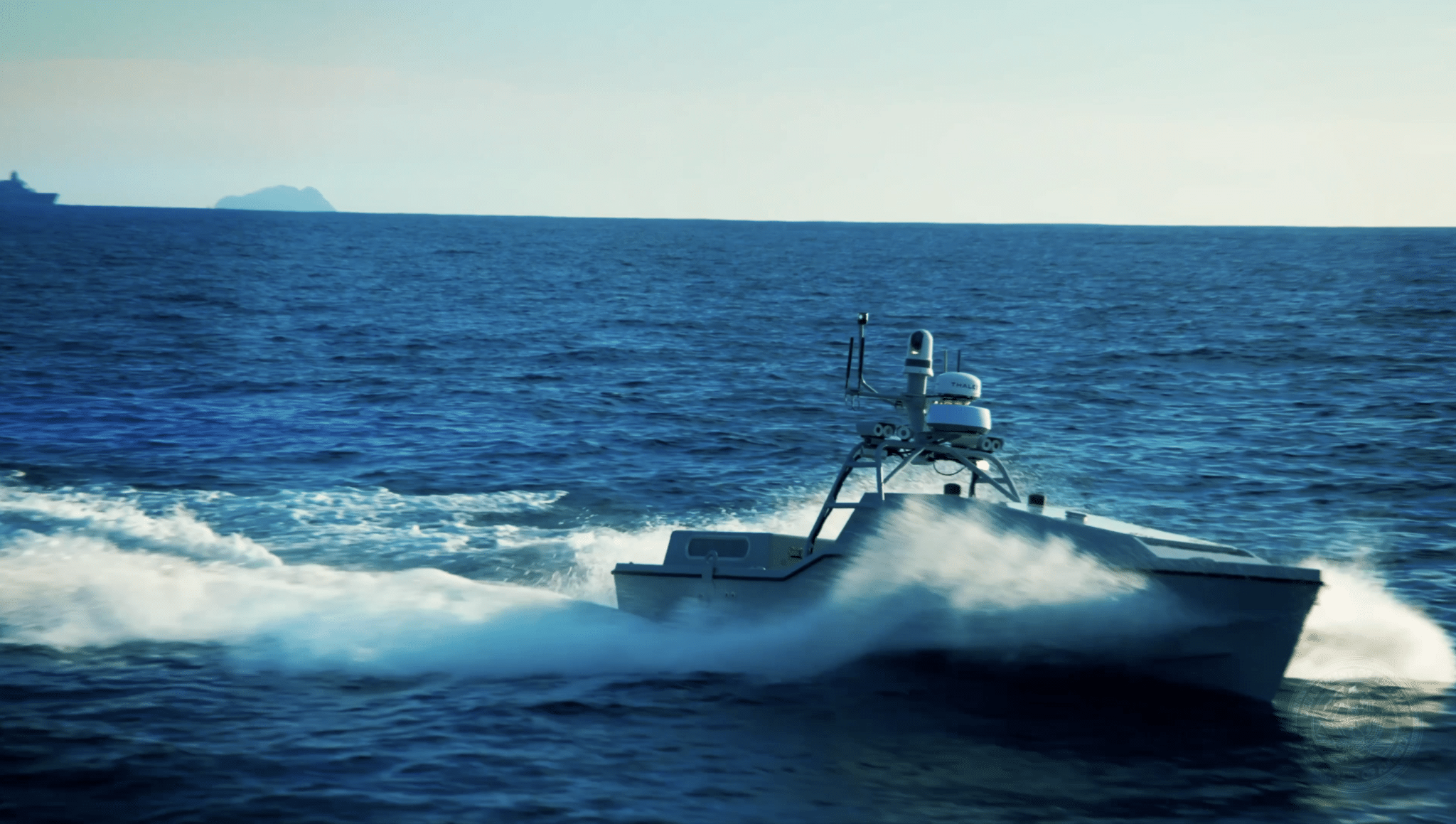
The most consequential maritime development was the Navy’s decision to establish RASWDC under U.S. Fleet Forces Command. The center is headquartered at Joint Expeditionary Base Little Creek–Fort Story and is tasked with integrating robotic and autonomous systems across aerial, surface and subsurface operations. Navy reporting describes it as a link between operational employment and the service’s acquisition structure, including the recently announced Direct Reporting Portfolio Manager for Robotic and Autonomous Systems. The measure matters because unmanned maritime capability has often advanced through separate task forces, demonstrations and program offices; the center is intended to connect those activities without replacing existing operator expertise.
The U.S.-UK Excalibur test was a narrower but technically significant event. The September 13 Scotland trial, disclosed this week, used the British extra-large UUV to launch a U.S. Mk 48 torpedo carried externally. The services said it validated integration between the weapon and platform, including mechanical, electrical and software elements. It did not establish a deployed weapon system or demonstrate an operational firing chain, but it provides an AUKUS Pillar 2 proof of concept for an allied autonomous platform carrying a heavyweight U.S. weapon.
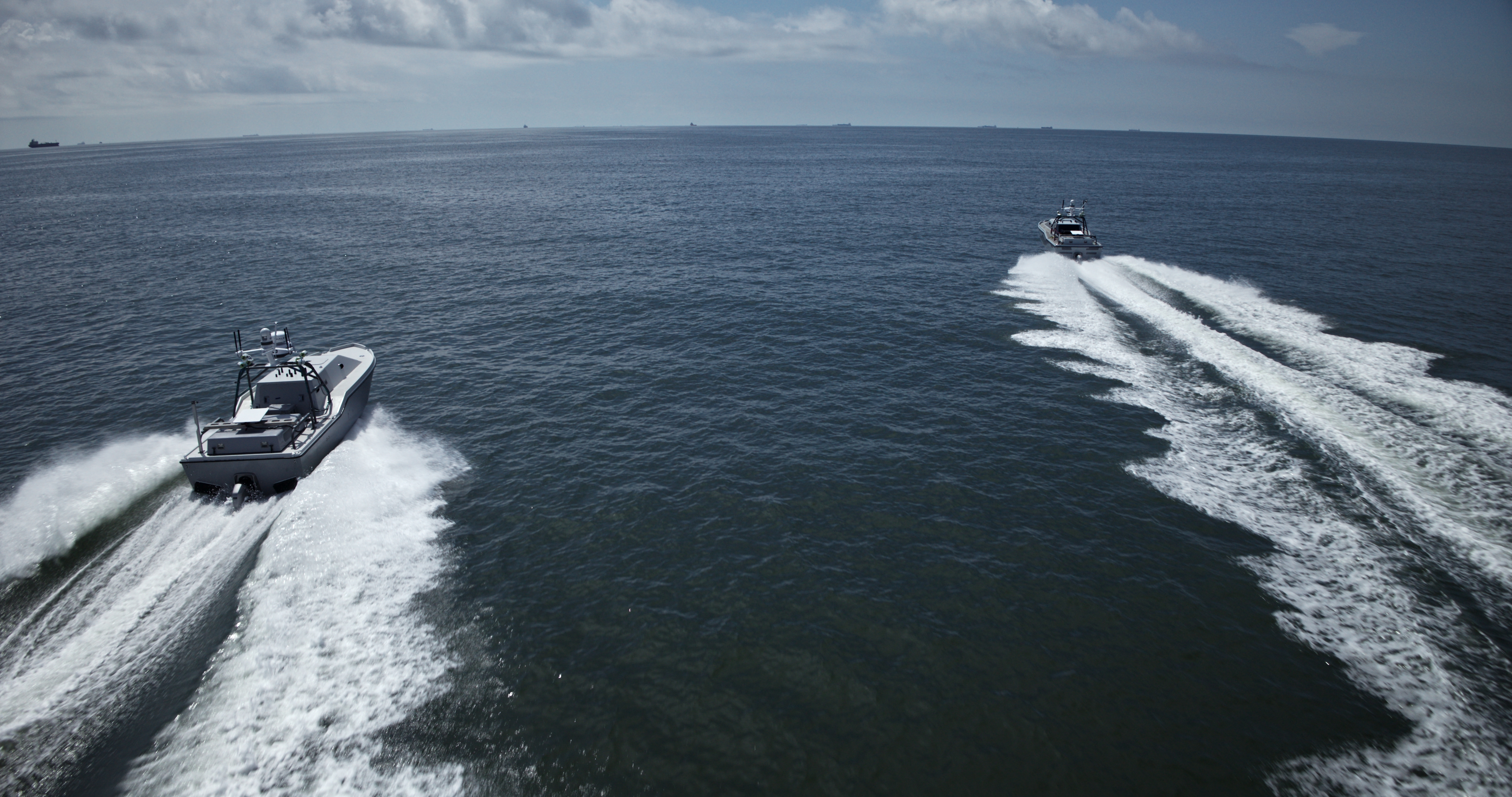
Logistics also entered the maritime-autonomy picture. Sea Machines Robotics said a 160th Special Operations Aviation Regiment MH-47G landed and replenished from an autonomously operating barge fitted with its SM300 conversion system. The company called it the first publicly disclosed U.S. helicopter landing and replenishment from an autonomous vessel. The claim should be treated as the company’s characterization, but the demonstration is notable for testing a crewed aircraft’s dependence on an uncrewed support platform rather than simply the latter’s navigation.
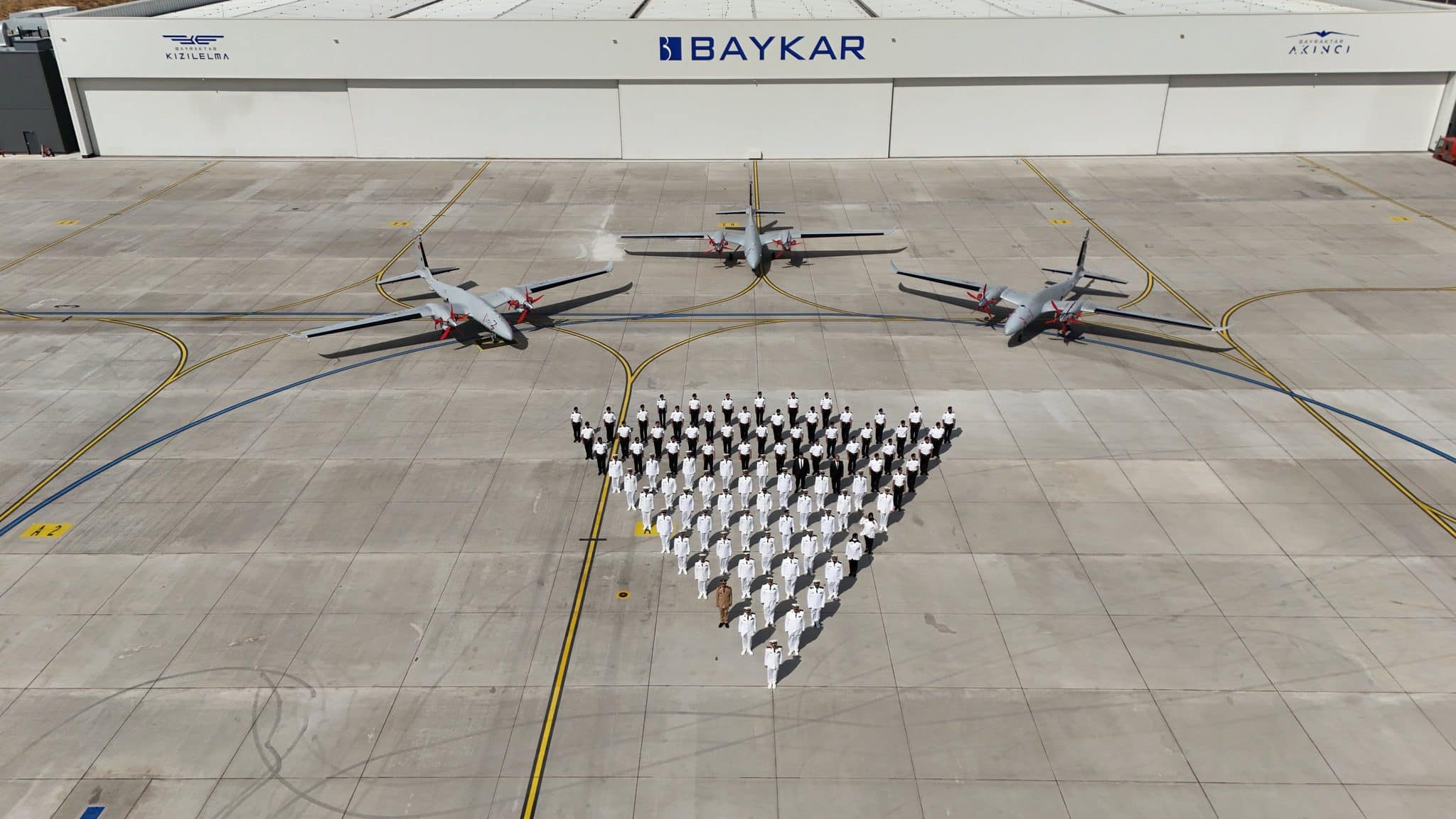
Other maritime activity broadened the evidence base without yet proving a common operational model. Baykar said its TB3 deployed two sonobuoys from TCG Anadolu during a Turkish naval exercise and processed acoustic telemetry from its own and a manned patrol aircraft’s buoys. Oshen tested six hydrophone-equipped autonomous sailboats as a distributed acoustic network at REPMUS26. Saildrone registered four Voyager USVs under Danish flag following a six-month Danish Navy operating period, while saying a follow-on Danish contract is under development. Each remains either company-reported, an exercise activity or a prospective procurement step.
AIR, AUTONOMY AND DATA
The FQ-42 Vengeance’s arrival at Creech puts a Collaborative Combat Aircraft in an established U.S. drone-operating environment for continued test and evaluation. General Atomics says the aircraft has flown with F-35 and F-15E fighters. That is evidence of ongoing crewed-uncrewed experimentation, but does not by itself reveal autonomy levels, mission effectiveness or the eventual control arrangements. The Air Force is testing both Vengeance and Anduril’s FQ-44 Fury while it develops associated support and operating concepts.
The MQ-25A Stingray, meanwhile, crossed a programmatic threshold: Boeing received a $562 million low-rate initial production contract for three aircraft, plus advance procurement for three more. The Navy plans initial deliveries from 2029. This is a move into production after Milestone C, distinct from an operational carrier deployment; technical-risk reduction and operator-training preparations continue.
The UK-Ukraine AI arrangement is a different kind of autonomy development: access to data and experimentation rather than a platform purchase. UK officials say selected firms will use anonymised, delayed battlefield-derived data in a controlled environment and will not receive copies of the underlying data. Ukrainian officials said Avengers AI Labs’ annotated dataset contains more than 5 million battlefield frames and sensor data representing millions of object detections. The value of the initiative will depend on the applications proposed and validated; neither government disclosed them this week.
COUNTER-UAS / EW
The Marine Corps’ Pulsar-L purchase is a direct response to the requirement for vehicle-level protection. Marine Corps Systems Command said the unspecified number of systems will give Amphibious Combat Vehicles an organic soft-kill capability against radio-frequency-dependent small drones, ahead of a planned fiscal 2027 program of record. The stated limitation is important: a jammer addresses systems dependent on vulnerable RF links, not every type of small UAS threat.
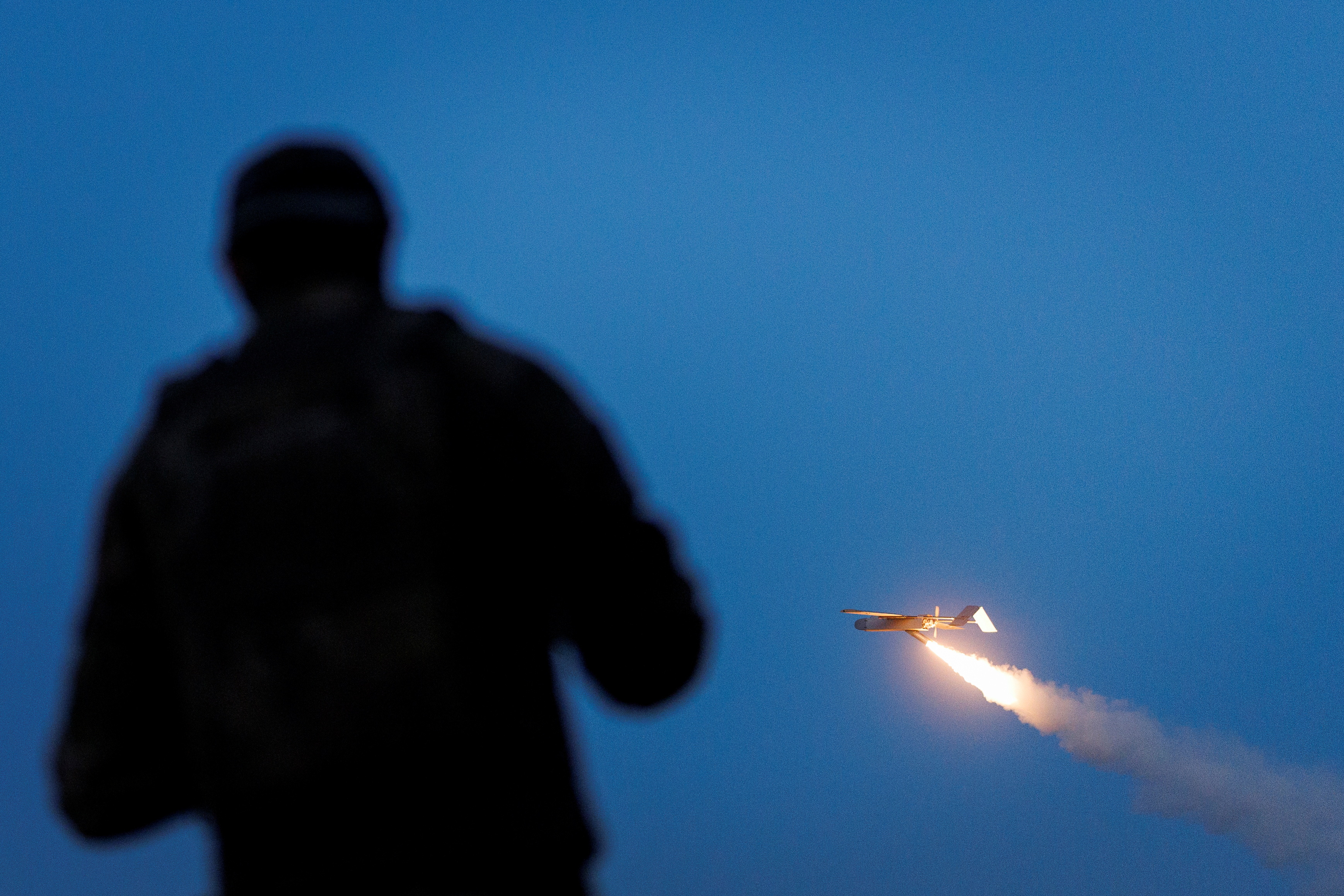
At Cape Canaveral, Space Launch Delta 45 told The War Zone that directed-energy systems will be included in a larger detection, tracking and defense modernization effort. The command cited hundreds of drone incursions in the prior year, but gave no operational timeline for the laser system. This is a planned infrastructure-defense measure, not a fielded capability.
On the Lyman front, Ukraine’s Third Army Corps said Operation Vivaldi paired FPV search-and-strike missions with attacks on Russian logistics and the reported airlift of unmanned ground vehicles behind Russian lines. The corps also claimed that locating and striking Russian drone-team positions compelled an almost complete redeployment of the Russian Rubicon unit from its sector. Those accounts are combatant claims and cannot be independently verified from the supplied reporting. Their relevance lies in the operational emphasis: suppressing an unmanned threat can mean targeting its crews, launch areas and sustainment network, not only its aircraft.
NUMBERS OF THE WEEK
| Figure | Why it matters | Source / status |
|---|---|---|
| $562 million | MQ-25A Lot 1 production contract for three aircraft, with advance procurement for three more | U.S. Navy contract |
| $15,711,445.50 | Marine Corps sole-source Pulsar-L counter-UAS contract | Marine Corps Systems Command contract |
| 10 days | Minimum required unmanned endurance for Navy Phase II MUSV proposals | U.S. Navy solicitation |
| 5 million+ | Battlefield frames in Avengers AI Labs’ annotated dataset, according to Ukrainian officials | Government-reported figure |
| 6 | Hydrophone-equipped C-Star autonomous sailboats in Oshen’s REPMUS26 acoustic-network trial | Company-reported exercise activity |
SYSTEMS TO WATCH
- FQ-42 Vengeance: now at Creech for continued test and evaluation after reported flights with F-35A and F-15E aircraft. Watch for disclosed results on control, support and tactics—not simply additional formation imagery.
- MQ-25A Stingray: the first production lot has been awarded, with initial deliveries planned for 2029. The next meaningful milestones are production execution, training preparation and further carrier-integration work.
- Medium Unmanned Surface Vessel: Phase II will test whether industry can satisfy the Navy’s combined requirements for endurance, payload capacity, open-architecture autonomy and scalable production.
FROM UNMANNED FRONTIER
This week’s Analysis and Explained work examined the enabling conditions behind these developments: the gradual transfer of flight and mission-management workload from human operators to software; navigation resilience when GNSS is unavailable; the iterative contest between drones and electronic warfare; and the sensor fusion needed to detect small UAS. Together, those pieces provide context for the week’s events, but do not change the distinction between a test, a procurement action and demonstrated operational performance.