Weapons have always depended on information. The difference now is how much of a weapon's behavior can change after the hardware has already been fielded.
A drone can receive new navigation logic. A command-and-control system can ingest a new sensor. A computer-vision model can be retrained on new battlefield imagery. A targeting workflow can be reorganized without replacing the aircraft or vehicle carrying it.
This is the software-defined battlefield: a force in which code, data and interfaces increasingly determine how quickly physical systems can adapt.
Software used to support the weapon; now it shapes the weapon
The distinction between platform and software is becoming harder to maintain.
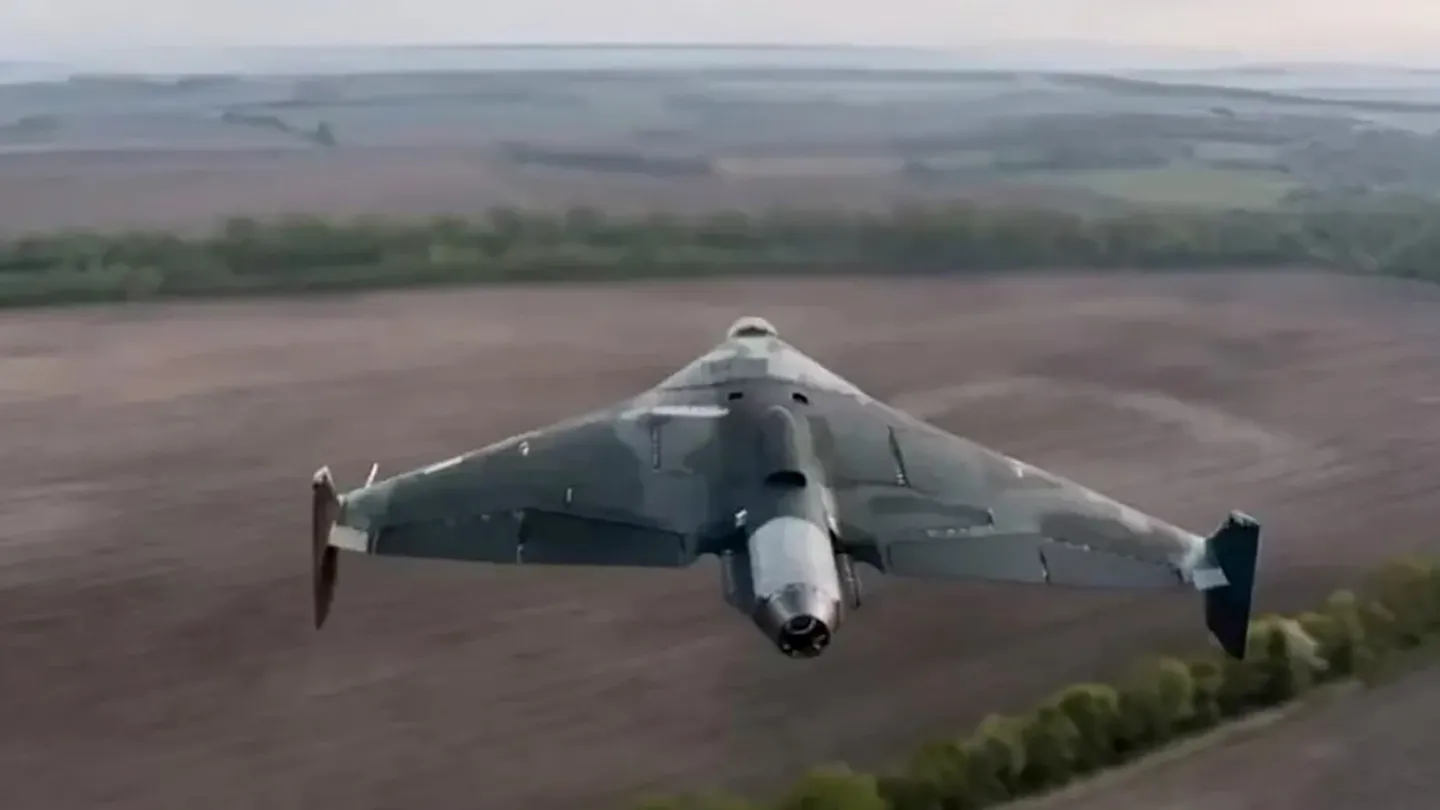
An unmanned aircraft's range still depends on energy and aerodynamics, but its navigation resilience can change through software. Its ability to detect an object can improve through a new model. Its communications behavior can change through firmware. Its mission can be planned and evaluated through digital command systems.
The hardware sets the physical envelope. Software determines more of what the platform can do inside that envelope.
Command and control is moving from applications to data architecture
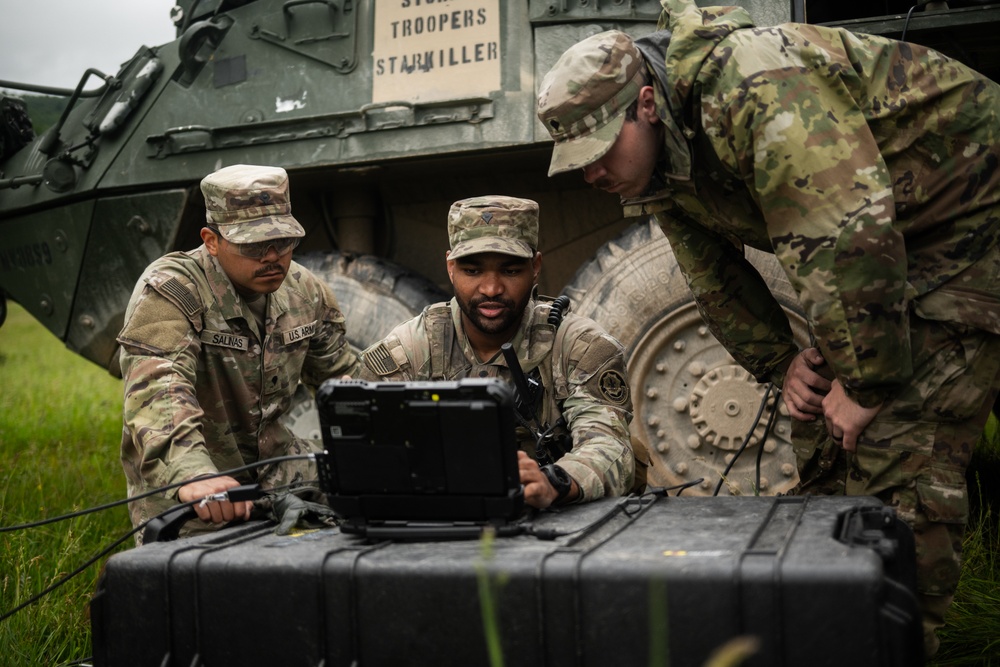
The U.S. Army's Next Generation Command and Control programme illustrates the shift.
Rather than maintain separate systems for individual functions, NGC2 is being built around common data and software services that can support multiple warfighting applications. In 2026, the Army described the architecture as ready to scale and established a common data-layer baseline.
That matters because applications can change faster than networks and vehicles. A common data layer allows new tools to use information that already exists instead of creating another isolated system.
Ukraine's DELTA shows what this looks like under combat pressure
Ukraine's DELTA ecosystem has become a practical example of software becoming operational infrastructure.
Mission Control records unmanned-system missions and generates dashboards for commanders across levels of command. The Ministry of Defence says the module is operational across all corps and force groupings and supports reconnaissance, strike, mining, logistics and evacuation missions.
The important part is not the dashboard. It is the feedback loop. Missions create data. Data is analyzed. Procurement and tactics can then change based on what actually worked.
| Layer | Hardware-era update | Software-defined update |
|---|---|---|
| Navigation | Replace sensors or platform | Change estimation logic, maps or sensor fusion. |
| Perception | Install different sensor package | Retrain or deploy a new model using the same sensor. |
| Command and control | Field another dedicated terminal/system | Deploy new apps on a common data and network layer. |
| Procurement feedback | Periodic reports and trials | Continuous mission data influences demand and ranking. |
| Interoperability | Point-to-point integrations | Stable APIs, data standards and modular services. |
The weapon is becoming a node in a data system
A drone used in isolation produces a local effect. A drone connected to a wider data architecture can also become a sensor, a reporting mechanism and a source of training data.
Mission Control, DELTA video analysis and other digital systems turn individual missions into structured information that can be compared across units.
That changes the value of the platform. The aircraft is no longer only the thing that flies. It is a participant in a network that learns from thousands of flights.
DOCUMENTNGC2 common data-layer baselineOPEN ↗Data quality becomes part of combat power
Software can only optimize what the data describes accurately.
If mission reports are incomplete, sensors are poorly synchronized or target classifications are inconsistent, automated analysis amplifies bad inputs.
This is why structured reporting and common data formats matter. A force that produces trustworthy operational data can evaluate systems, identify failure patterns and train models more quickly.
AI turns battlefield data into model updates
Ukraine's Avengers Labs makes the software-defined logic explicit.
The Ministry of Defence has opened access to an annotated battlefield dataset for Ukrainian defence companies training AI models. The data comes from real combat imagery rather than only controlled test environments.
That enables an adaptation loop in which new visual conditions, equipment and camouflage can become training material for future model versions.
The capability is not simply artificial intelligence. It is the infrastructure that moves battlefield experience back into software.
Software shortens some upgrade cycles — and creates new risks
A code update can move much faster than a new aircraft design. That is its attraction.
It also means a bad update can spread quickly. Compatibility problems, model regressions, cyber vulnerabilities or incorrect assumptions can affect many systems at once.
Version control, testing and rollback therefore become military readiness functions rather than normal IT housekeeping.
Open interfaces become strategic
If every sensor, drone and effector uses proprietary interfaces, the force cannot adapt quickly without the original vendor.
Open architectures do not eliminate vendors. They reduce the cost of connecting a new component to the rest of the system.
This is why U.S. Army NGC2 work, NATO counter-UAS initiatives and many unmanned programmes increasingly emphasize common data, modularity and software interoperability.
The update pipeline becomes part of logistics
Traditional logistics moves fuel, ammunition and spare parts. Software-defined forces add another flow: configuration.
Units need the right firmware, maps, models, keys and applications. Engineers need feedback about failures. Commanders need confidence that different units are operating compatible versions.
The more software controls behaviour, the more update distribution resembles ammunition distribution: the right thing has to reach the right unit at the right time.
Mission data can reshape procurement
Ukraine's 2026 drone procurement reforms show how software can reach beyond the battlefield network into industrial decisions.
The Ministry of Defence says data from ePoints, DOT-Chain, Brave1 Market, DELTA and Mission Control is used to rank systems and determine procurement priorities.
This is a shift from purchasing based mainly on specifications toward purchasing informed by observed battlefield performance.
DOCUMENTMission Control as data-driven command infrastructureOPEN ↗The data architecture therefore changes what the state buys, not only how the unit fights.
Software can separate the platform from the mission logic
The U.S. Air Force's Collaborative Combat Aircraft programme is one of the clearest examples of this separation.
The service has separately contracted air vehicles and mission-autonomy software, treating the intelligence layer as something that can compete and evolve independently from the airframe.
That creates the possibility of a fleet whose physical platforms remain stable while mission behavior changes through software.
Cybersecurity becomes inseparable from lethality
A software-defined weapon system has a larger digital attack surface.
Code, update channels, data stores, identity systems and communications all become potential points of failure.
Ukraine's DELTA has undergone formal cybersecurity assessment as it scaled, reflecting the reality that an operational data platform has to remain available and trustworthy under attack.
A software-defined force that cannot secure its software supply chain creates a new vulnerability while trying to gain speed.
The battlefield is becoming an API problem
This sounds abstract, but the operational consequence is concrete.
A sensor detects something. Another system has to understand the track. A drone may need the coordinates. A commander needs the same event on a map. An effector may need a cue. A reporting system should record the outcome.
If those systems cannot exchange data, humans become the integration layer — copying coordinates, re-entering reports and switching screens.
Software-defined warfare attempts to replace those manual seams with machine-readable interfaces.
The fastest force is not necessarily the force with the newest hardware
Hardware remains essential because code cannot overcome physics.
But if two forces have comparable physical systems, the one that can update navigation, perception, command software and procurement logic faster can change battlefield behavior without waiting for a new generation of equipment.
That makes adaptation rate a combat metric.
Why code is becoming part of the weapon system
The software-defined battlefield is not a claim that war has become virtual.
It is the opposite: physical systems now generate so much data and depend on so many digital functions that code directly influences what those systems can do in the real world.
The weapon is increasingly a combination of hardware, software, data and the update pipeline connecting them.
The force that treats those layers as one operational system can adapt faster. The force that treats software as an afterthought will repeatedly field yesterday's solution.