An FPV drone looks simple because most of its complexity is compressed into a small frame.
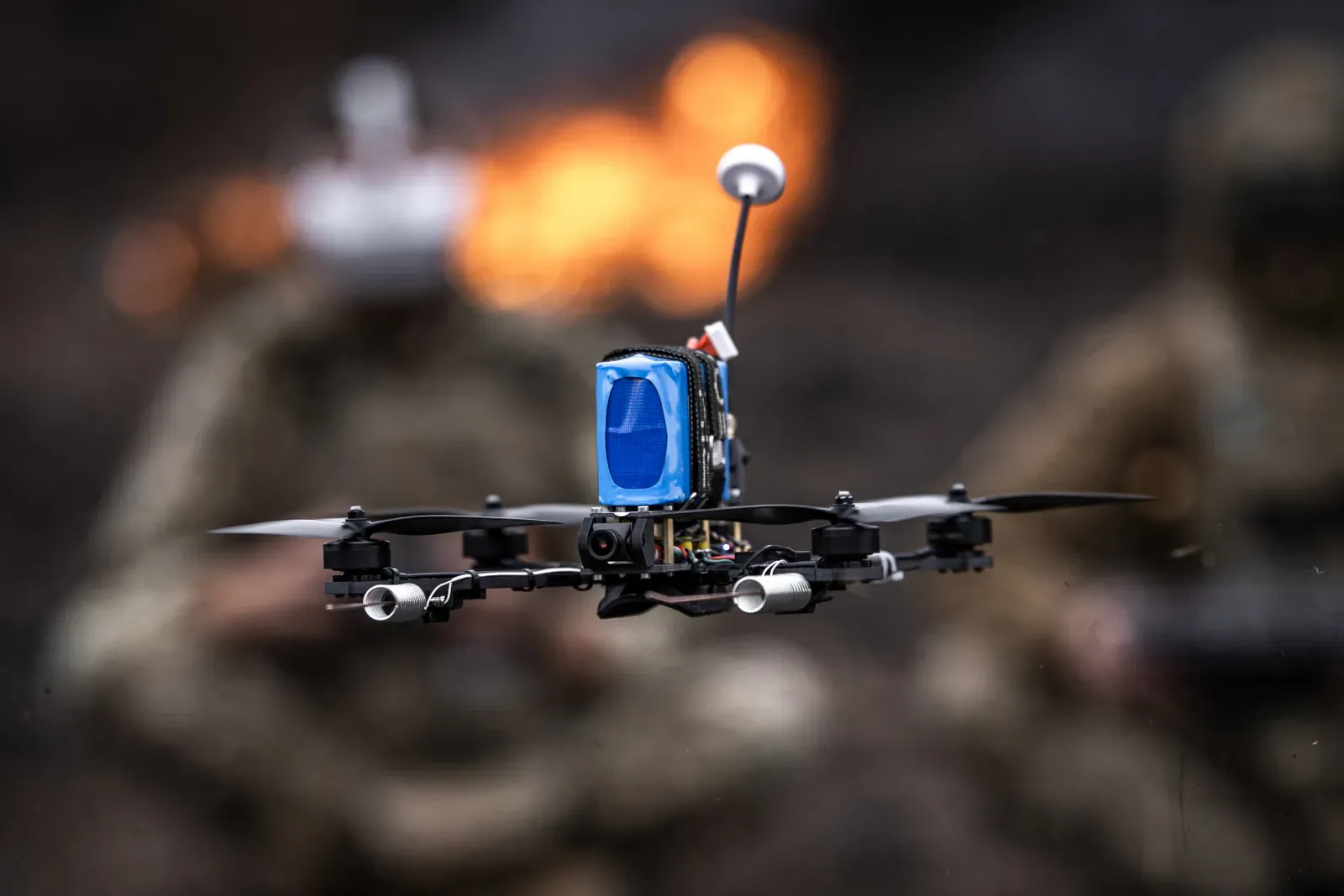
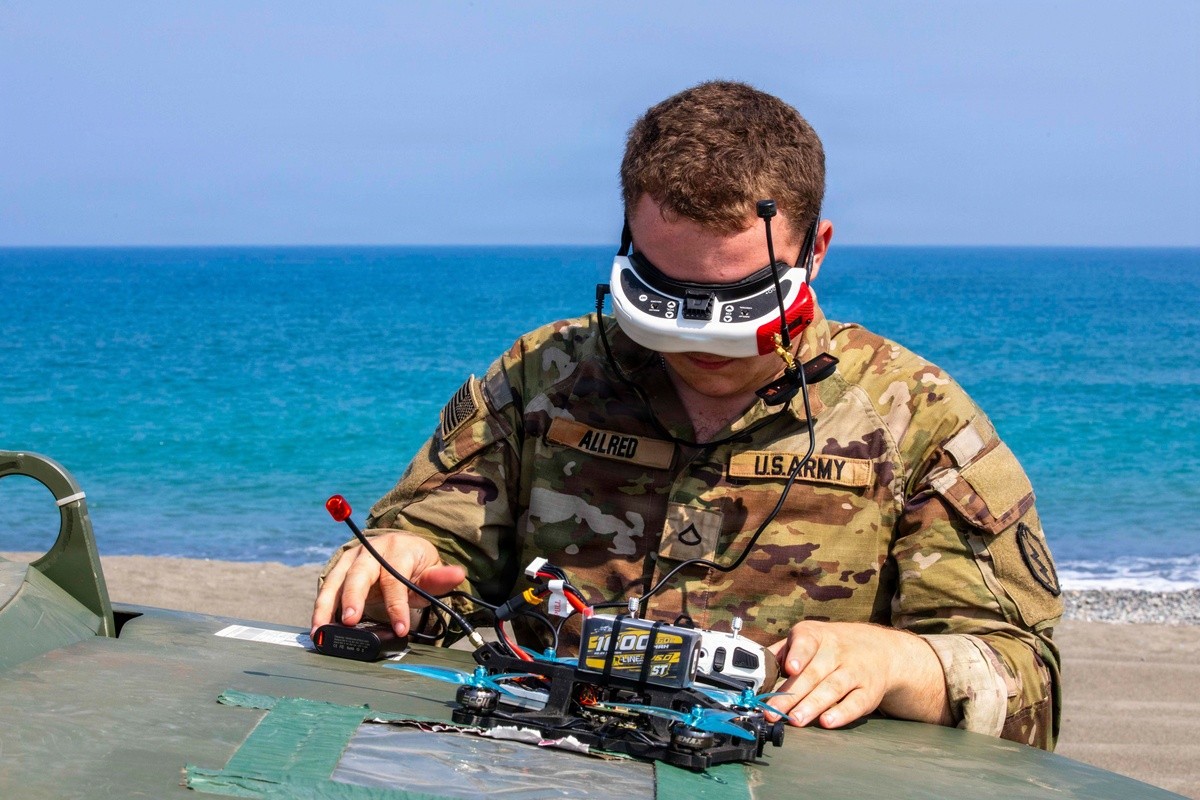
Four motors produce thrust. A battery supplies energy. A flight controller stabilizes the aircraft. A radio link carries pilot commands. A camera and video transmitter send the pilot a live view. The operator closes the loop through goggles and a controller.
The useful way to understand an FPV is not as a collection of hobby components, but as a chain. Every subsystem depends on the others, and changing one part alters the behavior of the whole aircraft.
The frame is the structure, not the capability
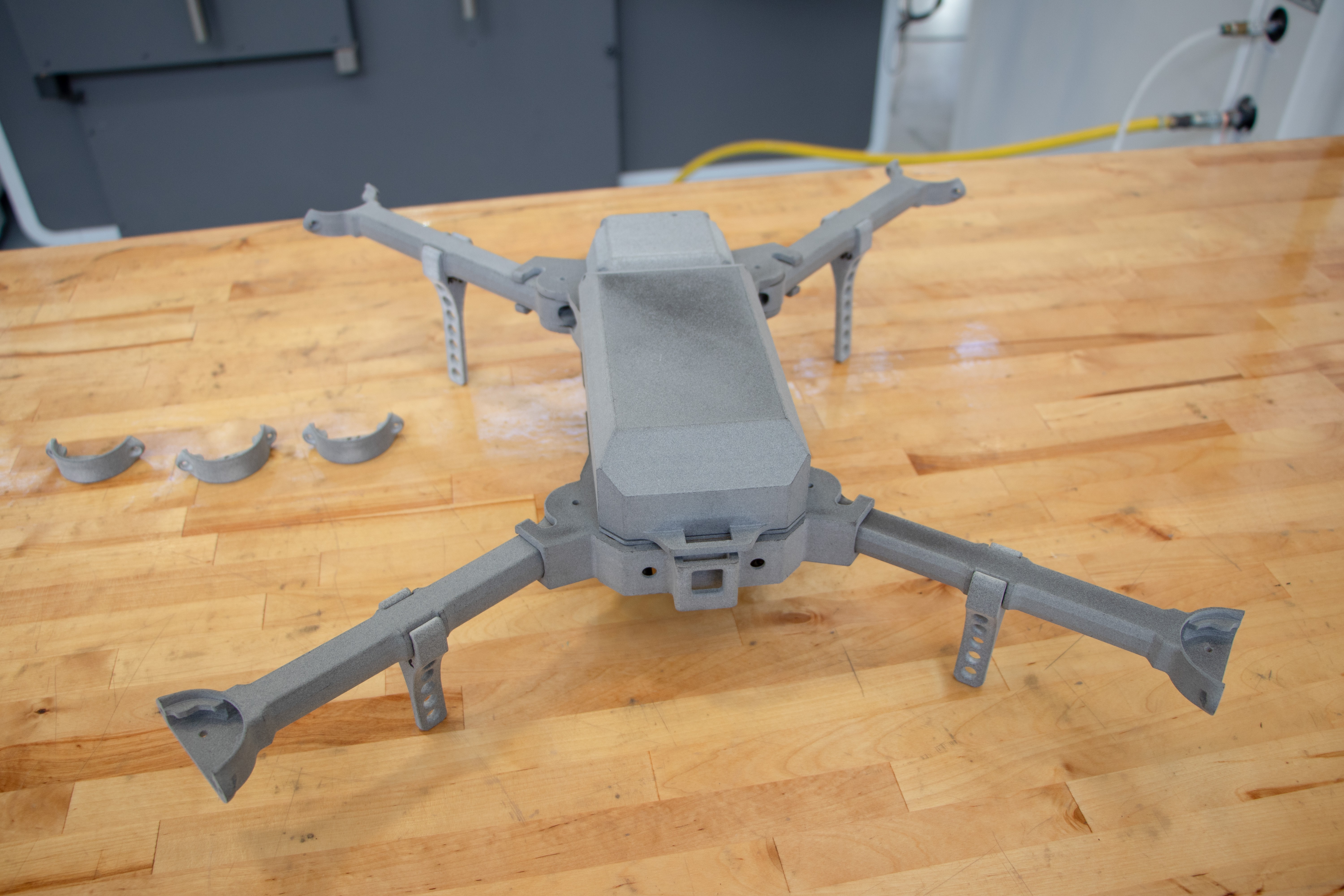
The frame holds motors, electronics, battery and payload in a geometry that can survive vibration and manoeuvre.
Its size influences propeller diameter, battery capacity, total mass and the amount of equipment the aircraft can carry. A larger frame can support more energy and payload but usually becomes more visible, more expensive and less agile.
The frame itself is rarely the most sophisticated part. Its importance is that every other component has to fit inside its physical and aerodynamic limits.
Motors and propellers convert electricity into control authority
Each motor spins a propeller, producing thrust. The aircraft manoeuvres by changing motor speed relative to the other motors rather than by moving control surfaces.
That gives multirotor FPVs extremely fast attitude changes. The same mechanism that keeps the aircraft level also allows rapid acceleration, braking and rotation.
Motor, propeller, battery voltage and total mass have to be matched. A propulsion system optimized for aggressive acceleration can consume energy quickly; one optimized for endurance may feel less responsive.
The electronic speed controller is the power gate
The flight controller does not drive the motors directly. Electronic speed controllers translate its commands into the electrical switching that regulates motor speed.
In many FPV designs several ESC channels are combined on one board. That saves space and wiring but also concentrates a critical function in one component.
The ESC has to tolerate high current, rapid throttle changes and electrical noise generated by the propulsion system.
The flight controller is the aircraft's reflex system
At the center of the drone is the flight controller.
Its sensors measure rotation and acceleration. Its software compares the pilot's command with the aircraft's actual motion and continuously adjusts motor outputs to produce the requested attitude.
DOCUMENTU.S. Army FPV flight equipment referenceOPEN ↗This happens far faster than a human could individually manage four motors. Even a manually flown FPV therefore contains substantial automation at the stabilization layer.
The pilot commands a desired motion; the controller turns that into thousands of low-level corrections.
| Subsystem | Function | Main trade-off |
|---|---|---|
| Frame | Carries and protects the system | Mass, stiffness, size and payload space. |
| Motors + propellers | Generate thrust and manoeuvre authority | Acceleration versus efficiency and endurance. |
| ESC | Controls electrical power to each motor | Current handling, heat, reliability and weight. |
| Flight controller | Stabilizes the aircraft and interprets control input | Processing, sensor quality and software configuration. |
| Battery | Stores mission energy | Capacity versus weight and discharge capability. |
| Control receiver | Receives pilot commands | Range, latency, robustness and spectrum dependence. |
| Camera + video transmitter | Provides pilot view | Image quality and latency versus power, bandwidth and range. |
| Goggles / ground controller | Human interface | Situational awareness, ergonomics and link quality. |
The battery sets the mission budget
Every function ultimately consumes energy from the battery.
More capacity can extend flight time, but the additional battery mass also increases the thrust required to remain airborne. This produces diminishing returns.
FPV batteries must also deliver large bursts of current when the aircraft accelerates. Energy density and power delivery are therefore both relevant.
The battery is not simply fuel. It changes the aircraft's weight, balance, manoeuvrability and thermal load.
The control link carries intent
The receiver converts radio commands from the operator into inputs for the flight controller.
Latency matters because FPV flight is highly interactive. The pilot is continuously correcting the aircraft based on what appears in the goggles.
Range and resilience depend on the radio architecture, antennas, environment and interference. This is one of the reasons FPV systems have become central to the electronic-warfare adaptation cycle.
The video link is a separate dependency
FPV means the pilot flies from the camera's perspective. That makes the video system operationally critical.
A small onboard camera feeds a video transmitter, which sends the image to goggles or another display. The pilot can retain a working control link and still become ineffective if the video feed becomes unusable.
Image quality, latency, transmission range and resistance to interference all trade against bandwidth and power.
The pilot is part of the control system
A conventional aircraft contains a pilot inside the vehicle. An FPV moves the pilot outside but keeps the person tightly coupled to the aircraft.
The goggles provide perception, the controller provides commands and the human brain performs much of the route planning, object recognition and tactical judgment.
This explains both the effectiveness and the scaling problem of manual FPVs. A highly skilled operator can improvise in complex environments, but the aircraft consumes human attention continuously.
Navigation is optional in ways many people misunderstand
An FPV can be flown manually without relying on GNSS for basic control.
That does not mean navigation is irrelevant. Some systems add GNSS, inertial sensors or other navigation functions for recovery, position awareness or mission assistance.
But a manually flown acro-mode FPV can remain controllable even when satellite positioning is degraded because the human is closing the loop through the video feed.
DOCUMENTUkraine's modular drone component marketplaceOPEN ↗Fibre-optic FPVs replace one link, not the whole system
Fibre-optic drones are often described as fundamentally different aircraft. Mechanically, much of the FPV stack can remain familiar.
The major change is the control/video transport. A fibre spool creates a physical connection that removes the conventional RF control-link vulnerability.
The drone still needs power, motors, flight control, camera, onboard electronics and a human interface. Changing the link architecture removes one electronic dependency without removing the rest of the aircraft.
Payload changes the entire configuration
Adding payload increases mass and shifts the center of gravity. That affects current draw, flight time and manoeuvrability.
This is why FPV configurations that look similar can behave very differently. The same frame with a different battery or payload can require different tuning and produce a different mission envelope.
Software is hidden inside almost every subsystem
FPV drones are not purely mechanical devices.
Firmware controls stabilization, motor response, receiver behavior, failsafes and sometimes navigation or sensor functions. Ground devices also depend on software.
That means a change in software can materially alter aircraft behavior without changing the frame.
Why the FPV ecosystem evolves so quickly
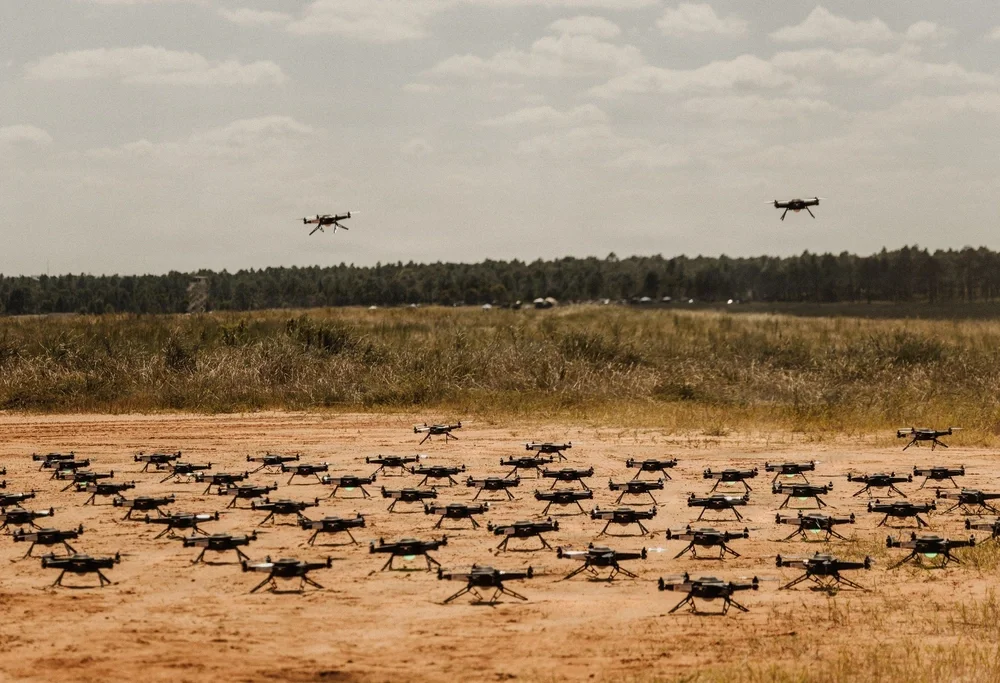
Most FPV subsystems come from a modular commercial or dual-use supply chain.
That makes substitution relatively easy. Motors, cameras, receivers, batteries and controllers can be replaced independently when supply, price or battlefield conditions change.
Ukraine's decision to let units acquire components directly through Brave1 Market reflects this modular reality.
The right way to understand an FPV drone
An FPV is not one technology. It is a balance among propulsion, energy, stabilization, communications, video and human control.
Its low cost comes partly from using compact, widely available components. Its agility comes from extremely fast electronic stabilization and direct human control. Its vulnerabilities emerge from the same tight coupling: a failed battery, video link, radio, motor or controller can end the mission.
The most important feature of the FPV ecosystem is therefore modularity. The aircraft can evolve component by component — and that is why it can adapt so quickly.