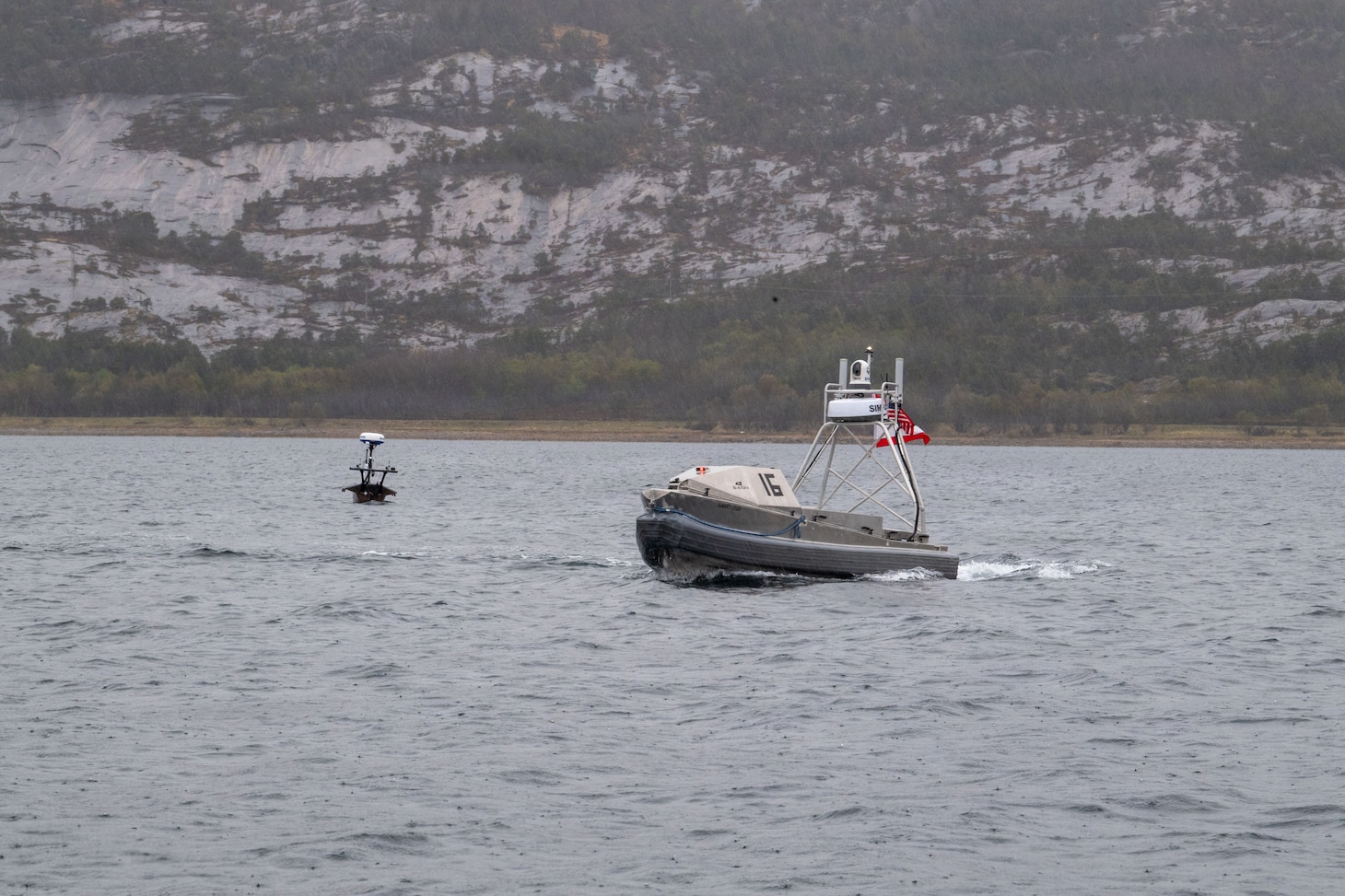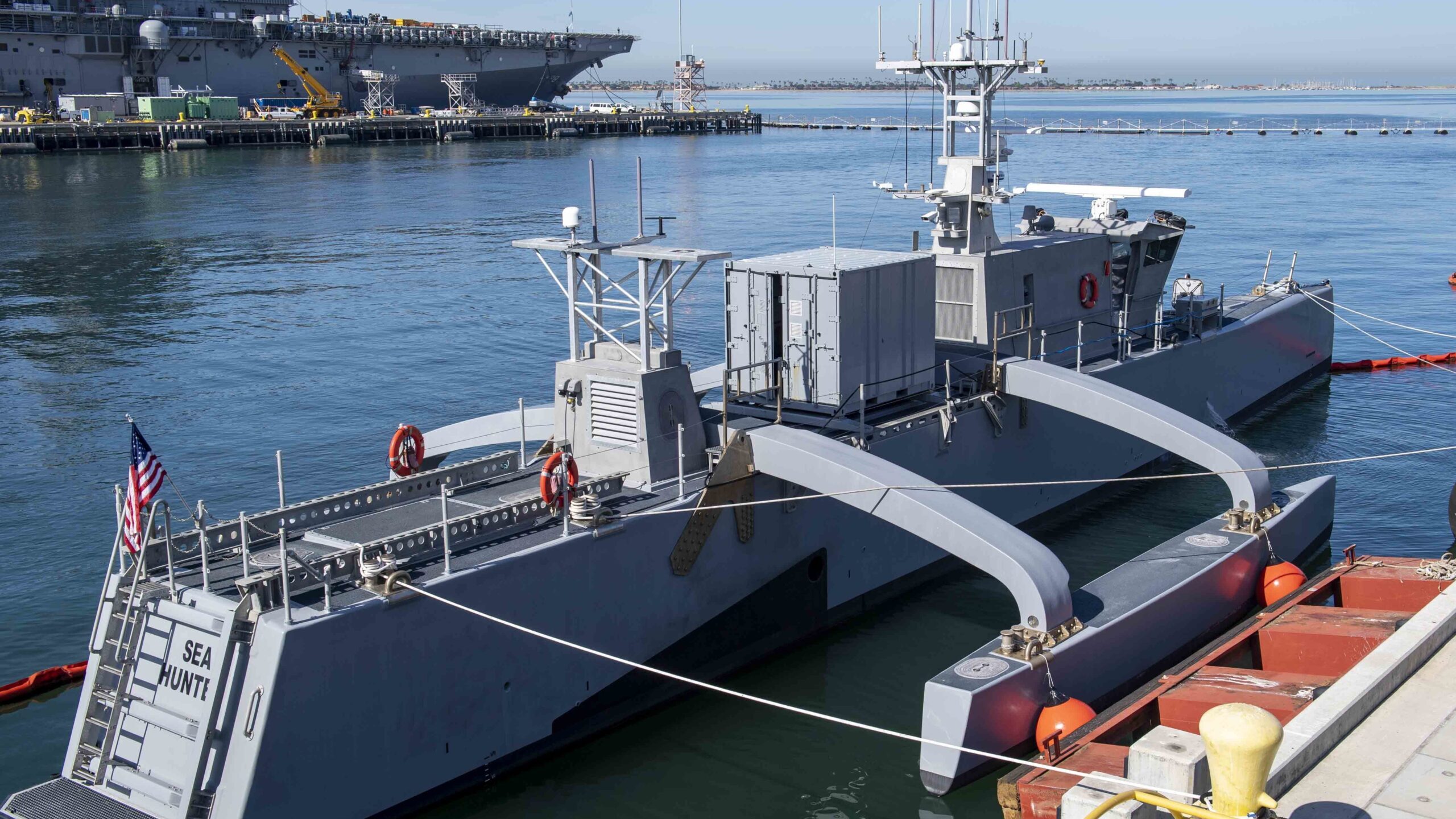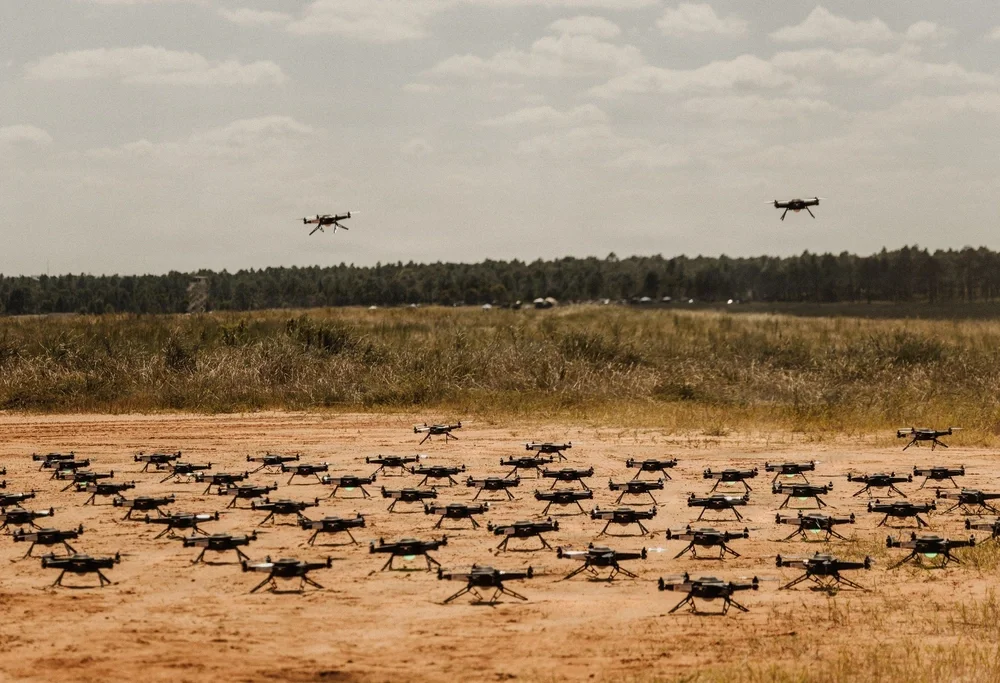
Small drones have broken one of the comfortable assumptions of modern air defense: that the object worth shooting down is normally more expensive, more visible and less numerous than the weapon used to stop it.
The small-UAS era reverses that logic. Quadcopters, reconnaissance drones and one-way attack systems can be produced in large numbers, flown low, launched repeatedly and replaced quickly. A defender may face threats that cost a fraction of a traditional air-defense interceptor and arrive in numbers that make every engagement an economic decision.
The result is not the disappearance of conventional air defense. It is a redesign around layers. Radar, RF detection, electro-optical sensors and acoustic systems feed command-and-control software. Electronic warfare, guns, interceptor drones, rockets and missiles become different tools for different target classes. The central question is no longer simply whether an air-defense weapon can hit a drone. It is whether a defensive network can detect, classify and assign the right effect fast enough — and do that repeatedly at sustainable cost.
The threat is too diverse for one countermeasure
The phrase small drone covers aircraft with radically different signatures, speeds and mission profiles. A commercial quadcopter conducting reconnaissance close to the front does not present the same problem as a fixed-wing reconnaissance UAV, a fibre-optic FPV or a long-range one-way attack drone.
That diversity matters because every countermeasure depends on assumptions. RF jamming depends on something useful being transmitted. A gun depends on the target entering its engagement envelope. An interceptor drone needs enough warning and geometry to reach the target. A missile may have the performance required but impose an unsustainable cost if used against every low-cost aircraft.
This is why current U.S. Army and NATO counter-UAS efforts increasingly describe the problem in terms of integrated systems rather than individual weapons.
Detection became a network problem
The first redesign is on the sensing side. Small aircraft can be difficult radar targets, may fly in ground clutter and may transmit little or nothing in the radio spectrum.
NSPA's 2026 counter-UAS framework contracts illustrate the emerging architecture: a common command-and-control backbone integrating radar, direction finding, EO/IR and acoustic sensors. The purpose is not to make every sensor see every drone. It is to allow one sensor's strength to cover another's blind spot.
NATO ACT's Layered Counter-UAS Initiative follows the same logic across larger formations. The objective is to connect sensors and effectors across national systems so a detection can become a usable track and then a defensive action without remaining trapped inside one vendor's box.
| Layer | What it contributes | Why it cannot stand alone |
|---|---|---|
| Radar / RF / EO-IR / acoustic sensing | Detection, tracking and identification from different signatures | Every sensor has target, terrain and environmental blind spots. |
| Command and control | Fuses tracks and assigns a response | Bad or delayed data makes even strong effectors ineffective. |
| Electronic warfare | Repeatable non-kinetic effects against susceptible links and navigation | Cannot defeat every link architecture or autonomous target. |
| Guns / point defence | Physical defeat at relatively low cost per shot | Limited geometry, ammunition and safety envelope. |
| Interceptor drones | Flexible kinetic layer with potentially favorable economics | Need warning, cueing and enough time to complete the intercept. |
| Missiles | High performance against demanding threats | Cost and magazine depth make routine use against cheap drones difficult. |
Command and control is becoming the center of the system
A layered architecture creates a new problem: deciding which layer should respond.
If several sensors report the same track, the system has to correlate them. If multiple effectors are available, someone or something has to determine which one is appropriate. That decision must account for target type, range, collateral risk, remaining magazines and the probability that another defensive layer will have a better shot.
The U.S. Army's Golden Shield experimentation makes this explicit. Army reporting describes an open architecture that combines sensors and effectors through next-generation command and control and automates parts of the detect-track-cue chain to reduce operator workload.
This is a profound change from treating counter-drone tools as local accessories. C-UAS is becoming an air-defense software problem as much as a hardware problem.
The defender now has an exchange-rate problem
DOCUMENTNSPA tactical C-UAS framework architectureOPEN ↗The economics of interception are not a secondary consideration. They shape the architecture.
If a low-cost drone can force the defender to launch an expensive missile, the attacker may impose strategic cost even when every aircraft is destroyed. If the defender uses jamming or a low-cost interceptor against the same target, the exchange can move in the opposite direction.
This is why current counter-UAS forces are adding more lower-cost kinetic and non-kinetic layers instead of assuming conventional air-defense missiles should absorb the entire threat.
The objective is not simply the cheapest possible interceptor. It is the cheapest reliable effect appropriate to the target. A cheap countermeasure that fails repeatedly is not economical.
Magazine depth is now a design requirement
A system can be tactically excellent and strategically fragile if it cannot sustain repeated attacks.
Small drones make magazine depth visible because an attacker can regenerate aircraft more quickly than many traditional air-defense munitions can be produced. Defenders therefore need effectors that can fire repeatedly, be replenished quickly or avoid consuming a munition at all.
Electronic warfare provides one form of reusable magazine. Guns provide another, constrained by ammunition and geometry. Interceptor drones create a new consumable layer that can potentially be produced on industrial timescales closer to the target itself.
The right mix depends on the threat environment, but the architecture increasingly assumes that no single magazine will be enough.
Mobility changes the problem again
Protecting a fixed airfield is different from protecting a manoeuvring brigade.
A fixed site can support larger radars, more power, denser communications and prepared engagement zones. A mobile formation has to move sensors and effectors while maintaining a shared air picture.
The U.S. Army's M-LIDS is one example of the integrated mobile approach: radar and EO/IR feed a command-and-control system that coordinates kinetic and non-kinetic defeat capabilities on tactical vehicles.
This is why the future counter-UAS problem is not simply base defense with drones added. It has to fit inside manoeuvre.
The threat is adapting faster than acquisition cycles
Counter-drone systems face the same adaptation pressure as drones themselves. Frequencies change. Fibre-optic systems remove radio-control vulnerabilities. Autonomy reduces dependence on communications. New airframes and mission profiles appear faster than traditional procurement can refresh an architecture.
NATO's LCI-X Crucible series and U.S. Army experimentation both reflect an attempt to shorten that cycle by bringing operators, industry and government into recurring field tests rather than waiting for a single final configuration.
This implies that a useful C-UAS architecture must be modular enough to accept new sensors and effectors without redesigning everything around them.
Open architecture is becoming a combat characteristic
Interoperability is usually discussed as an acquisition or standards issue. In counter-UAS, it directly affects combat value.
A new interceptor is less useful if it cannot receive the tracks already generated by the force. A new radar is less useful if its data cannot enter the common air picture. An EW system that cannot be coordinated with friendly drone operations can create its own problems.
The faster the threat evolves, the more valuable interfaces become. An open architecture reduces the cost of replacing one layer while preserving the rest of the defensive system.
DOCUMENTGolden Shield layered counter-UAS architectureOPEN ↗Automation is arriving first in the kill chain
The volume of small targets creates cognitive load before it creates a firing problem.
Track correlation, classification, prioritization and sensor cueing are natural candidates for automation because they involve large amounts of repetitive data. Army experimentation increasingly uses software to accelerate these functions and reduce the number of screens and manual handoffs required from operators.
That does not mean every engagement becomes autonomous. The more realistic near-term pattern is automated detection and cueing feeding human-supervised defensive actions, with the exact authority depending on system, environment and policy.
Counter-UAS is becoming part of normal air defense
The long-term implication is institutional. Counter-drone defence is moving away from being a specialist protection function added around high-value sites.
The U.S. Army's 2026 handbook initiative, repeated formation-level exercises and NATO procurement frameworks all point toward C-UAS becoming routine equipment, training and command architecture.
That matters because the drone threat is no longer episodic. It is present across reconnaissance, strike and force-protection problems every day.
Why traditional air defense still matters
The proliferation of lower-cost layers does not make missiles and conventional air-defense systems obsolete.
Some drones fly faster, higher or farther than low-cost point-defense systems can reliably handle. Mixed attacks can combine drones with cruise missiles and other threats. Conventional air defense also provides sensing and command infrastructure that lower layers can plug into.
The redesign is therefore additive. Expensive systems are preserved for the threats that justify them while cheaper layers absorb targets that would otherwise consume scarce high-end magazines.
The real counter-drone weapon is the architecture
The small-UAS era has made air defense more distributed, more software-dependent and more economically conscious.
No single radar, jammer, gun or interceptor solves the problem because the threat changes too quickly and arrives in too many forms.
The durable capability is a network that can see through several sensor types, maintain a coherent track picture, choose among several effectors and replace individual components as the threat evolves.
That is why air defense is being rebuilt around small drones. The decisive system is no longer one weapon. It is the logic that connects all of them.