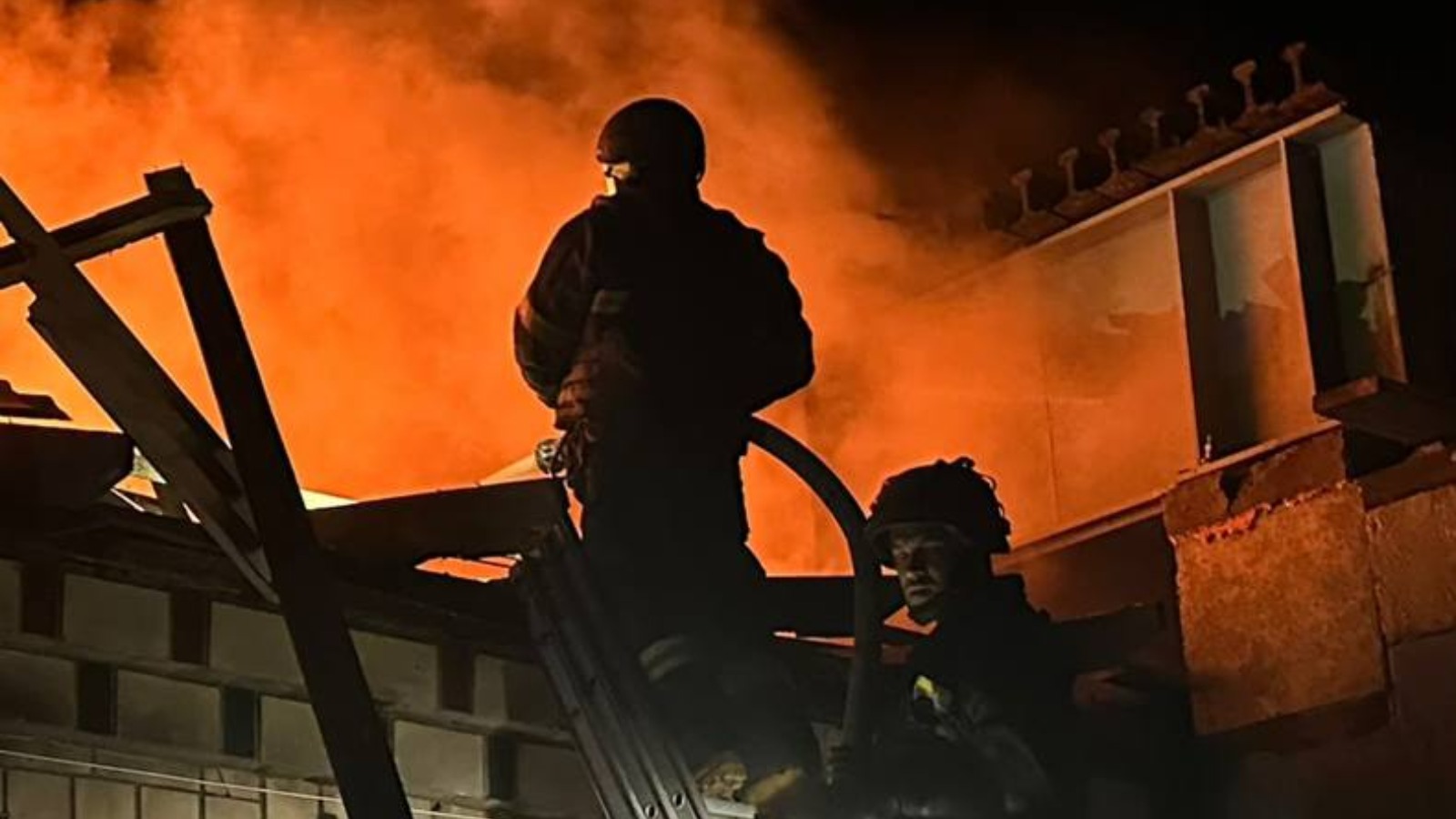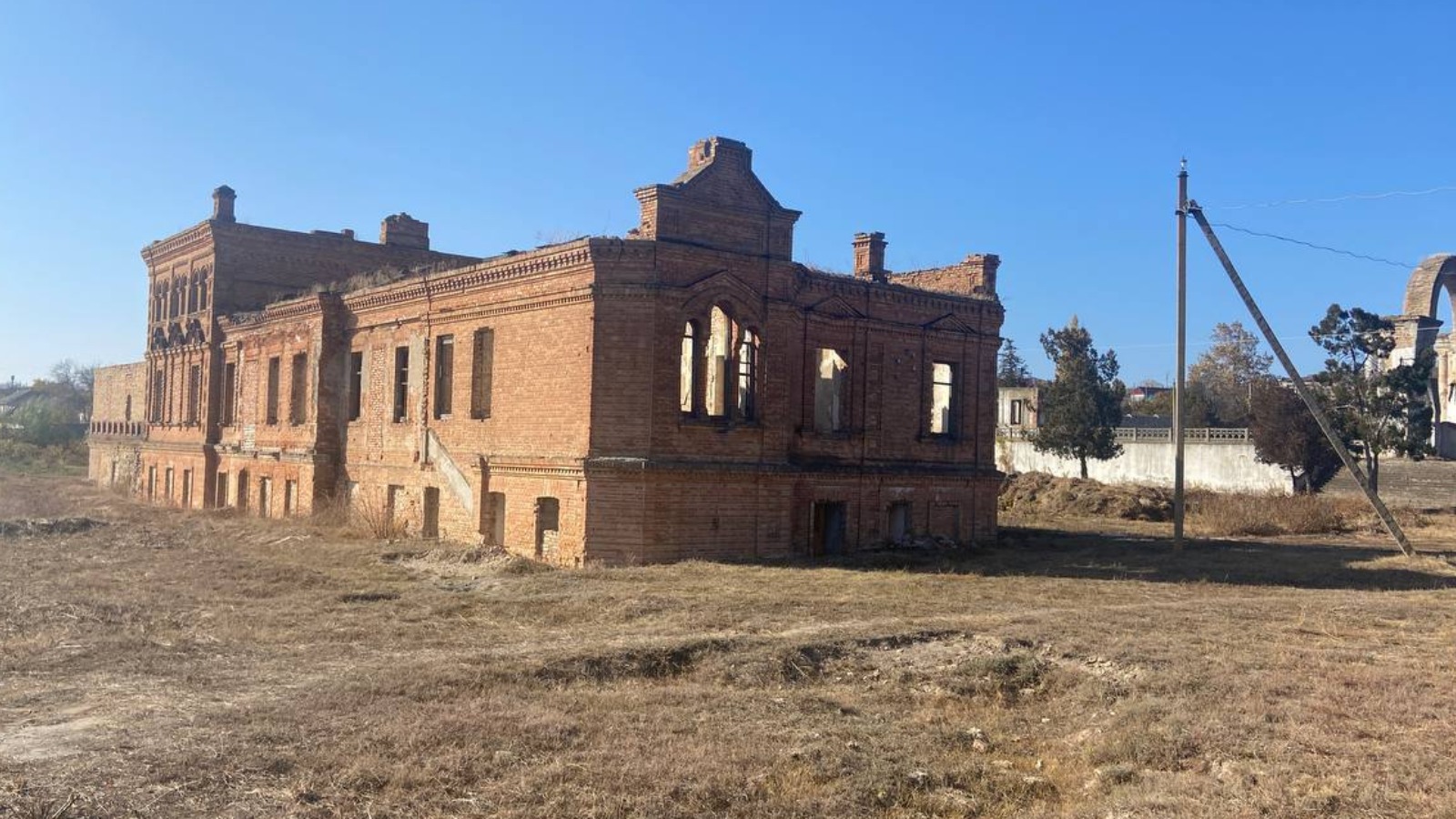
Military unmanned systems this week moved in two directions at once: toward larger, more complex long-range strike packages and toward more specialised defences against them. Ukraine reported using a newly developed interceptor drone against a jet-powered Russian Geran-5, while Russia and Ukraine issued competing, unverified accounts of mass drone attacks around Moscow and across Ukraine. The available evidence does not establish the full results of those operations, but it does show that jet-powered one-way threats and large raid sizes are now shaping both operational claims and defensive investment.
The clearest operational development was Ukraine’s public disclosure of a second interceptor-drone effort against jet-powered threats. The Security Service of Ukraine (SSU) said its new catapult-launched, delta-wing interceptor successfully engaged a Geran-5 on 19 September. Technical details remain undisclosed and the claimed interception was not independently verified. Still, the disclosure matters because it identifies a distinct effort focused on a faster target class than the propeller-driven one-way attack drones that have dominated earlier counter-drone discussions.
Outside the battlefield, U.S. decisions showed two complementary responses: rapidly fielding an inexpensive air-to-air counter-drone weapon on F-15Es in the Middle East, and buying interceptors plus electronic-warfare equipment for USSOUTHCOM. Meanwhile, Pentagon competition results and North Korean production imagery pointed to continued institutional emphasis on affordable attack-drone volume—though neither establishes actual output or combat effectiveness.
WHAT CHANGED
- Ukraine publicly reported operational use of a new SSU interceptor designed for jet-powered Shahed-type threats. Zelenskyy said it struck a Geran-5 and had been successfully deployed twice on 19 September. The SSU has not released its manufacturer, speed, range, seeker, engine or engagement method; video assessment cited by Militarnyi suggested a catapult-launched delta-wing aircraft. This is a public fielding claim, not independently confirmed performance evidence.
- Long-range drone operations were presented as mixed packages rather than single-system raids. Zelenskyy listed FP-1, RZ-100, MICH-2000, Palianytsia, Vendetta, Liutyi, Bars, Flamingo, Sichen and Pelican among systems used in a reported Moscow-region operation. Reported impacts on oil and logistics sites remain unverified, but the official account indicates an operational approach combining several named domestic systems and multiple Ukrainian services.
- The reported scale of drone attacks rose sharply, while reliable battle-damage accounting remained difficult. Russia claimed 1,110 Ukrainian drones intercepted or destroyed overnight nationwide and 450 approaching Moscow; Ukrainian authorities reported 138 incoming Russian UAVs overnight, with 101 downed or jammed as of 08:00. These are opposing official claims, not comparable verified totals, and both operations were still being described amid incomplete information.
- Counter-UAS procurement shifted from individual tools toward layered packages and accelerated acquisition. The U.S. Department of War awarded more than $25 million for USSOUTHCOM interceptors and EW systems, intended to support detection, tracking and defeat. JIATF-401 said the awards moved from requirement to operational use in less than one month, though suppliers, quantities and locations were not disclosed.
- The U.S. Air Force demonstrated a rapid route from testing to fielding for an existing weapon adapted to the drone mission. It equipped Middle East F-15Es with APKWS laser-guided rockets for air-to-air engagements against Iranian-made one-way attack drones, about nine days after testing began in May 2025, according to the Air Force Test Center. This is an announced fielding milestone, rather than new evidence of combat results.
- Low-cost strike-drone production and procurement gained concrete institutional markers. The Pentagon selected Perennial Autonomy and Neros Technologies as Gauntlet II leaders in long-range strike and confined-environment tactical assault, respectively. Separately, KCNA imagery showed dozens of North Korean Harop-like loitering munitions in industrial facilities, but did not reveal output, operational status or performance.
AIR: INTERCEPTORS MEET FASTER ONE-WAY THREATS
Ukraine’s SSU interceptor is the week’s most consequential system disclosure because the stated target set is evolving. Zelenskyy described the Geran-5 as jet-powered; earlier the same day, he said the interceptor had been developed specifically against jet-powered Shahed drones. Ukraine’s claim that the system made two successful deployments is important as evidence of reported operational use, but not enough to establish its repeatability, kill mechanism, or suitability against the broader threat set.
The Russian attack reported overnight on 19–20 September underlines the pressure behind that effort. Ukrainian authorities said the 138-UAV package included Shahed, Gerbera and Parodiya systems, and Ukrainska Pravda reported that roughly half were jet-powered. Authorities reported 101 targets shot down or jammed, strikes at 17 locations and debris at five, while noting that the attack continued. Because destroyed and jammed UAVs were combined, the report cannot show the relative contribution of kinetic air defence and EW.
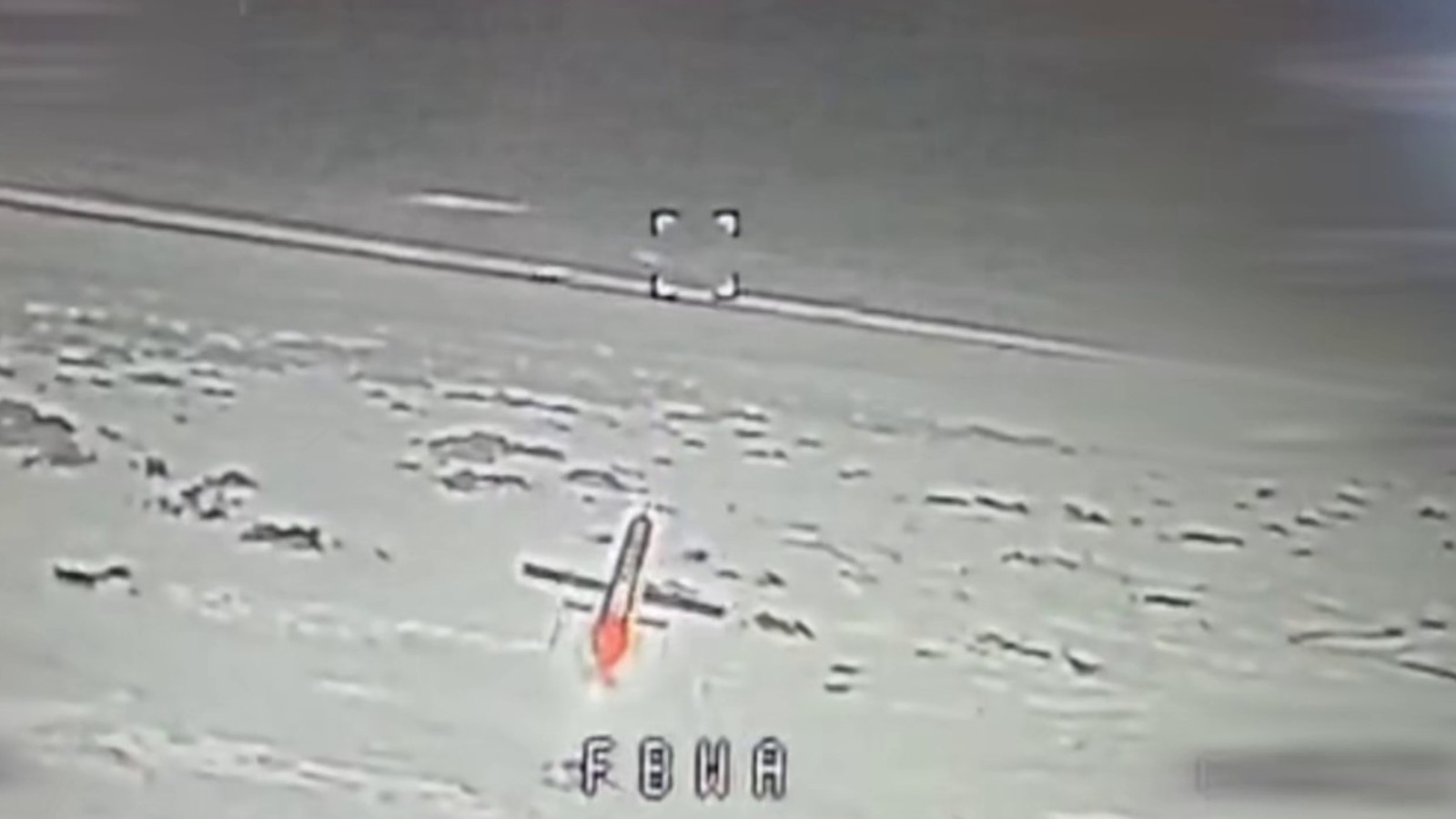
The United States’ APKWS fielding illustrates a separate defensive path: using a relatively inexpensive guided rocket from manned fighters. The F-15E integration followed earlier F-16 adoption. The Air Force says parallel developmental and operational testing enabled deployment within the first week of activity. The development is evidence of speed in adaptation and fielding, but the supplied reporting does not provide interceptor cost, firing doctrine, target success rate, or comparative effectiveness against different drone types.
LONG-RANGE STRIKE: SCALE, RANGE AND UNCERTAIN EFFECTS
The reported Moscow-region raid brought the broadest Ukrainian public list of named long-range systems in the supplied evidence. Zelenskyy said the operation involved the Security Service, Unmanned Systems Forces, Special Operations Forces, Defence Intelligence and Foreign Intelligence Service. Moscow officials acknowledged that several drones reached the grounds of the Moscow Oil Refinery, while fires were reported at the refinery and Sofyino logistics technopark. Neither targets nor damage were independently verified in the supplied reporting, and Russia’s interception claims cannot resolve that uncertainty.
A separate incident illustrates the expanding geographic and political footprint of fast unmanned threats. Moldovan police recovered debris from a turbojet UAV after an explosion near Chisinau; authorities did not identify the model or manufacturer. Militarnyi assessed it could be a turbojet Geran variant, but this was not an official determination. Lithuania, meanwhile, said Italian NATO Baltic Air Policing fighters shot down a drone that crossed from Belarus near the Kruonis pumped-storage plant. Its type, payload and origin remained under investigation.
INDUSTRY, PROCUREMENT AND SYSTEM DESIGN
Procurement activity this week was notable for its focus on scale and availability rather than exquisite specifications. The Pentagon’s Drone Dominance Program named winners in two mission categories after Gauntlet II. Its previously described framework attached production orders of 8,000 drones to the top performer in each category, but the supplied announcement identifies winners rather than confirming that orders have been issued. The U.S. Army also awarded Skyeton’s U.S. subsidiary a $10.6 million Raybird hardware-and-services contract, with quantities, user, delivery location and funding orders undisclosed.
Ukraine’s Ukrspecsystems used MSPO to unveil the RAM-2X X-wing loitering munition. The company says it can strike targets up to 180 km away, remain airborne for more than two hours, use multi-band radio or Starlink communications, and work with a SHARK-M reconnaissance UAV acting as a repeater and target-designation platform. Those are manufacturer claims, not independently demonstrated specifications. What is material is the design emphasis: a reconnaissance-strike pairing and communications alternatives intended to address EW pressure.
North Korea’s state imagery supplies visual evidence of multiple similar Harop-like air vehicles in production facilities after Kim Jong Un’s 16–18 September inspections. It supports the conclusion that the programme is being presented as an industrial effort, consistent with Kim’s November 2024 order to establish serial production. It does not support conclusions about production rate, guidance quality, warhead, range, or readiness for combat.
MARITIME / UNDERWATER
Iran said it captured a U.S. underwater vehicle near the Strait of Hormuz and identified it as Anduril’s Dive-LD. The Pentagon said an older U.S. underwater drone malfunctioned more than a day earlier during regional surveying, did not confirm capture, and said it carried no sensitive data or classified sonar or radar. Anduril later confirmed to TWZ that it had lost a Dive-LD in the region. The episode confirms a platform loss but leaves the precise recovery circumstances and Iranian description unverified.
NUMBERS OF THE WEEK
| Figure | What it describes | Qualification |
|---|---|---|
| 138 | Russian UAVs Ukraine said were launched overnight on 19–20 September | Preliminary official account; attack still under way. |
| 101 | Russian UAVs reported downed or jammed by 08:00 | Combined kinetic and EW figure; no breakdown. |
| $25m+ | USSOUTHCOM counter-UAS awards | Covers interceptors and EW; systems and quantities undisclosed. |
| $10.6m | U.S. Army Raybird contract to Skyeton | Hardware and services; quantities and operator undisclosed. |
| 9 days | Reported F-15E APKWS test-to-fielding interval | According to the Air Force Test Center, for activity begun in May 2025. |
SYSTEMS TO WATCH
- SSU jet interceptor: Reportedly used twice in one day against jet-powered threats, but key technical and operational details remain undisclosed.
- RAM-2X: A newly presented Ukrainian loitering munition whose claimed SHARK-M teaming and communications options make it relevant to the EW-resilience problem; performance claims are the manufacturer’s.
- Dive-LD: Anduril confirmed the loss of one vehicle in the Hormuz region, making subsequent official clarification on the circumstances and sensitive-equipment question significant.
FROM UNMANNED FRONTIER
This week’s Explainer on drone interceptors provides the necessary caution for interpreting the SSU claim: an interceptor is only the final effector in a chain requiring detection, track, identification, cueing and engagement. The week’s reports reveal the interceptor aircraft, but not the sensor and command chain behind it. Our analysis of drone economics also frames why APKWS integration, layered USSOUTHCOM procurement and low-cost-drone competitions matter: the relevant comparison is not unit price alone, but magazine depth, production speed and the cost of sustaining defence.