The U.S. Marine Corps has selected Allen Control Systems’ Bullfrog autonomous weapon system for integration into its Light Marine Air Defense Integrated System, adding an AI-enabled gun system to a ground-based effort intended to protect forces from aerial threats including drones.
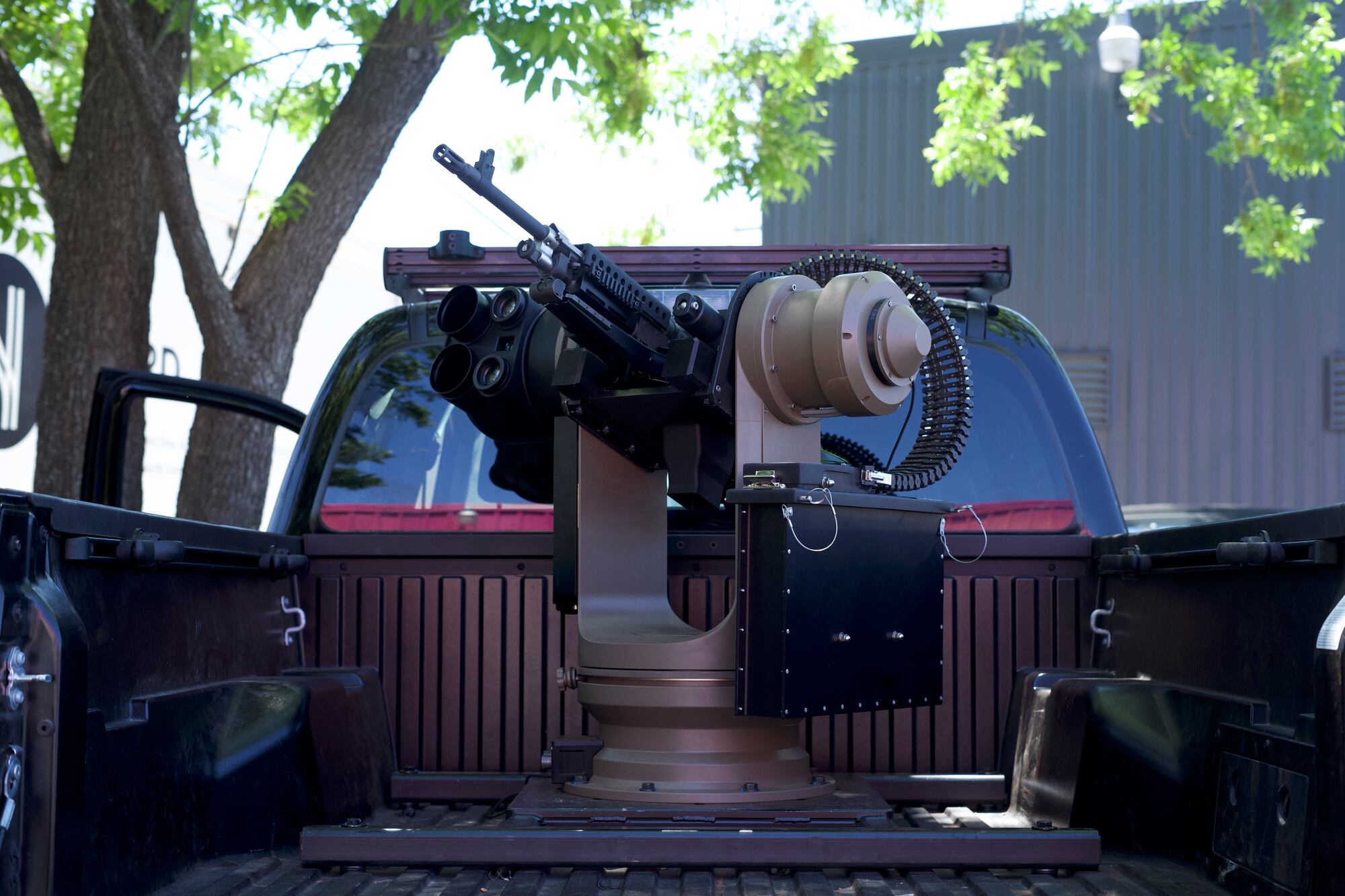
Allen Control Systems announced the selection Monday. Bullfrog detects and tracks aerial threats, then automatically aims a firearm at them, according to the company and reporting on the program. Video footage of the system shows the mounted weapon making small adjustments as it refocuses on a drone target after firing.
Integration with L-MADIS
The Marine Corps is pursuing the system through its Ground Based Air Defense program, which develops and fields capabilities to defend forces against airborne attack. Bullfrog is to be incorporated into L-MADIS, a counter-unmanned aircraft system mounted across two vehicles and built around electronic-warfare capabilities.
The selection places Bullfrog within a layered counter-drone approach rather than treating it as a standalone solution. L-MADIS already relies heavily on electronic warfare, while the ACS system is designed to engage aerial threats with a firearm after detecting, tracking and aiming at them. The system is also already in use with the Army and Navy, and has been approved by Joint Interagency Task Force 401, the Pentagon organization established to streamline counter-drone technology acquisition.
A gun-based response to a cost problem
The decision comes as the Pentagon gives greater emphasis to counter-drone systems that can be fielded at scale and at lower cost. Conflicts in Ukraine and the Middle East have highlighted the modern battlefield role of relatively cheap drones, while also exposing an imbalance in air defense: small unmanned systems can compel the use of interceptor missiles costing millions of dollars.
That problem has been especially pronounced during the U.S. war with Iran. American forces have relied heavily on costly defenses against Iranian Shahed drones, which can cost about $35,000, compared with roughly $4 million for some interceptors. Experts have warned that a prolonged conflict could significantly drain U.S. interceptor inventories.
ACS has presented Bullfrog as a lower-cost option for certain drone engagements. Its release on the Marine Corps agreement identified the Bullfrog M240, a version compatible with the U.S. military’s belt-fed, fully automatic M240 machine gun. The company says the system has a maximum effective range of nearly half a mile and can engage medium and large drones weighing as much as 1,320 pounds. The mount weighs 300 pounds without ammunition.
ACS also offers Bullfrog variants supporting the M2 machine gun and M320 chain gun. The company says the M240 version can deliver “a cost-per-kill as low as $10,” a claim that reflects the Defense Department’s interest in reducing the expense of defeating unmanned aircraft. Other firms are pursuing the same market: Lockheed Martin said this week that a lower-cost Patriot interceptor it announced would cost less than half as much as other multimillion-dollar interceptors.