WASHINGTON — The Army says it has reached a point where small drones are available across its force at the platoon level, shifting the immediate challenge from acquiring platforms to preparing soldiers to operate them at the squad level, particularly in an electromagnetic environment where adversaries may try to jam or disrupt drone and communications systems.
Col. Gregory Merkl, the Army’s director for the Pentagon’s Drone Dominance program, said the Defense Department’s gauntlet-style drone competitions have helped build the needed volume. “We do have the volume to do that. A lot of that has been facilitated by [the Pentagon’s] Drone Dominance program,” Merkl said.
But fielding hardware does not by itself create a squad-level capability. “Where we still have some work to do, candidly, is getting everybody trained at the appropriate level,” Merkl said. “I think if you look across the force, you have that capability in every platoon. We still have a little bit of work to do in terms of getting the qualified pilots down to the squad level.”
Training becomes the near-term focus
The training push comes as a deadline set under the Drone Dominance program approaches. When Defense Secretary Pete Hegseth announced the initiative in 2025, he directed that every Army squad be outfitted with small, one-way attack drones by the end of fiscal 2026. The program was intended to reduce bureaucratic barriers and accelerate drone production and fielding.
With the fiscal-year deadline at the end of the month, Merkl said the Army is concentrating on teaching soldiers to use the systems under contested electromagnetic conditions. Such conditions involve opposing forces attempting to interfere with drones or the equipment used to communicate with them, making spectrum awareness a practical part of operating the systems rather than a separate technical concern.
The Army is running a series of working groups at the headquarters level and with interagency partners, including the Federal Aviation Administration, Merkl said. Their purpose is to help soldiers understand how to “safely use the spectrum.” The effort reflects the need to prepare operators not simply to fly a platform, but to do so while accounting for the constraints and disruptions of the electromagnetic environment.
Exercises inform spectrum skills
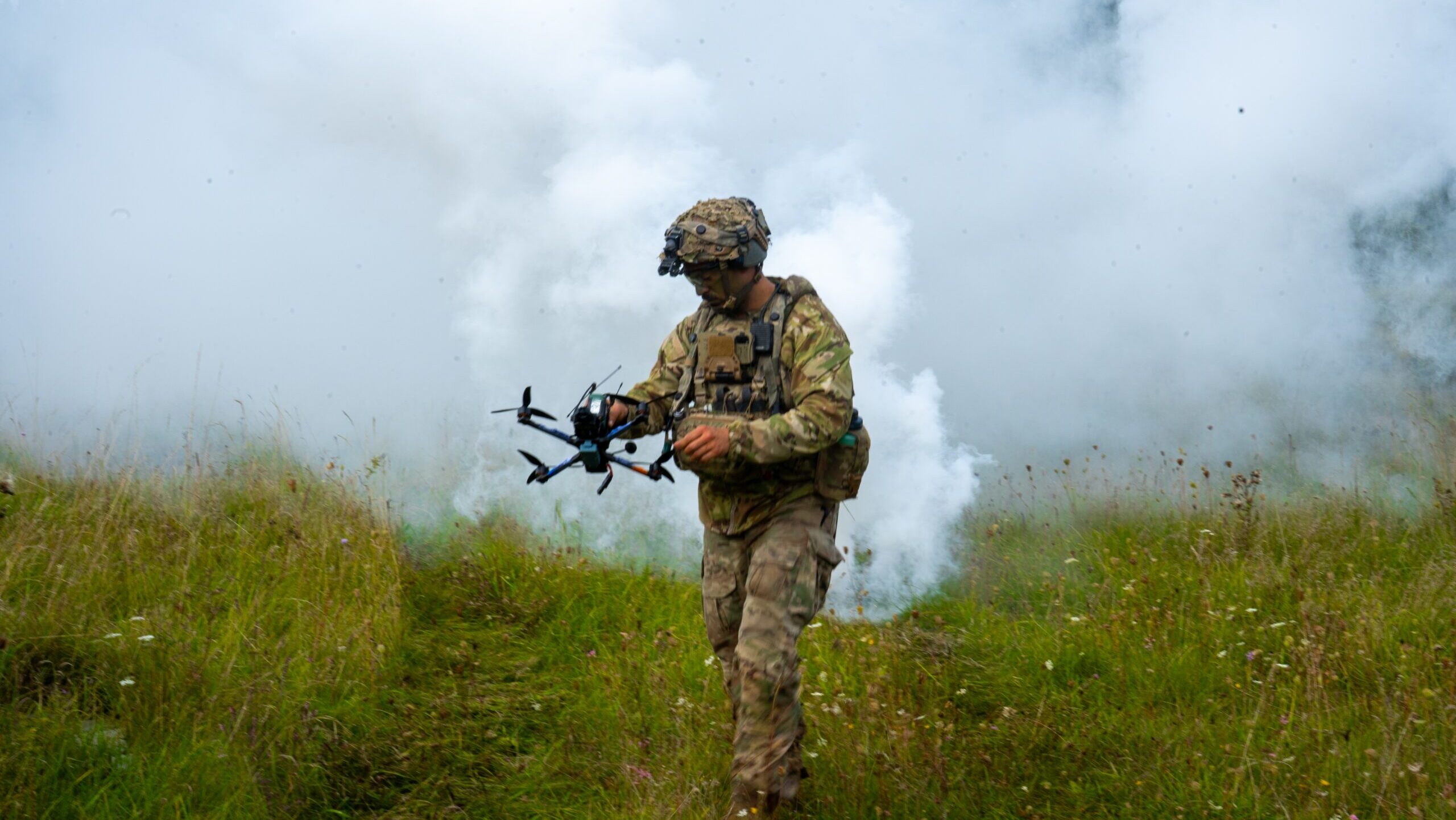
The service is also conducting training at smaller-unit levels overseas. At the recent Saber Junction exercise in Germany, soldiers from the 504th Parachute Infantry Regiment worked with Ukrainian and NATO counterparts to better understand operations in a contested spectrum, according to Merkl. The regiment is a drone-focused unit that will soon return to its role as a traditional infantry unit.
Merkl said the central lesson from the exercise was that soldiers must learn to navigate the electromagnetic spectrum in much the same way they learn to navigate terrain. Troops made progress during the event, he said, though further results will depend on continued training.
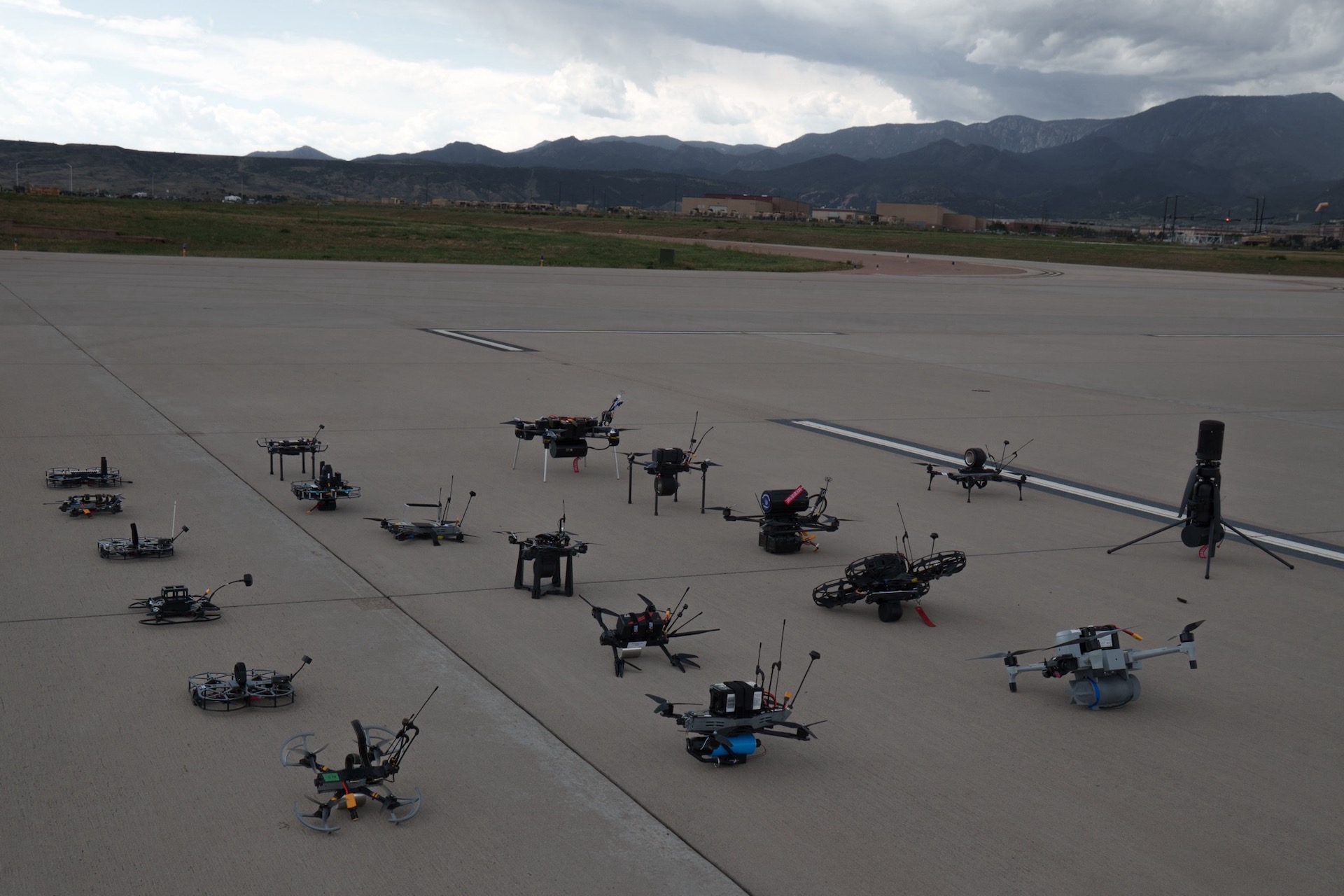
The available procurement figures indicate the scale of the department’s broader effort, though the number of drones sent directly to Army units is unclear. The Drone Dominance Leaderboard shows units had accepted 12,080 drones from the program’s first gauntlet as of the day of Merkl’s remarks. Eleven companies received agreements to provide 24,320 small drones through that first competition.
A second gauntlet focused on long-range strike and tactical-assault missions in confined environments. The Drone Dominance program named nine winners from 19 initial participants earlier in the week. Those top performers could receive portions of an expected order for 60,000 platforms from the second round, extending the program’s supply pipeline as the Army works to close its operator-training gap.