The Army’s decision to return an experimental drone battalion in Europe to its airborne infantry role was made before Gen. Christopher LaNeve became the service’s top uniformed officer, LaNeve told soldiers, as Army leaders seek to counter questions over whether the move signals a retreat from drone warfare.
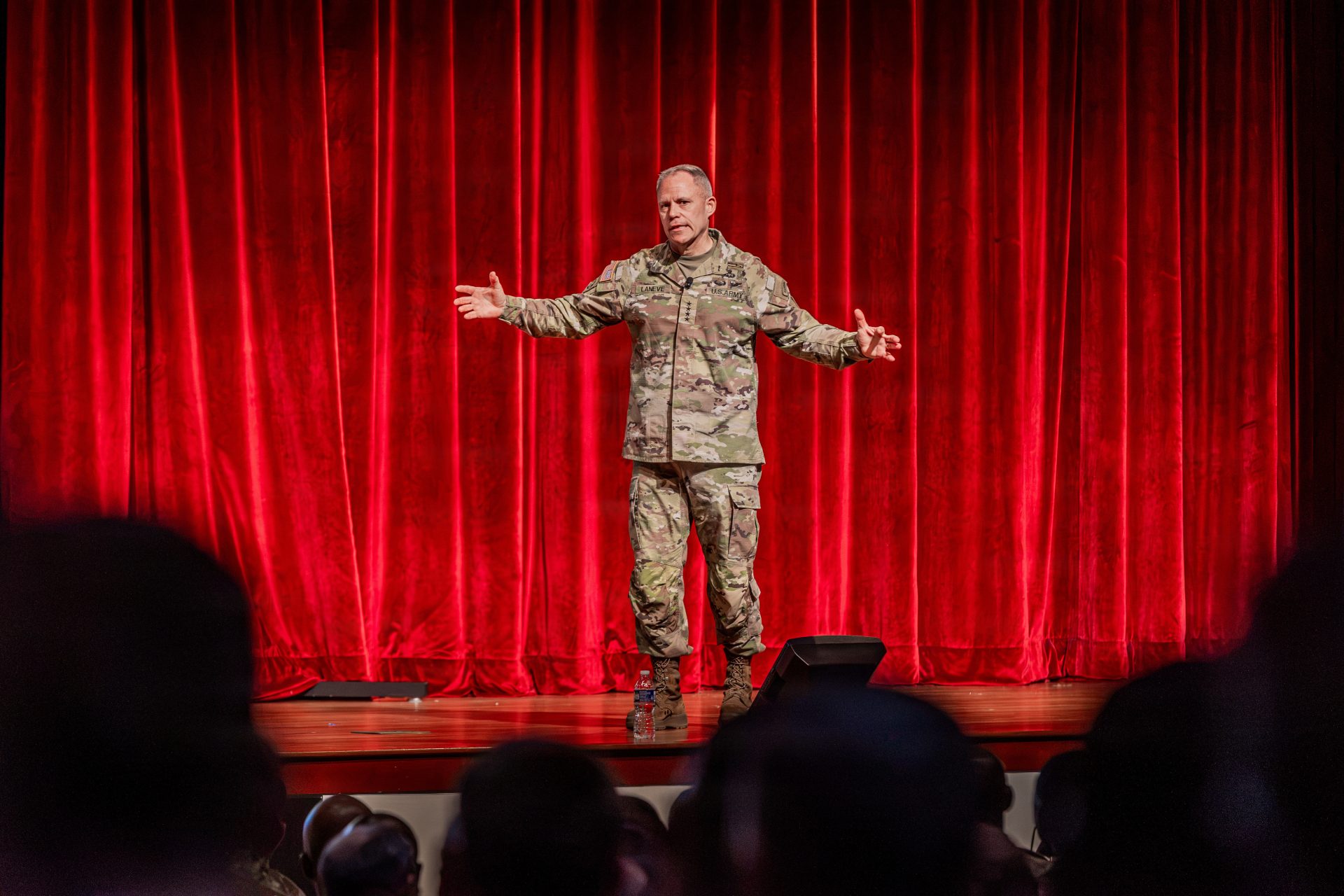
Speaking at the Maneuver Warfighting Conference at Fort Benning, Georgia, LaNeve said reporting that attributed the decision to him had surprised him. “Frankly that decision to move the battalion back into an infantry one was made a long time before, you know, really I was in the seat,” he said in response to a question from the audience.
Army spokespeople acknowledged questions from DefenseScoop about who made the decision and when, but did not answer them. The Wall Street Journal first reported the wind-down Aug. 19, prompting concern from lawmakers and renewed scrutiny of how the Army intends to adopt unmanned systems across the force.
An experimental mission with a planned endpoint
The Army assigned an infantry battalion from the 173rd Mobile Brigade Combat Team to the Unmanned Assault Battalion experiment last fall. U.S. Army Europe and Africa, working with the Department of the Army and U.S. European Command, tasked the formation in November 2025 with studying dedicated drone forces, including Ukrainian units, and sending its findings back to the broader Army.
According to an Army official who spoke to DefenseScoop, the battalion was intended to study drone warfare, test different unmanned systems and distribute lessons as part of the Pentagon’s drone-dominance push. The unit was scheduled to return to its airborne infantry mission after Exercise Saber Junction in Germany. Another Army official said in August that the reversion would follow the multinational exercise, which ran across August and September.
Senior Army officials have since described that timeline as the intended design of the experiment, rather than the closure of a permanent specialist capability. Alex Miller, the Army’s chief technology officer, told reporters that the battalion was never meant to become a lasting centralized drone organization.
They were never flagged to be a permanent centralized drone unit. In fact, we pushed back on having something like a drone corps since its inception because our theory of the case is if you centralize that in one place, what you lose is the ability to actually scale that learning and send that out to the rest of the Army.
Alex Miller, Army chief technology officer
Brent Ingraham, the Army’s acquisition, logistics and technology lead, and Col. Gregory Merkl, the service’s drone dominance director, supported that explanation during the same media roundtable. Command Sgt. Maj. Christopher Mullinax, the senior enlisted leader for U.S. Army Europe and Africa, gave soldiers a similar account at the maneuver conference: the battalion was to collect lessons from Ukraine, validate them in training and pass them on to the force.
The bottom line is there was never a plan to make [the infantry unit] a permanent drone battalion.
Command Sgt. Maj. Christopher Mullinax
Congress seeks answers
The initial reports nevertheless raised concerns on Capitol Hill, where lawmakers questioned whether ending the battalion’s specialized mission would weaken the Army’s ability to learn from Ukraine and keep pace with changes on the modern battlefield. A bipartisan group of senators and Rep. Michael Turner wrote to LaNeve and then-Army Secretary Dan Driscoll on Sept. 1 seeking an explanation of the decision and whether it originated with the Army or Defense Department leadership.
We have deep concerns that eliminating this specialized drone unit will limit our ability to learn from allies, particularly the Ukrainian Armed Forces, and hinder our efforts to modernize drone warfare at the speed necessary to compete on the modern battlefield.
Sens. Jeanne Shaheen, Thom Tillis and Angus King, and Rep. Michael Turner, in a Sept. 1 letter
The lawmakers said they understood the move as potentially connected to LaNeve’s emphasis on a “back to basics” approach centered on the Army’s primary combat mission. LaNeve’s strategic roadmap, “The Army Azimuth,” calls for domestic defense, warfighting and land-based power projection. It also says the Army must counter enemies using stand-off weapons, including unmanned systems and weapons of mass destruction, while emphasizing soldier readiness and small-unit tactical skills.
That combination of priorities has left lawmakers questioning how the service will balance foundational infantry skills with rapid adoption of drone technology. The Army has been incorporating small drones into training, running soldier competitions to identify relevant skills, tactics and technologies, and devoting significant resources to unmanned systems as it seeks to respond to battlefield developments involving adversaries including Russia.
Army says drone work will continue
Army officials have argued that returning the 173rd battalion to infantry status is consistent with, rather than opposed to, wider drone adoption. Miller said the issue was that the service had not explained the experiment’s purpose quickly enough or demonstrated the scale of its broader work on autonomous systems.
We are not slowing down on drones or autonomous systems, and we are not walking away from them. That was just probably not us telling the full story fast enough, as opposed to showing the actual scale at which we’re doing autonomous systems now.
Alex Miller, Army chief technology officer
At the conference, Sgt. Maj. of the Army Michael Weimer cautioned soldiers to be skeptical of reporting until they could obtain trustworthy information. He said the unit had completed the role assigned to it and that its return to airborne infantry status meant “being brilliant at the basics.” LaNeve, meanwhile, said the decision had long predated his tenure, though the Army had not publicly identified who made it or when.