LVIV, Ukraine — Mykhailo Fedorov, Ukraine’s former defence minister, has announced an “Army of Robots” initiative intended to accelerate the development and fielding of autonomous and humanoid-like ground systems for military missions. The project is designed to bring together engineers, startups, investors and defence companies around battlefield robotics, while also pursuing artificial-intelligence-enabled strike systems, sensors and lower-cost interceptors for Shahed-type drones.
Fedorov unveiled the initiative at the IT Arena technology conference in Lviv, describing the effort as a concentrated wartime technology programme. In a presentation that included an AI-generated depiction of humanoid and crab-like machines operating across a front line, he outlined a longer-term objective of shifting dangerous frontline work now performed by soldiers to ground robots.
Our idea is to combine engineers, startups and capital into one ecosystem so we can launch humanoid-like robots on the battlefield.
Mykhailo Fedorov, speaking to Defense News
Fedorov said he ultimately wants robots to substitute for infantry, but acknowledged through the programme’s timelines that the effort is at an early stage. He has set a goal of producing a first confirmed battlefield result from a humanoid-like robot within six months. Within a year, he aims for an assault in which robots perform the most dangerous elements of a mission without infantry operating alongside them. Those objectives are targets set by Fedorov, rather than demonstrated current capabilities.
From remotely operated systems to autonomy
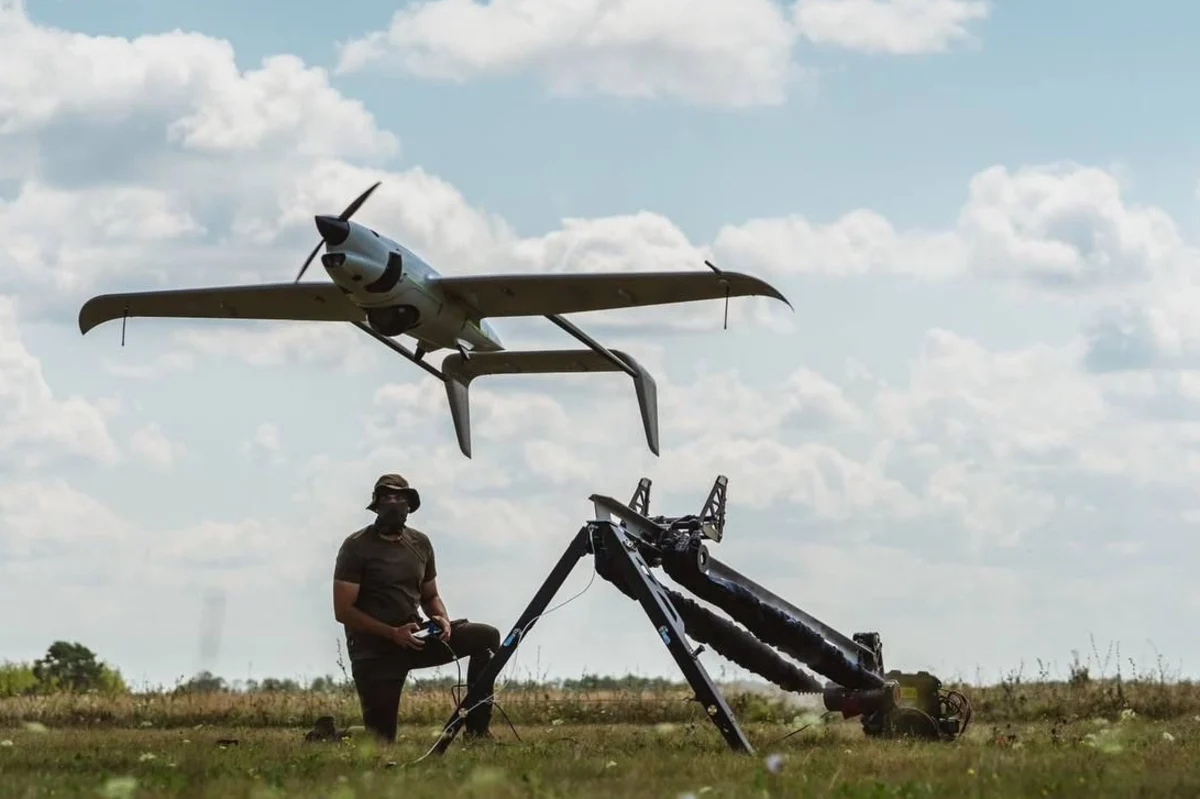
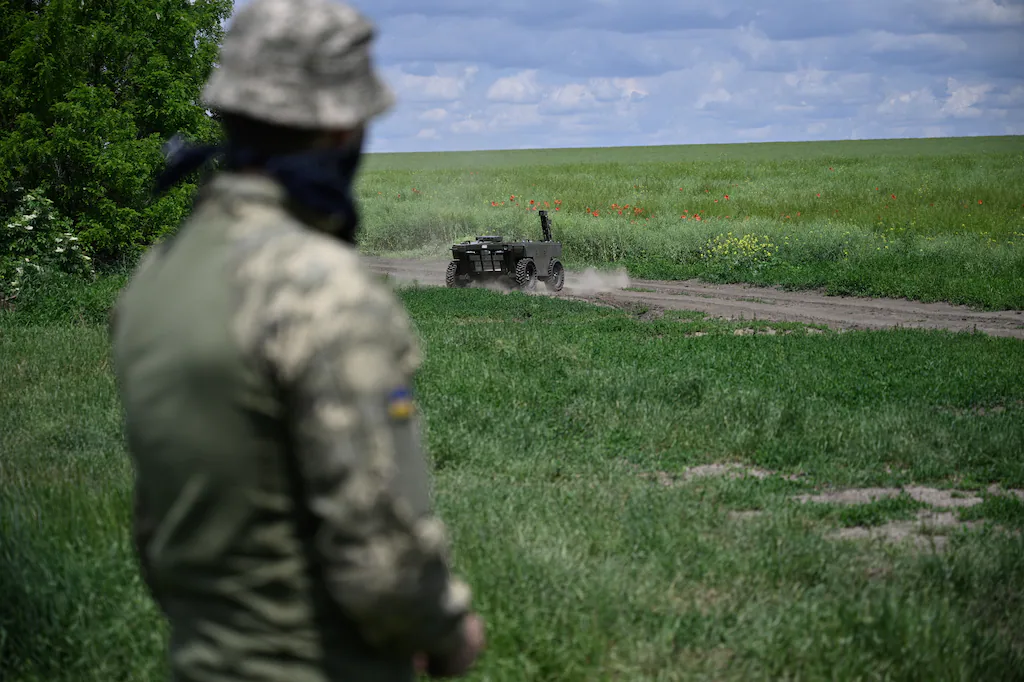
Ukraine already employs unmanned ground vehicles for military tasks, particularly logistics and evacuation. The Defence Ministry said Ukrainian troops conducted more than 25,000 such missions in August, a figure 3.3 times higher than in January. However, most ground robots currently in Ukrainian service remain controlled by human operators, commonly using Starlink links. The humanoid and other advanced designs displayed during Fedorov’s presentation are not generally in combat use in Ukraine today.
The proposed programme therefore extends beyond the systems now conducting transport and casualty-evacuation work. Fedorov said the planned ecosystem would draw on expertise in robotics, artificial intelligence, sensing and autonomous systems to develop machines capable of more complicated frontline tasks. He has framed the timing as important because, in his assessment, Russia can copy Ukrainian battlefield innovations and scale new weapons quickly through its larger military and industrial base.
Russia always thinks about new strategies, how to hack our frontlines. We need to be the first side to hack our frontlines.
Mykhailo Fedorov
To meet the six-month target, Fedorov said the initiative will not begin with a lengthy basic research cycle. Instead, it will invest first in companies that have already tested weapons or technologies and shown some commercial viability. He said several companies would participate at different points in the development chain, including suppliers of components, manufacturers assembling complete robots and software developers creating the systems to operate them.
Investment and development structure
According to a statement issued after the announcement, the Army of Robots will include a venture fund for investments in technology teams, defence-technology companies of its own and a research-and-development arm. Fedorov told Defense News that funding was available for the first companies involved, though he did not identify them. He said there would initially be two or three partner companies working in the programme’s selected areas.
The initiative’s development model calls for participants to identify a battlefield problem, find a technical approach and a team to pursue it, provide development resources, test the product with troops in operational conditions and expand production or use of systems that prove effective. Fedorov said the structure draws on the model of Ukraine’s Army of Drones programme, which he began in 2022 while serving as digital transformation minister. That programme opened the market to Ukrainian drone manufacturers, established government procurement and operator training, and contributed to the creation of the country’s first strike-drone units.
Now we are trying to build the same ecosystem for robots.
Mykhailo Fedorov
Robotics is one of three principal technology directions in the new initiative, Fedorov said. The other areas are cheaper anti-jet-Shahed missiles and AI strike drones and missiles. The latter priorities come as Ukraine enters another winter amid Russian aerial attacks and a reported shortage of air-defence interceptors. On the weekend of Fedorov’s announcement, Russian drones struck sites including kindergartens, university buildings, a large civilian hospital, a food market and several petrol stations in and around Kyiv, killing at least three people and injuring dozens during an aerial attack that continued for days.
The Army of Robots announcement follows Fedorov’s recent disclosure that he was forming a new defence company, with Palantir chief executive Alex Karp identified as its first investor. Fedorov said that company will begin with a corporate fund and could subsequently establish its own venture fund. For the robotics effort, he identified the pace of innovation and deployment as the central challenge, arguing that systems must reach troops quickly enough to reduce risks to infantry and retain a technological advantage over Russia.
We don’t have enough time. We need to achieve these results as soon as possible.
Mykhailo Fedorov