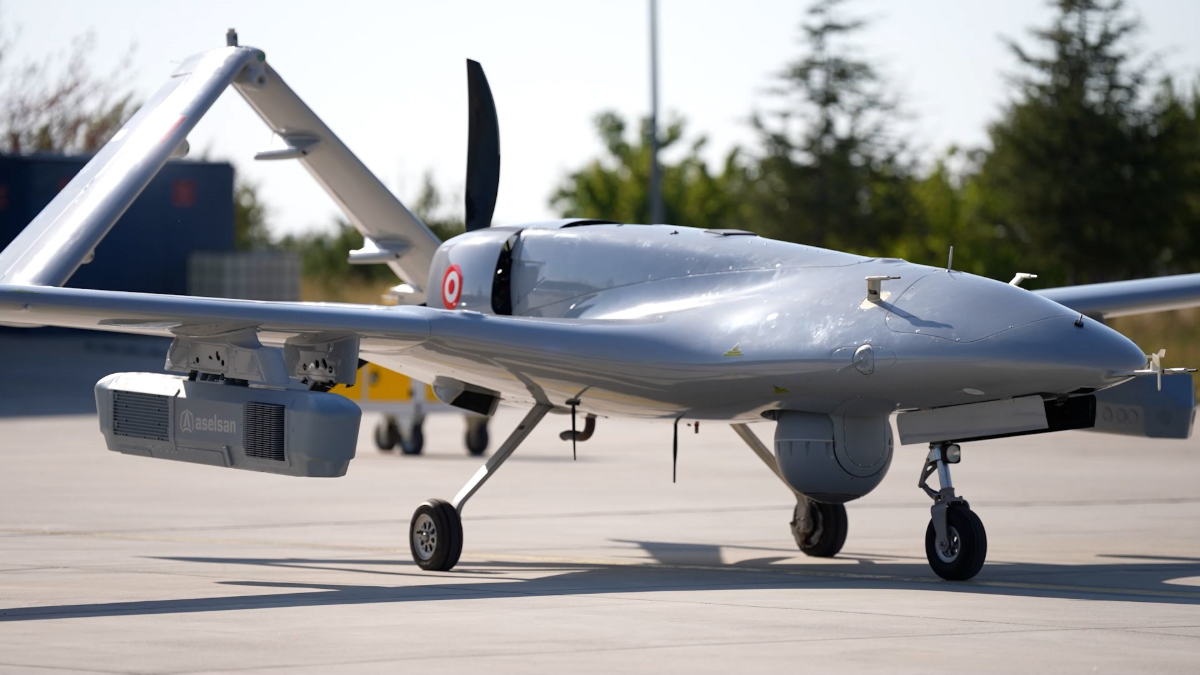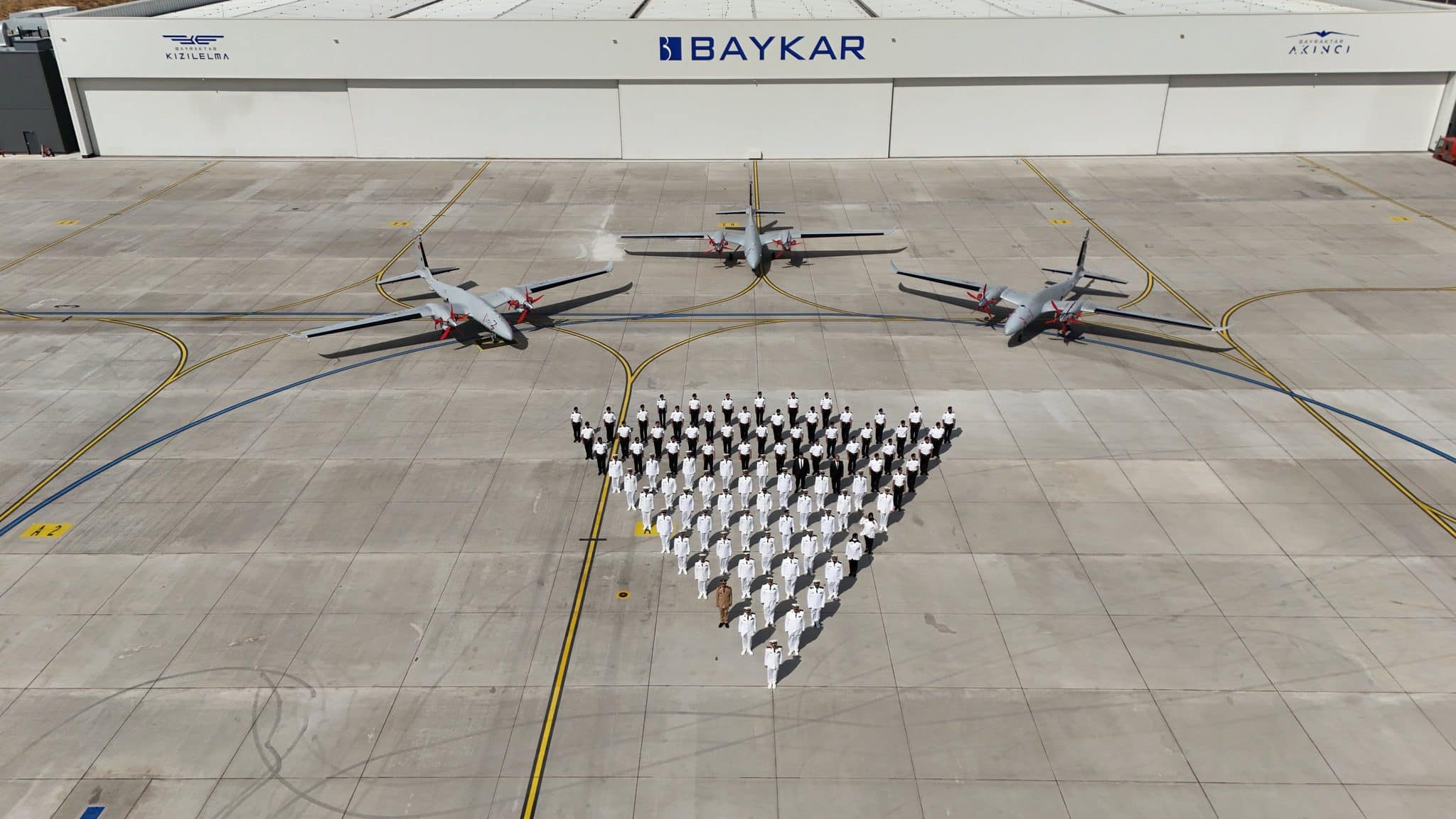
Fifteen pilots and 15 technicians from the Royal Saudi Naval Forces have completed Bayraktar AKINCI unmanned combat aerial vehicle training in Türkiye, Turkish manufacturer Baykar announced on September 25. The graduation is a step toward a naval role for the twin-engine UCAV under Saudi Arabia’s wider AKINCI procurement arrangement.
Baykar said the 30 Saudi personnel attended courses at its Çorlu Flight Training and Test Center. The group comprised 15 pilot trainees and 15 mechanical and electronic technician trainees, according to the company’s September 25 social-media announcement.
The manufacturer did not state when the Royal Saudi Naval Forces would begin operating AKINCI aircraft, nor did it identify the service’s intended missions. Official information on the number of aircraft, delivery schedule and final contract price has also not been released.
2023 agreement covered air force and navy
The training follows an AKINCI agreement signed during the Turkish president’s visit to Jeddah in July 2023. Baykar described that arrangement as Türkiye’s largest defence and aerospace export contract. It covers personnel from both the Saudi air force and navy, as well as training, technical support and logistics.
Media reports have put the agreement’s value at about $3 billion, but Baykar and Saudi authorities have not publicly confirmed the final price or disclosed batch quantities. The completion of a distinct naval training group indicates that the programme is progressing beyond its air-force component, while leaving the operational fielding plan unannounced.
Maritime surveillance and strike potential
AKINCI has been employed in combat operations and is operated by several countries for reconnaissance, surveillance and strike tasks. It has also demonstrated air-to-air engagement capability. For the Saudi naval service, the aircraft could be used for maritime surveillance and potentially for engagements against targets at sea, though Baykar has not confirmed Saudi mission sets or weapon plans.
Baykar’s published specifications list endurance of more than 24 hours, an operational altitude of 30,000 feet and payload capacity of up to 1,500 kg. In a maritime setting, such endurance could support extended patrols, contact tracking and the relay of information to ships or shore-based commanders, depending on the sensors and communications fitted to the aircraft.
The UCAV’s payload capacity also permits carriage of weapons larger than those typically associated with smaller tactical drones. The SOM stand-off cruise missile has been listed among AKINCI’s potential weapons, and the platform has undergone firing tests with Roketsan’s UAV-230 and UAV-300 supersonic missiles.
In a Black Sea test in September 2026, a UAV-300 launched from an AKINCI struck a maritime target at a distance exceeding 250 kilometres. The reported figure concerned the test engagement rather than a published maximum missile range. It nevertheless demonstrated a maritime-target strike at substantial stand-off distance, relevant to the potential naval employment of the UCAV.
The combination of long-endurance patrol capability and stand-off weapons could allow an aircraft to contribute to a recognised maritime picture before being employed as a strike platform if a target is identified and an appropriate weapon is available. AKINCI could also receive targeting information from other sources rather than detecting every target independently. Whether the Royal Saudi Naval Forces adopts either approach has not been disclosed.