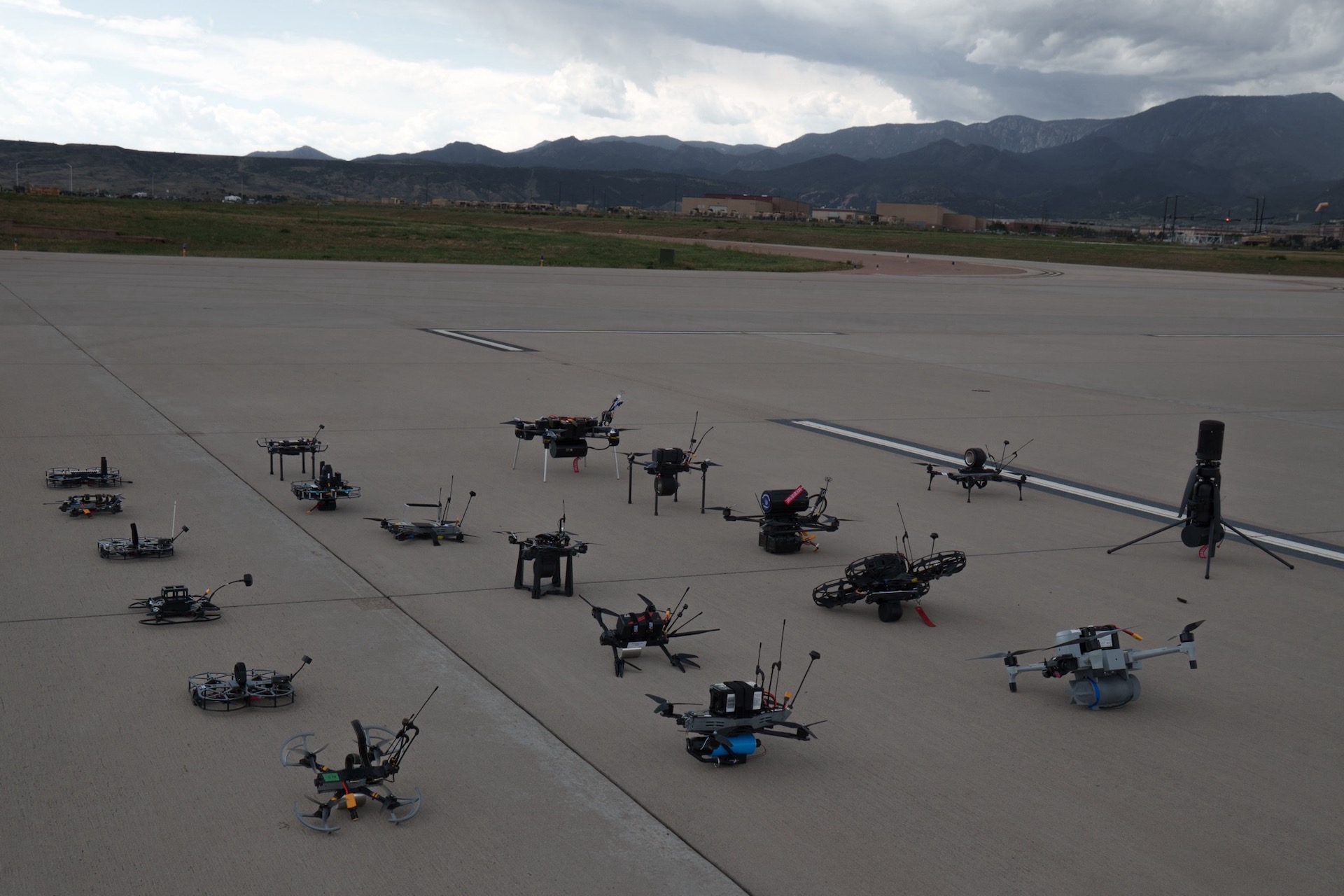
Defense Secretary Pete Hegseth has ordered the consolidation of nearly all Pentagon programs involving drones and autonomous systems under a new office that will report directly to Deputy Secretary of Defense Stephen Feinberg. The Direct Reporting Portfolio Manager for Unmanned Systems, known as DRPM-UxS, is intended to become the department’s single joint integrator for unmanned and autonomous-system programs.
A June 29 memorandum, made public Wednesday, gives the office broad responsibility for how the military develops, acquires, fields and sustains systems operating in the air, on the ground and at sea. Pentagon chief spokesperson Sean Parnell described unmanned and autonomous systems as “the most consequential battlefield innovation of this generation.” A director has not yet been named.
Broad portfolio, with major-program exceptions
The new portfolio includes small unmanned aircraft in groups 1 through 3, unmanned boats, ground robots and counter-drone systems. Its remit also extends to the artificial intelligence and swarming software used to guide those systems. Unmanned underwater vehicles will fall under joint oversight by the unmanned-systems manager and the Pentagon’s submarine portfolio manager.
The reorganization does not encompass the Pentagon’s major defense acquisition programs, which remain subject to a separate approval structure established by law. As a result, several large service-led efforts remain outside the new office’s portfolio, including the Air Force’s Collaborative Combat Aircraft and the Navy’s MQ-25 Stingray, MQ-4C Triton and medium unmanned surface vessel programs.
The memo does not spell out how the arrangement will affect unmanned-system programs already underway within the military services. But it places a large share of the department’s lower-cost and autonomous-system work under an office with authority that reaches across those services and their acquisition organizations.
Acquisition and budget authority
DRPM-UxS will serve as milestone decision authority for programs in its portfolio, determining whether systems advance through development. On unmanned-system acquisition issues, its authority will rank behind only Hegseth and Feinberg. The office may act as the top buying official for its own contracts, direct the services to shift funding between programs through the Pentagon comptroller, and halt a system before it reaches the field.
The office is also set to centralize the department’s interactions with Congress on drone matters. Pentagon organizations will be required to clear their drone-related plans with DRPM-UxS before engaging lawmakers. Separately, the memorandum designates the Defense Innovation Unit—the department’s link to commercial technology firms—as the new portfolio’s single point of contact.
The change comes as the Pentagon seeks a major expansion in autonomous-system spending. Its latest budget request includes $53.6 billion for autonomous drone platforms, part of what department officials have called an unprecedented commitment to drones and counter-drone capabilities.
Existing organizations move under the office
Two existing organizations will move beneath the new manager. Joint Interagency Task Force 401, which has led work against small aerial drones, will broaden its mission to counter unmanned threats in every domain. The Defense Autonomous Warfare Group, the Pentagon effort focused on mass-producing inexpensive drones, will become a subordinate element of DRPM-UxS. The memo says neither organization’s staff nor positions will be relocated.
The memorandum exempts the office’s programs, positions and personnel from Pentagon hiring freezes, workforce reductions and reductions in force. Its eventual director will also have direct-hire authority. After a director is appointed, the department plans to begin hiring within 30 days, deliver an organizational plan within 60 days and produce a full list of transferring programs within 90 days.
The unmanned-systems office is the widest-ranging of several direct-reporting portfolio managers established under Feinberg as Hegseth’s team seeks to bring priority programs closer to senior Pentagon leadership. It is also part of Hegseth’s broader push to accelerate weapons delivery. That effort has drawn scrutiny: a Government Accountability Office report released Tuesday found that the Pentagon’s independent testing office, reduced from 126 civilian positions to 30 the previous year, was monitoring 15 of roughly 110 active programs using one fast-track acquisition pathway.