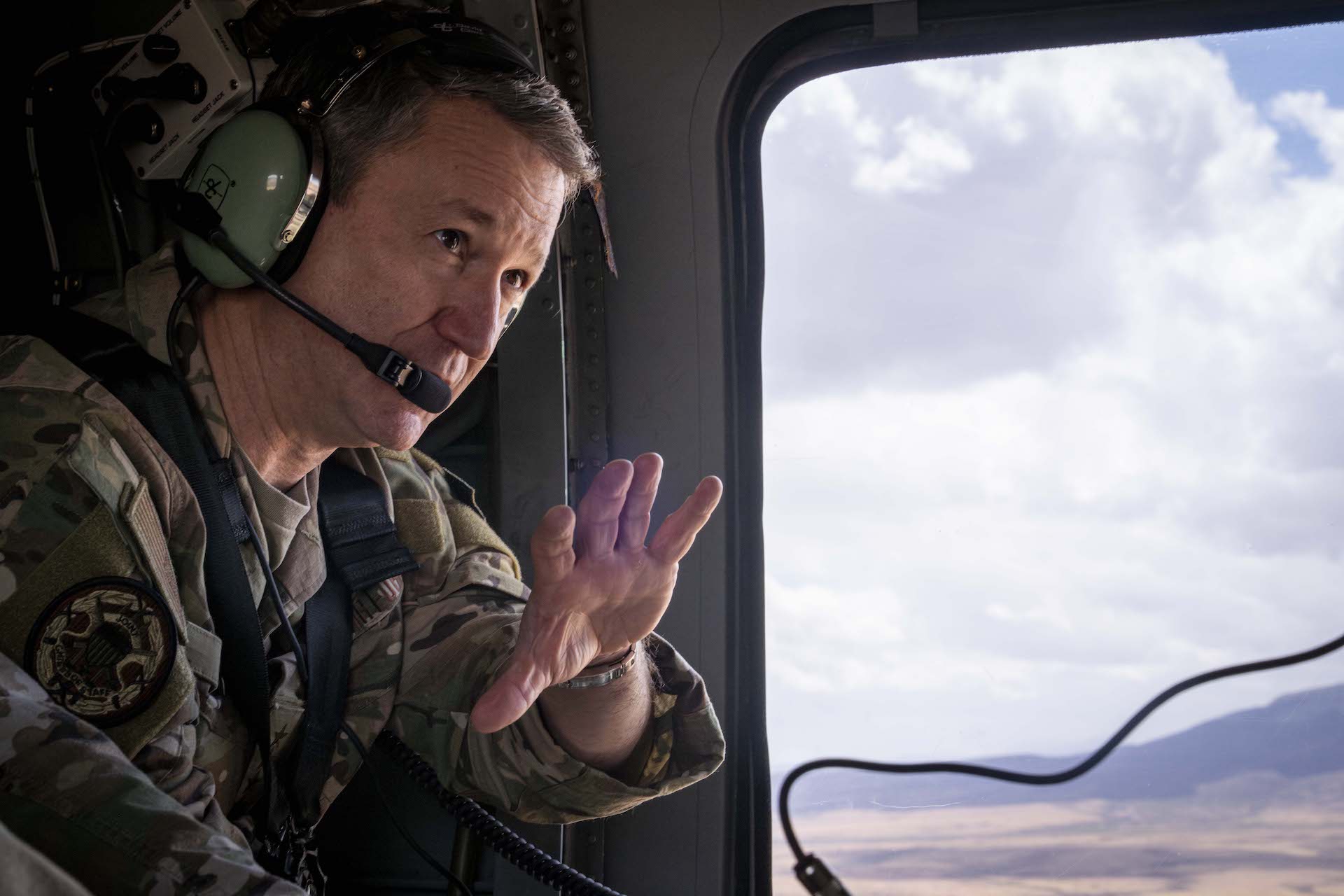
The era of AI-enabled drone warfare has arrived, and U.S. forces should expect autonomous systems to hunt, track and disrupt them in future conflicts, Joint Chiefs Chairman Gen. Dan Caine said during a keynote address at the Air Force Association’s Air, Space and Cyber Conference.
Caine pointed to developments in Ukraine and a recent U.S. Central Command rescue operation near Oman as evidence that unmanned systems and artificial intelligence are already changing military operations. His message was that the joint force must field and adapt capabilities quickly enough to give service members the tools needed before a future fight begins.
Ukraine shows the tactical impact of low-cost autonomy
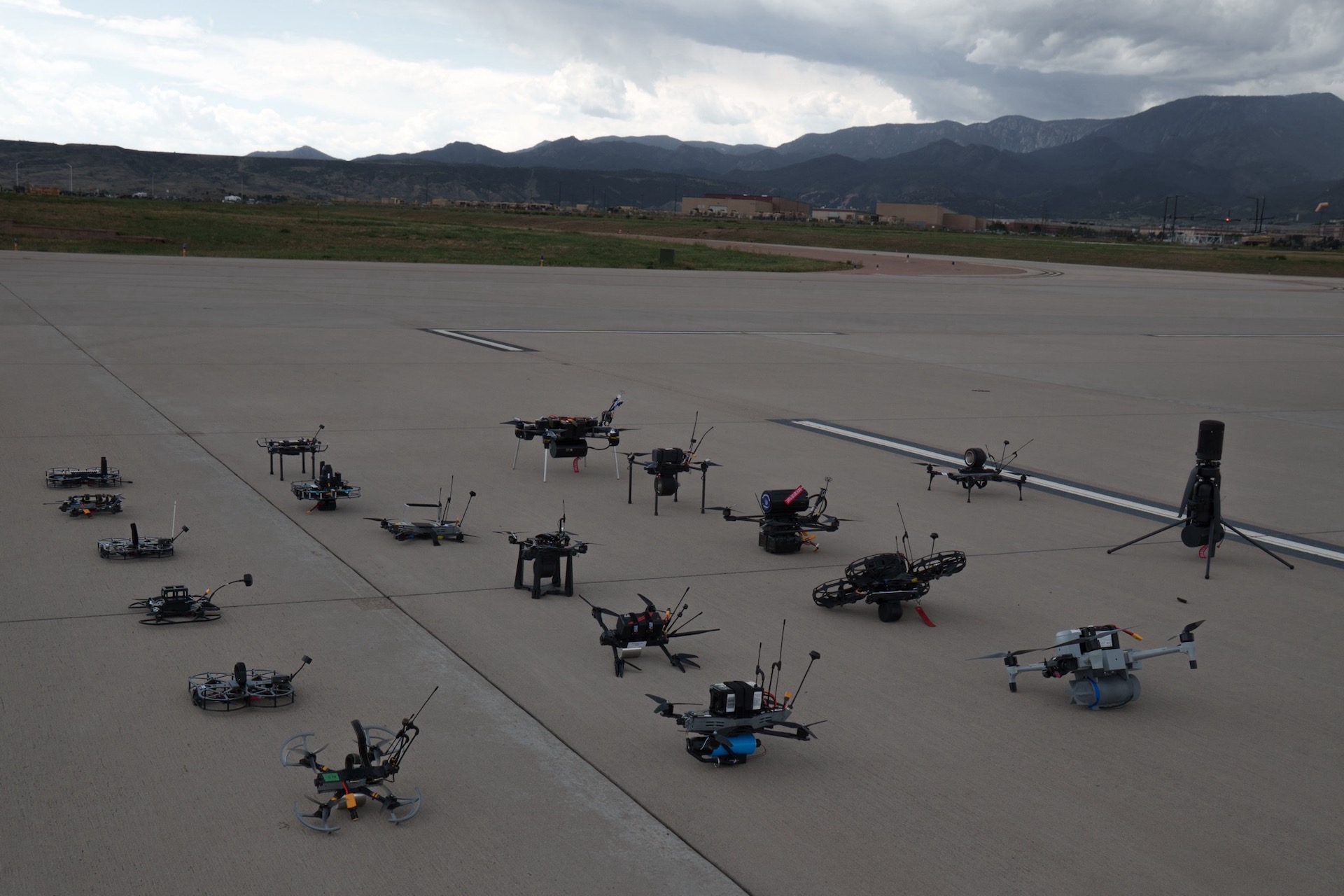
In the Russia-Ukraine war, Caine said first-person-view drones are operating in heavily contested electromagnetic environments. Some are using AI-enabled computer vision to continue toward targets after losing GPS access or control links, an example of how software and autonomy can provide small units with affordable precision at the tactical edge.
“In Ukraine, we see … first-person view drones operating in heavily contested [electromagnetic interference] environments, some now using AI-enabled computer vision to continue to drive towards targets even when there’s no GPS or the links are cut. That gives small units affordable precision and shows how quickly software and autonomy are changing what is possible at the tactical edge. And the results are stark,”
Gen. Dan Caine
Caine cited the reported life expectancy of some newly arrived Russian recruits at certain frontline locations as little as 20 to 30 minutes. He characterized that outcome as a consequence of low-cost precision weapons being fielded rapidly, adapted quickly and scaled across the battlefield. The cost of lethal exchange, he said, is declining day by day, raising questions about the future of close air support.
A force designed to fight while hunted and jammed
For U.S. formations, Caine said the operational assumption must now be that autonomous systems will pursue them, electronic warfare will jam them across the spectrum, and adversaries will track them in real time. Preparing for that environment requires the joint force to generate and deliver lethality at scale through what he called an agile, optimized high-low mix of combat capabilities.
“We have to assume from now on that our formations will be hunted by autonomous systems, jammed across the spectrum, and tracked in real time. And we have to transition the joint force to be prepared to fight and win our future wars by generating and delivering lethality at scale with an agile, optimized, high-low mix of combat capabilities to give the young members of the 2.8 million member all-volunteer joint force the tools that they need before they need them,”
Gen. Dan Caine
The chairman described advances in AI and cyber as the leading factor accelerating changes in warfare. In his assessment, future advantage will belong to the force that can see, understand, decide and act first while also functioning as a learning organization. He said the joint force is already applying AI daily to move faster and improve decisions through active adaptation on battlefields.
Task Force 59 rescue illustrates operational use
Caine also highlighted a June rescue of two Army Apache helicopter pilots who went down near Oman in the Strait of Hormuz during the conflict with Iran. Task Force 59, CENTCOM’s unmanned joint maritime unit, deployed an autonomous Corsair surface vessel built by Saronic to help find and recover the two service members.
According to Caine, the rescue reflected years of work by Task Force 59 to test, integrate and operationalize unmanned systems and AI in a demanding operating environment. He credited sailors and other joint-force personnel managing networks of unmanned systems over thousands of miles of water, while AI processed large volumes of data into a maritime picture that enabled the recovery operation.
“What made this [successful rescue] possible was a bunch of entrepreneurial sailors and members of the joint force on watch floors at piers, managing networks of unmanned systems across thousands of miles of water, and using AI to turn massive amounts of data into a crisp, clear, perfect maritime picture that allowed us to go grab those two soldiers in the water,”
Gen. Dan Caine
Together, the examples underscored Caine’s argument that autonomy is not solely a prospective capability. AI-enabled drones are affecting tactical combat in Ukraine, while unmanned maritime systems and AI-supported data processing have contributed to real-world U.S. operations. The challenge for the joint force, he said, is to translate those lessons into capabilities that can survive and prevail in increasingly contested future wars.