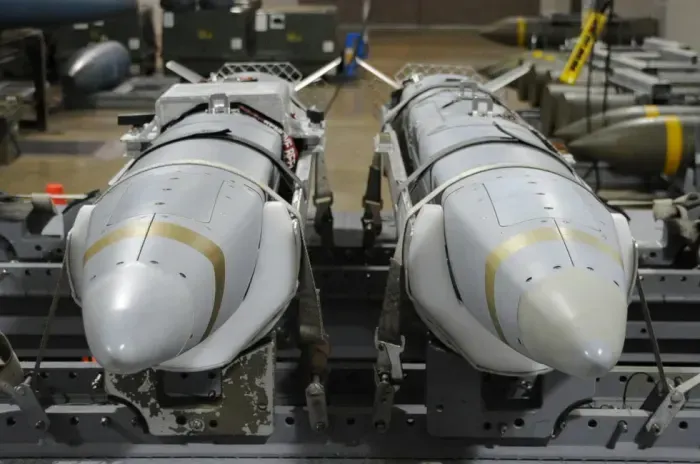
Photographs said to have been taken in Iran appear to show wreckage from a Raytheon ADM-160 Miniature Air-Launched Decoy, or MALD, an expendable U.S. system designed to deceive and distract enemy air defenses. The apparent identification is credible based on visible components in the imagery, including markings associated with Raytheon, but neither the debris’s provenance nor the circumstances in which it was lost have been independently established.
Iranian sources reported that the debris was recovered after an interception earlier in the day. No confirmed recovery location, flight route, launch aircraft or independently substantiated account of the event has emerged. Those gaps are significant: Iranian state and military media have a record of making claims during periods of conflict that later prove unverified or exaggerated. The released images therefore require independent scrutiny even if the apparent MALD identification is plausible.
One visible marking cited in assessments of the images is the Commercial and Government Entity, or CAGE, code 15090, which is assigned to Raytheon. The code reportedly appears on tail fins and other remnants. That detail supports the conclusion that the photographed material is linked to Raytheon, but it does not by itself establish the precise ADM-160 version, where the system was recovered, who launched it, or whether it was brought down by Iranian forces.
The appearance of the debris comes amid indications that the United States and Israel continue to collect information on Iran’s integrated air-defense and command-and-control structure. Decoys and other deception systems can be used to stimulate radar and missile units, enabling surveillance platforms to collect the signals emitted by those systems. Such activity can help build or refresh an electronic order of battle: a detailed picture of air-defense locations, operating characteristics and command relationships that could be needed for future air operations.
Iranian reporting separately claimed the destruction of an Orbiter-type reconnaissance drone over the Strait of Hormuz before imagery of the apparent MALD wreckage emerged. It remains unclear whether the drone report and the reported recovery of decoy debris concern the same incident or represent two separate losses. The available reporting does not establish a connection between the two claims.
A decoy built to imitate more valuable targets
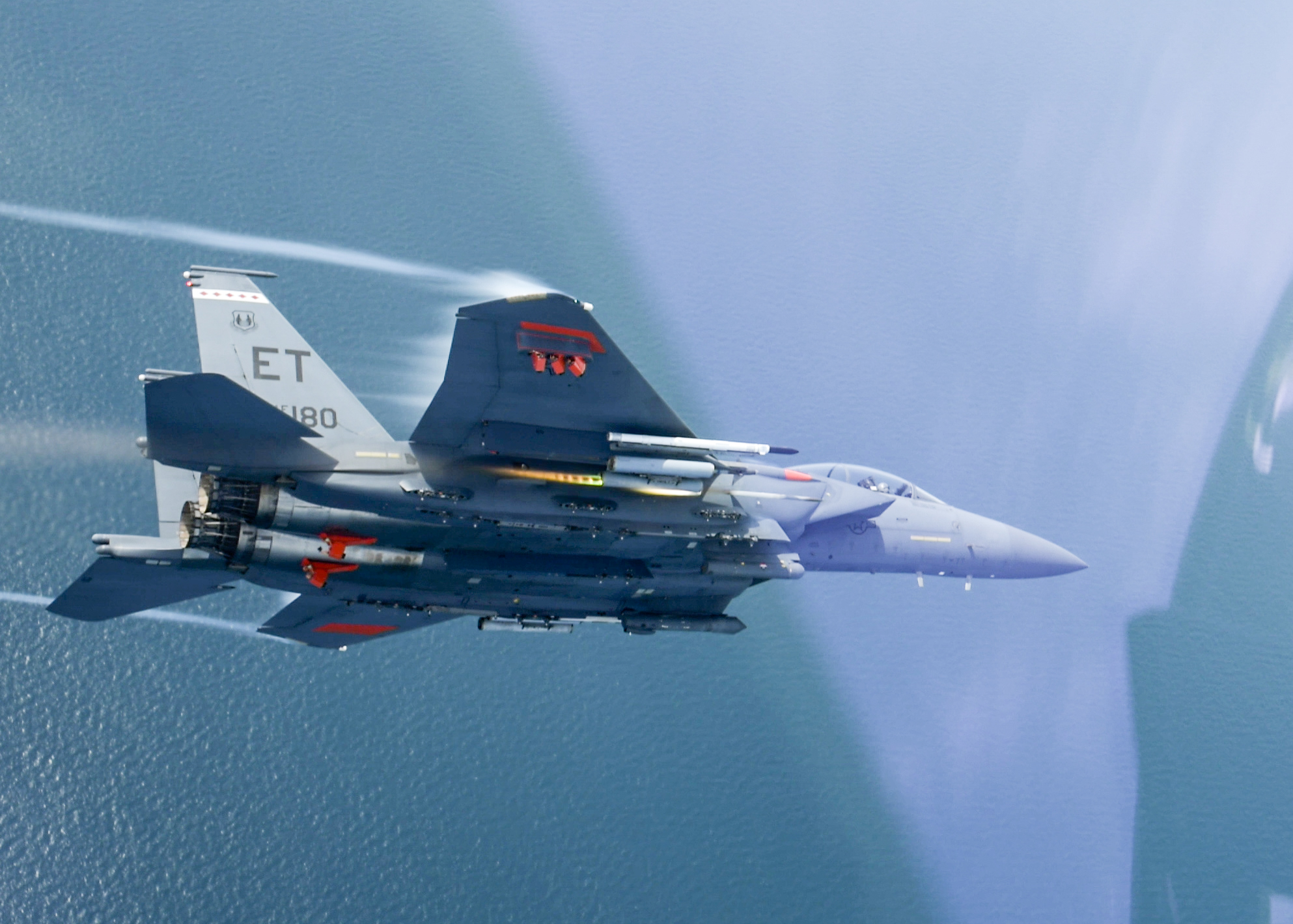
MALD is an expendable store launched from another aircraft. Instead of carrying a conventional warhead, it carries equipment intended to reproduce the radar signature of particular aircraft or standoff weapons. The system can consequently create additional tracks on an adversary’s radar displays, potentially presenting air-defense operators and surface-to-air missile crews with targets that appear credible and worth engaging.
The decoy can be programmed to fly complex routes intended to better resemble the aircraft or weapon it is emulating. In combat, that capability can shift defensive attention away from crewed aircraft and standoff weapons, complicate an adversary’s assessment of an incoming force, and prompt air-defense units to activate. An activated radar or associated command-and-control system can reveal information about its location and operating characteristics to platforms collecting electronic signals.
Raytheon received the U.S. Air Force development contract for the current-generation ADM-160B in 2003. The B-model is substantially different from the original ADM-160A, whose development began in the late 1990s under Teledyne Ryan, later Northrop Grumman. The subsequent design has a more powerful turbojet engine and greater range than the earlier version.
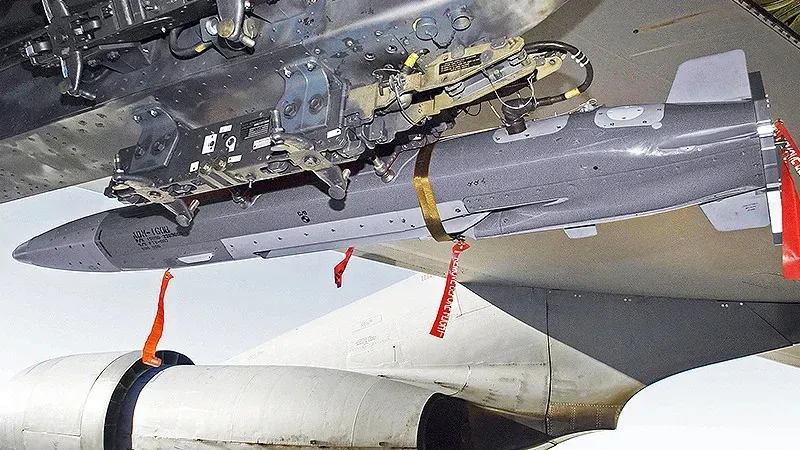
The ADM-160B is approximately 6.5 feet long and has a deployed wingspan of roughly 5.6 feet. It is powered by a small turbojet and has an operational range of around 550 miles. Publicly available imagery of the Iranian debris is not sufficient to determine which member of the ADM-160 family, if any, was involved in the reported event.
A related model, the ADM-160C MALD-J, adds electronic-warfare capabilities. It can conduct stand-in jamming and other active electronic attacks against air-defense nodes while retaining the family’s deception role. Further improved MALD variants have been developed, and the U.S. Navy has also acquired versions of the system. There is no basis in the available imagery, however, to identify the reported Iranian wreckage as a MALD-J or any other particular variant.
Possible role in assessing Iranian defenses
In the Strait of Hormuz context, a MALD could be used in its basic protective role, drawing Iranian defensive attention toward the decoy and away from allied aircraft or weapons. It could also operate more independently as a probe, triggering radar, missile and command-and-control responses that reveal the positions and condition of Iranian air-defense systems. Airborne surveillance platforms could then collect the resulting signals data without exposing a person or a higher-value intelligence platform to the same level of risk.
That type of employment could be particularly relevant during a period in which kinetic activity has slowed but has not stopped. A decoy made to resemble something more threatening could prompt a reaction from Iranian air defenders without necessarily representing an unprecedented escalation in an environment where strikes and other military actions are still occurring. Information generated by such activity could support planning for later operations and help update assessments of Iranian defensive readiness.
Iran has characterized the reported event as a shoot-down. If Iranian forces did engage the object and it was a MALD, the incident would represent an air-defense interception of a U.S. deception system. A successful engagement is only one possible explanation for the appearance of wreckage, however. Because MALDs are designed to be expendable, a decoy could also be lost through malfunction or after completing its programmed route and exhausting its fuel. The debris alone does not identify the aircraft that may have launched it.
The ADM-160 family has been integrated with a broad range of U.S. aircraft. During U.S. operations against Iran, U.S. Air Force A-10C Thunderbolt II attack aircraft have been observed returning from the theater with markings depicting MALD missions. That observation indicates that the type has been used in the wider operational environment, but it does not establish that an A-10C launched the decoy represented by the reported Iranian wreckage.
The possibility that the United States had used MALDs against Iran had already attracted attention after Operation Midnight Hammer, the U.S. strike on Iranian nuclear facilities in June 2025. U.S. officials said that operation involved a complex deception plan using aircraft and other decoy measures intended to prevent Iran from determining the true direction and composition of the attack. Those descriptions strongly pointed to MALD as a potential element of the broader deception architecture, although officials did not publicly identify a specific MALD employment.
The opening hours and days of Operation Epic Fury also likely involved MALD employment, according to the source reporting. ADM-160s have additionally been used extensively by Ukraine against Russia, principally to provoke air-defense systems into radiating and to assist cruise-missile penetration. Those uses illustrate how an expendable decoy can compel an adversary to choose whether to expose a system, commit an interceptor, or ignore a possible target.
Unclear sightings and a continuing operational backdrop
The apparent MALD debris emerged alongside online reports of unusual objects seen over Iran, including videos and eyewitness accounts from Tehran. The authenticity of the footage and the nature of the objects cannot currently be determined. The sightings should therefore be treated cautiously and cannot be linked to the reported decoy wreckage on the available evidence.
The uncertainty reflects a broader environment in which low-end drones, decoys and other deception systems may be used not only to stimulate air defenses but also to distract populations or assess how information leaves a denied area. Such possibilities may be relevant to the reported sightings, but there is no confirmation that the objects seen over Iran were connected to military activity, to MALD operations, or even that the circulating footage is authentic.
The reported incident also coincides with renewed discussion of potential U.S. military action. Iran’s central military command said Sunday that it had received information indicating that Washington was preparing to resume attacks. President Donald Trump told Fox News that he was in a “deciding mode” and was considering further military action alongside economic pressure and a deal. He had told Axios the previous week that he was approaching a major decision on whether to restart large-scale military operations, while U.S. forces in the region would remain at their existing levels through the end of the year.
Iranian officials have said that a renewed U.S. attack would trigger retaliation against American forces and interests across the region. At the same time, Qatar and Pakistan are pursuing diplomatic efforts intended to restart negotiations. In that setting, maintaining current intelligence on Iran’s air-defense network would be important for any potential air campaign, especially if Iranian capabilities have been repaired, relocated or otherwise reconstituted since earlier operations.
The source reporting notes that maintaining a detailed electronic order of battle can involve assets operating in space, in the air and under the sea. Reports have described Israel’s RA-01 stealth flying-wing drone over Iran, while the United States operates the RQ-170 and RQ-180, among other known penetrating aircraft capable of collecting relevant information. These reported sightings and known capabilities do not establish a connection to the alleged MALD loss, but they illustrate the range of assets that may contribute to air-defense intelligence collection.