The U.S. Air Force intends to field at least 500 Collaborative Combat Aircraft, or CCAs, by 2032, while building an equal-sized fleet of Massed Modular Aircraft drones intended to take on missions now performed by MQ-9 Reapers. Secretary of the Air Force Troy Meink announced the updated goals during a keynote address at the Air & Space Forces Association’s 2026 Air, Space & Cyber Conference.
The plans represent substantial growth from the service’s most recently stated targets. In June, when the Air Force announced production orders for General Atomics’ FQ-42 and Anduril’s FQ-44, Meink said the program was on a path to procure more than 150 combat-capable CCAs by the end of the decade. The Air Force had previously discussed an initial CCA fleet of between 100 and 150 aircraft, though then-Secretary Frank Kendall had outlined a longer-term ambition in 2023 to acquire at least 1,000 CCAs over the life of the program.
Vengeance and Fury enter production
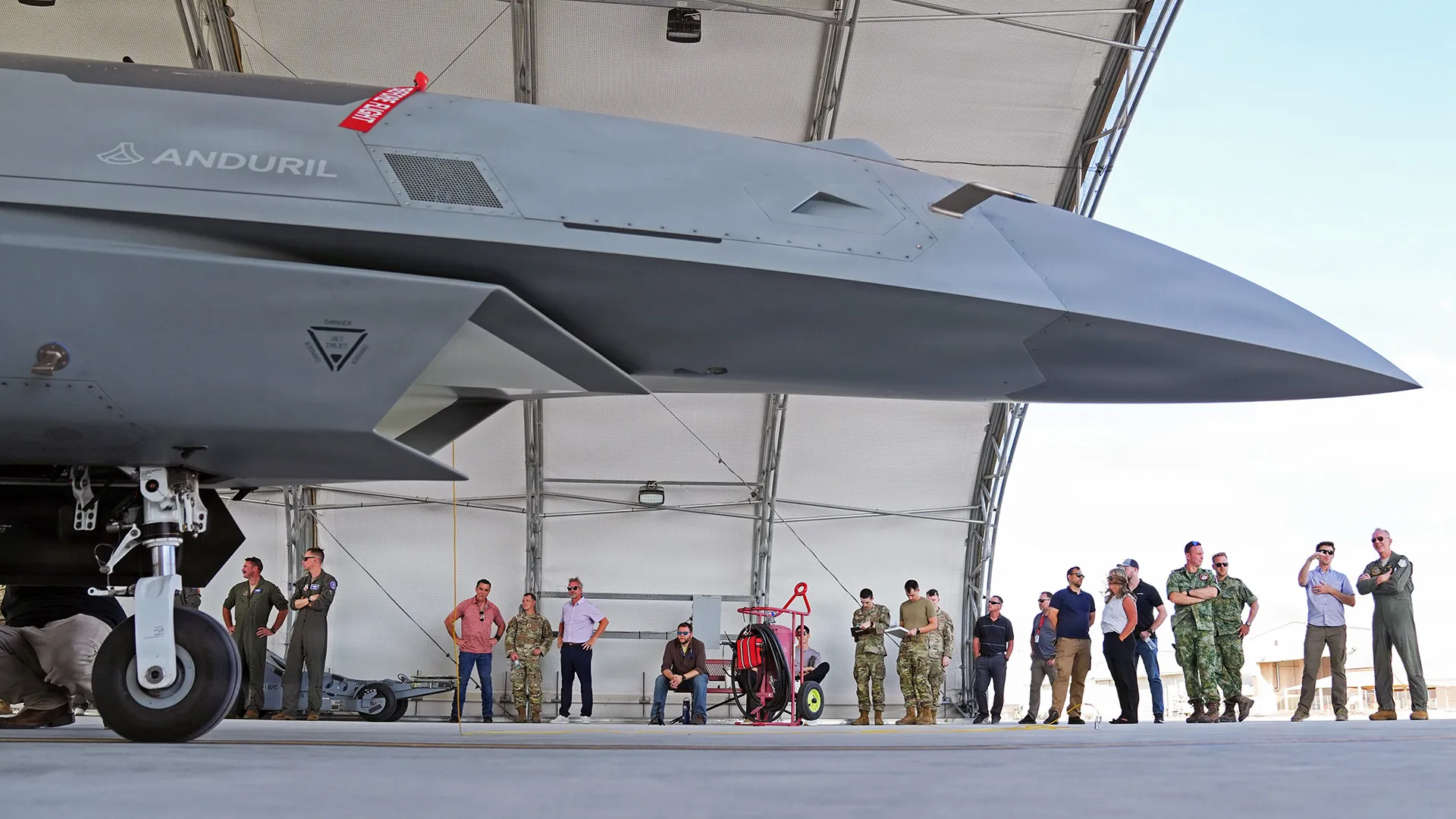
Meink also confirmed the official names for the first CCA designs entering production. The General Atomics FQ-42 will be called Vengeance, replacing the company’s earlier Dark Merlin name, while Anduril’s FQ-44 will be known as Fury. Both aircraft are part of Increment 1, the first phase of the CCA program, and Meink said the first examples are already coming off assembly lines.
“They’ll be performing many of the same missions that we do with manned fighters today,” Meink said of the FQ-42 and FQ-44. At least one further CCA increment is planned, potentially opening the way for additional aircraft types. The Air Force has not said how the 500-aircraft objective will be apportioned, but the later increment could be included in that total.
During a question-and-answer session following his speech, Meink said the Air Force could potentially manufacture more CCAs than its 500-aircraft goal, but that affordability could become the limiting factor. The program was intended from the outset to produce comparatively simple aircraft rapidly and at lower cost, he said. Unit prices for the FQ-42 and FQ-44 have not been disclosed; the service has previously targeted a cost of roughly $20 million per aircraft once full-rate production begins.
The service is still developing the operational model for the aircraft, including how they will be deployed, launched, recovered, supported and used tactically. Meink highlighted the Air Force’s Experimental Operations Unit, established to help develop that foundation. The unit led a new round of operational testing involving YFQ-42 and YFQ-44 prototypes at Creech Air Force Base, Nevada, in July, and supported a similar exercise at Edwards Air Force Base, California, in April.
“Getting them into these developmental kind of operational units, so they can start experimenting with that – familiarity breeds confidence, right?” Meink said. The Air Force has framed CCAs as a means of adding capability and capacity in contested environments. When the production contracts were announced, Air Force Chief of Staff Gen. Ken Wilsbach said the aircraft would change how the service projects power and generates mass in such conditions.
A parallel replacement effort for Reaper missions
Alongside the fighter-focused CCA effort, the Air Force now aims to field 100 MMA drones in 2029 and 500 by 2032. Meink said the aircraft are intended to cost less than CCAs and a fraction of the price of current manned aircraft. The service has cited an approximate $10 million unit cost for the MMA program, whose planned fleet has also expanded from a previously disclosed target of at least 180 airframes.
The MMA aircraft are expected to perform the broad strike and intelligence, surveillance and reconnaissance missions now associated with the MQ-9A Reaper. The program formally began in July. Meink said operations against Iran earlier this year, known as Epic Fury, underscored the value of ISR and strike platforms, including MQ-9s and ULTRA aircraft. He described MMA as an effort to apply those lessons through affordable, attritable, long-range strike systems that can be fielded at scale.
The initiative follows Reaper losses during operations against Iran, as well as further attrition and deliberate divestments in recent years. The Air Force had 135 MQ-9s in inventory as of May, with additional losses reported afterward. General Atomics has proposed its Wildfire design as a Reaper successor, and other companies are expected to compete for the MMA requirement. If the service meets both 2032 objectives, it will have added at least 1,000 new uncrewed aircraft across the CCA and MMA programs, reshaping its combat-drone force structure.