The U.S. Navy is seeking industry concepts for a containerized, low-cost interceptor system intended to counter cruise missiles and attack drones without requiring permanent changes to the warships that carry it. The effort, called the Naval Affordable Interceptor, is the first system planned for procurement through the Navy’s Portfolio Acquisition Executive Munitions Rapid Capability Cell, according to a request for white papers released Wednesday.
The concept calls for a container launcher able to carry at least 60 missiles. The Navy wants the system to be installed aboard a host ship without permanent modifications, a requirement that could allow it to be added to vessels as needed. Companies responding to the request must be capable of producing 500 interceptors per year and of operationally deploying the system within 12 months of an award.
A response to magazine-depth pressure
The request reflects the Navy’s effort to address the cost and capacity challenge posed by massed, low-cost threats. Iran and its proxies have fielded such missiles and one-way attack drones since 2023, creating what the white paper describes as “an unfavorable cost and magazine-depth problem for traditional air and missile defense.”
Since Red Sea engagements began in 2023, Navy ships have used the Standard Missile family of interceptors against lower-cost Iranian attack drones. The service views those interceptors as valuable for a potential conflict with China, while its ship-based options for engaging drones beyond the range of close-in weapon systems have been limited. Affordable interceptors are being pursued as one potential way to improve that exchange.
The Navy has already fielded some dedicated counter-unmanned aerial system missiles on a select number of Arleigh Burke-class guided-missile destroyers, including RTX’s Coyote and Anduril’s Roadrunner. L3Harris has also announced that the Navy will procure its VAMPIRE counter-UAS system, though the system’s deployment scheme was not specified. Littoral Combat Ships equipped with Hellfire modules were upgraded in 2024 to target and shoot down drones, albeit at limited range.
Containerized capability for the fleet
The proposed installation approach aligns with a broader Navy focus on using containers to bring offensive and defensive weapons, sensors and electronic-warfare capabilities to ships. Payload delivery systems were initially deployed aboard Littoral Combat Ships to increase their firepower. Similar systems placed on the open decks of lightly armed warships or on helicopter decks could provide additional protection for vessels, according to the request’s context.
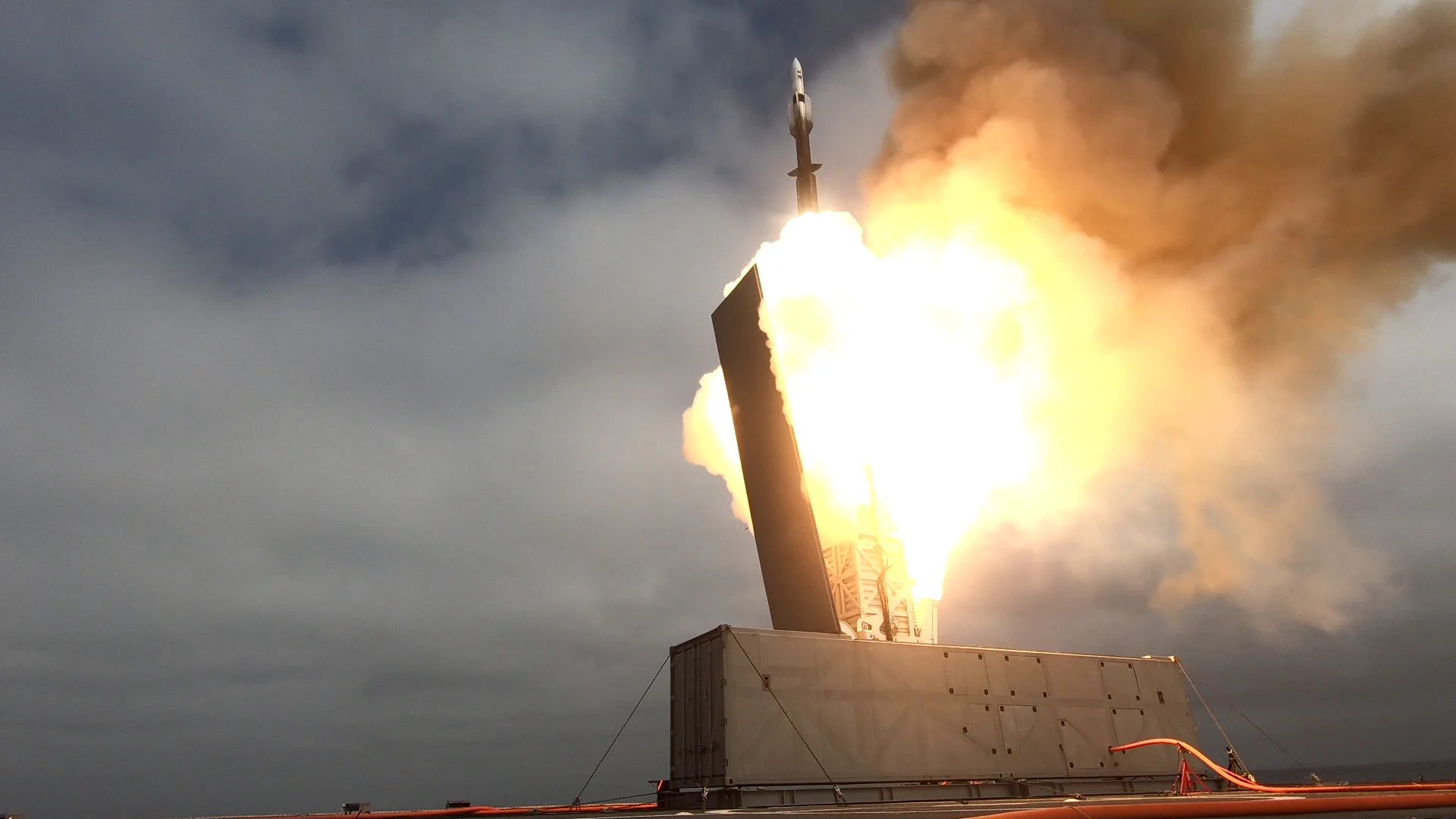
A Navy photograph from October 2023 showed USS Savannah firing an SM-6 from a Lockheed Martin Mk 70 containerized missile launcher, illustrating the service’s use of containerized launch concepts. The Naval Affordable Interceptor would apply that general approach to a much larger loadout of low-cost defensive weapons intended for cruise-missile and drone threats.
The planned system is expected to supplement the Navy Modular Missile, the service’s intended replacement for legacy Standard Missiles. Like the affordable-interceptor effort, the modular missile program is intended to reduce costs and tailor weapons to aerial and surface threats. It is also planned to accommodate a low-cost interceptor sought by the Missile Defense Agency for ballistic- and hypersonic-missile defense. The Navy said further Naval Affordable Interceptor concept requests are anticipated.