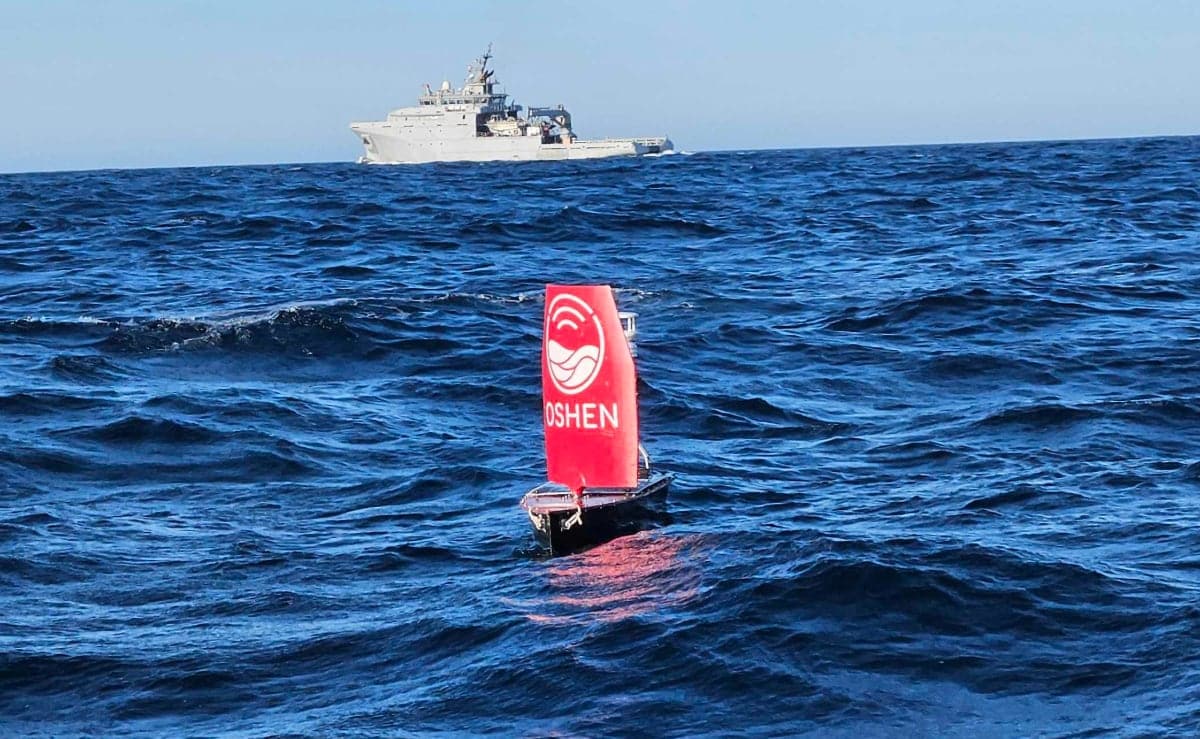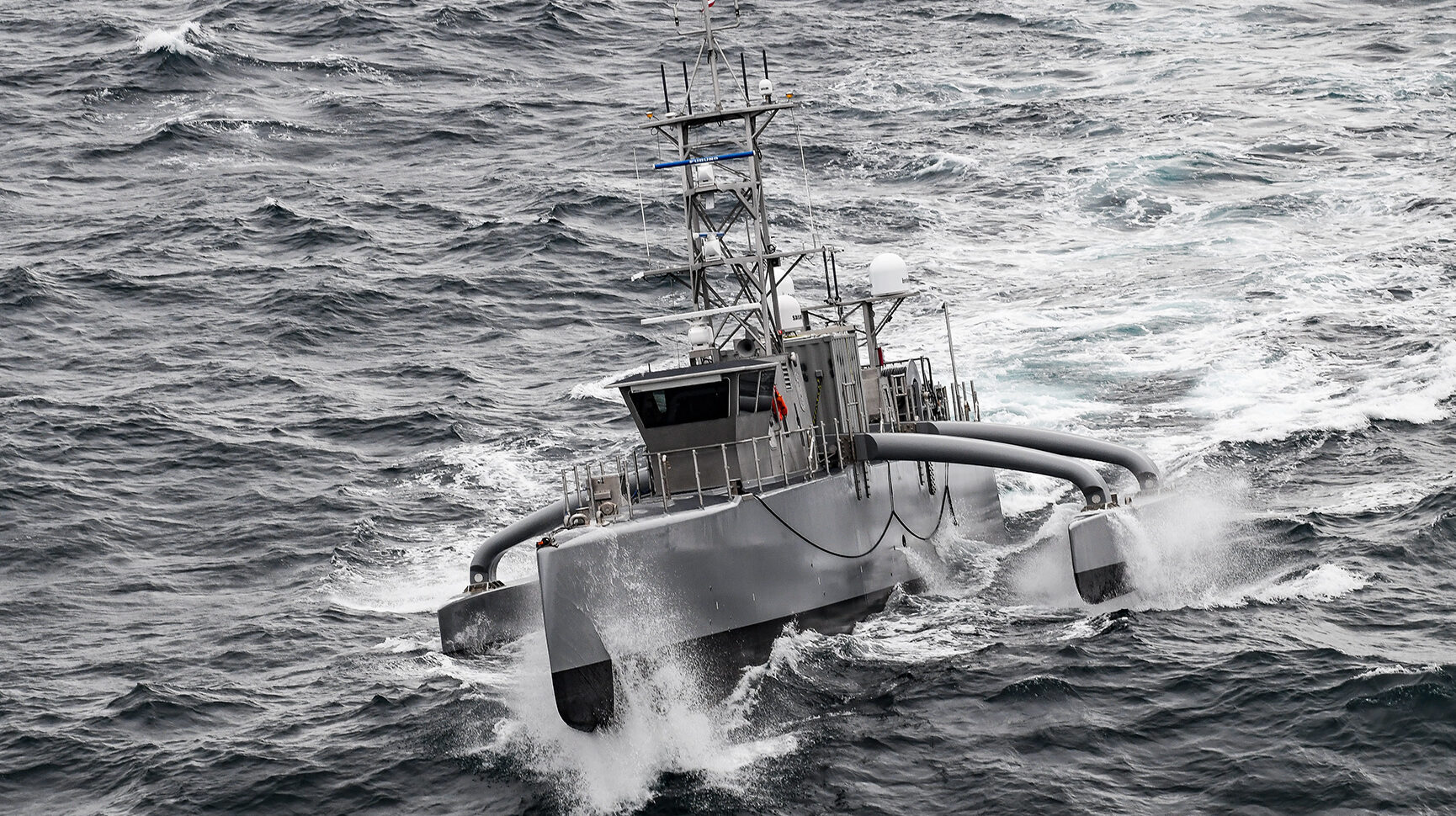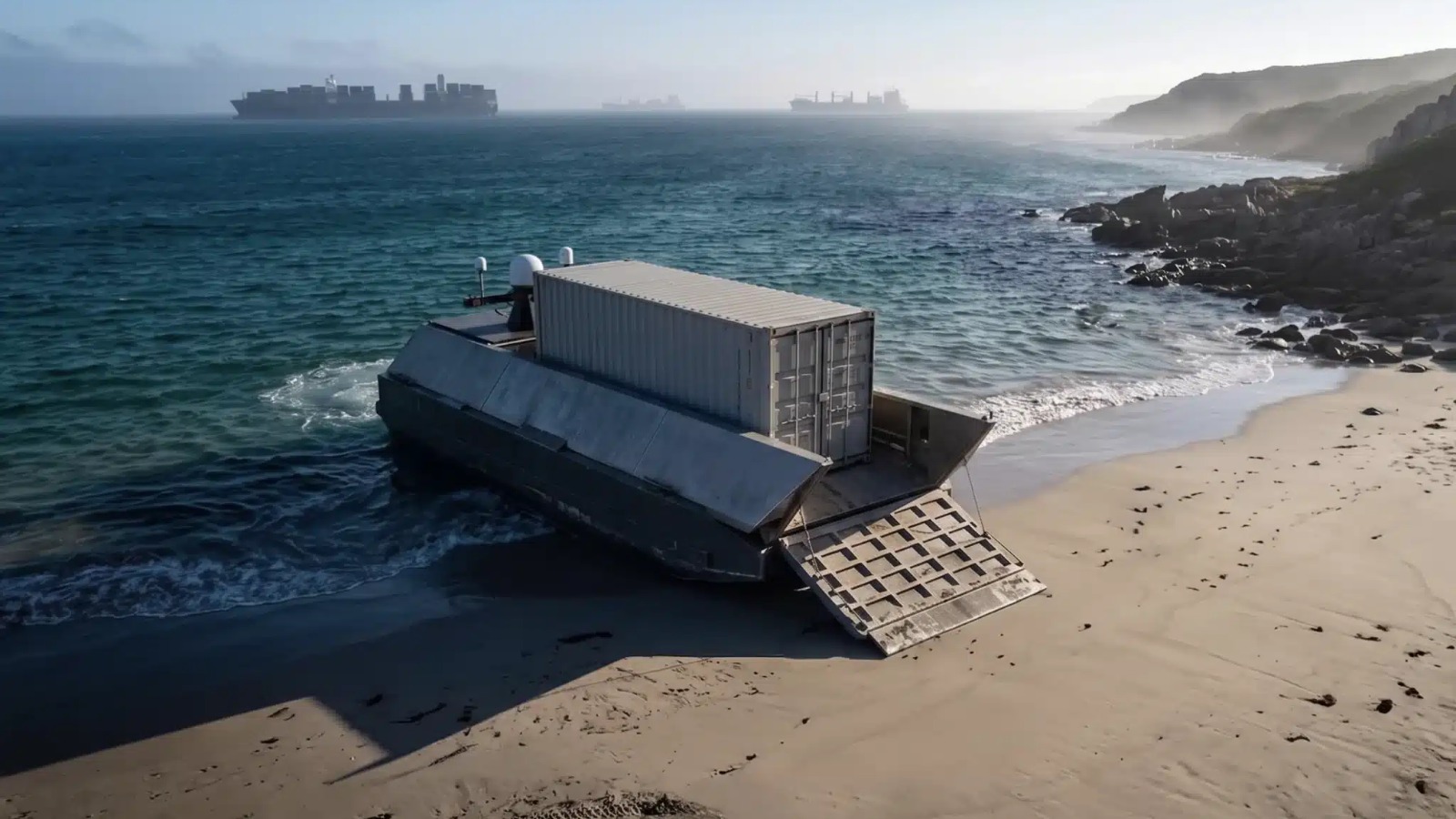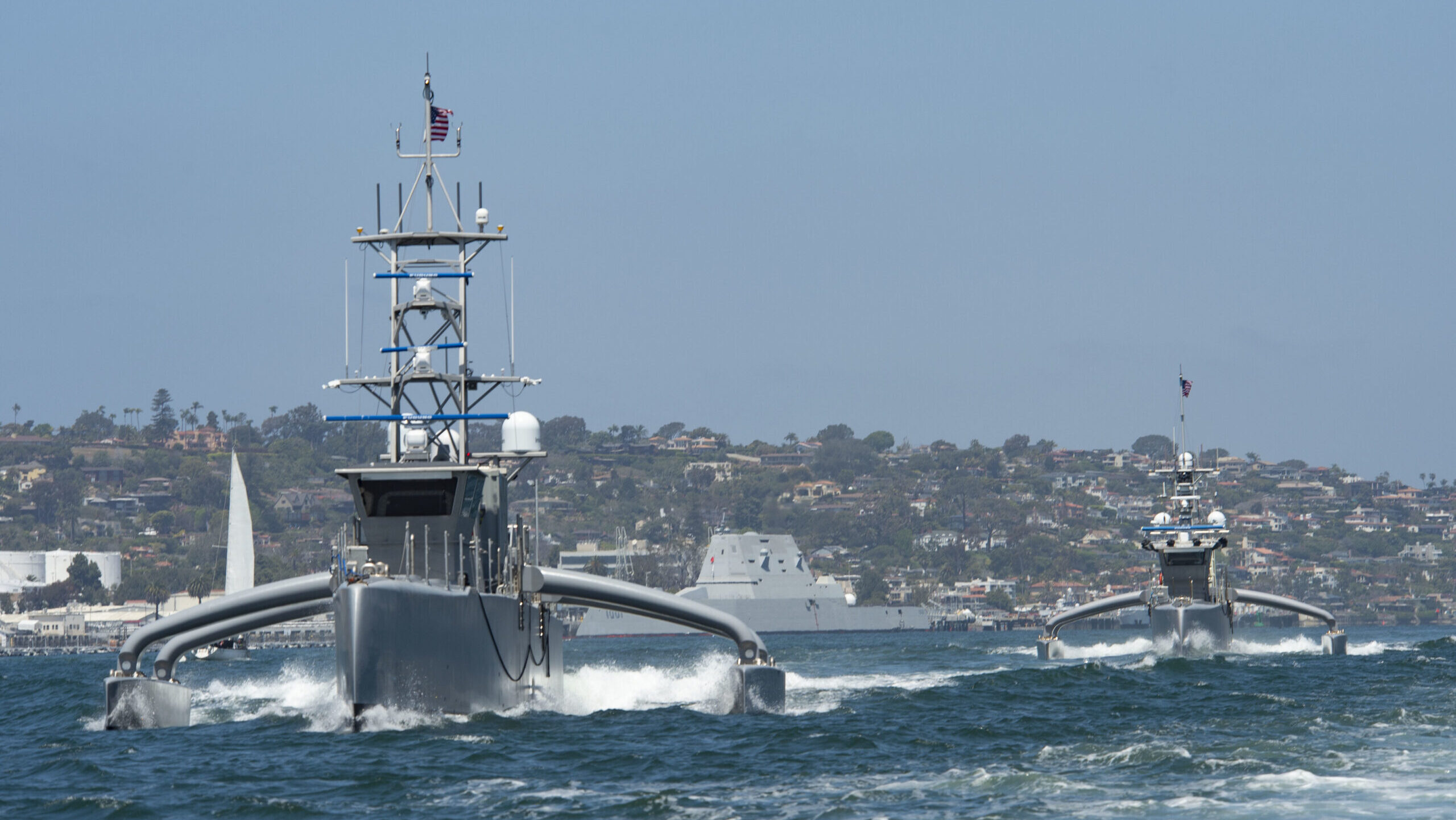
The U.S. Navy has launched the second phase of its medium unmanned surface vessel (MUSV) project, seeking production-ready platforms and modular payload solutions for an online marketplace intended to support the procurement of autonomous maritime systems.
The solicitation, posted Sept. 23, invites companies with experience in vessel construction, autonomy, perception systems and broader maritime operations to submit innovative solutions. The Navy said proposals will be assessed on platform maturity, compatibility with open-architecture autonomy, endurance, payload-integration capacity and the ability to scale production rapidly.
Requirements for qualifying vessels
Under the Phase II requirements, proposed vessels must be capable of at least 10 days of unmanned operation. They must also be able to accommodate a payload equivalent to at least two standard 20-foot shipping containers and must not exceed 90 meters in length.
The container requirement differs from guidance issued by the Navy earlier in the year, before Phase II, which stated that submitted designs should be able to hold at least two 40-foot shipping containers. The source material does not specify the reason for the change.
Sea demonstrations and marketplace access
Companies whose proposals are successful will conduct an at-sea demonstration. The Navy plans to evaluate the vessels’ sustained speed, maneuverability and fuel consumption, along with other criteria, during the trial.
Platforms approved through the process are intended to be listed on the Navy’s maritime marketplace. According to the solicitation, the marketplace is designed to allow the Pentagon to configure and issue funded delivery orders for vetted autonomous maritime systems without repeating procurement cycles.
The open call is also intended to allow new companies to compete while giving existing vendors an opportunity to submit updated product blocks and modular payload configurations, the notice said.
The Navy announced plans for the MUSV Marketplace in March as part of a procurement model focused on production-ready, mission-capable platforms already available. Navy officials described it at the time as the first iteration of a recurring marketplace.