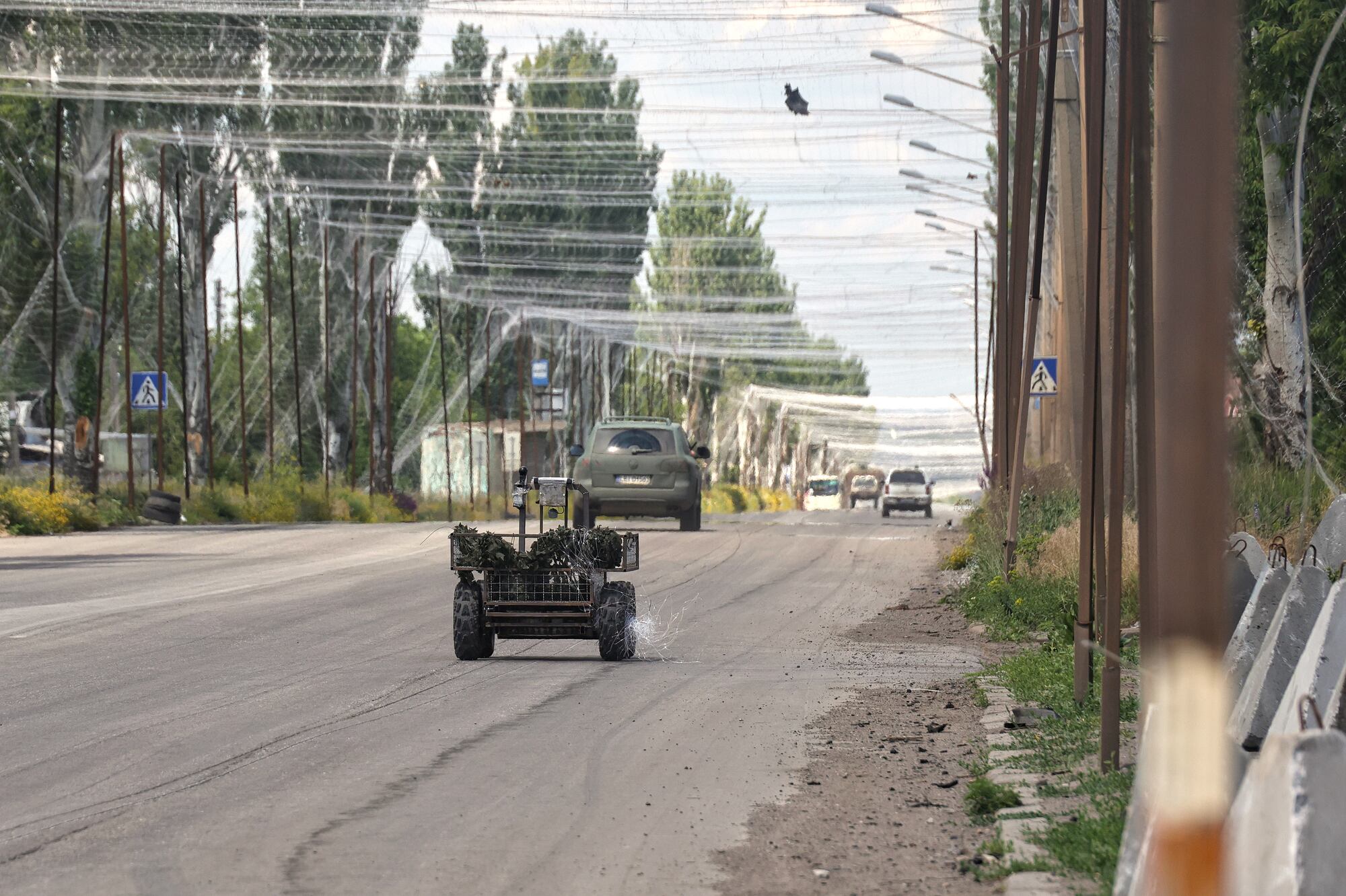
Trinity Robotics plans to produce about 2,200 unmanned ground vehicles this year, doubling its original target as Ukrainian military orders increase, according to co-founder Oleksii Konik. The Ukrainian manufacturer had initially expected to build roughly 1,100 UGVs in 2026, but is expanding throughput at its facilities in response to demand.
Rising military demand
The company works with Ukraine’s military procurement agency and directly with more than 20 military units, Konik told Defense News. He described battlefield robotization as the company’s central mission, linking the production increase to the Ukrainian Army’s growing use of ground robots in operations.
Trinity Robotics’ flagship platform, Konyk One, is designed for logistics and medical-evacuation missions. In its standard configuration, the vehicle weighs 460 kilograms and can carry up to 300 kilograms, according to company data. Trinity is also developing a turret-equipped variant that Konik said would allow the UGV to be used in combat operations.
Overseas production talks
Alongside its domestic expansion, Trinity is seeking manufacturing partners in Europe to produce its vehicles abroad. Konik said the company is looking for European manufacturers of trucks, vehicles and military parts that could participate in a joint enterprise. Such production could provide additional volumes for interested end users, he said.
The company is negotiating with an unnamed French producer on a joint venture to manufacture Trinity UGVs outside Ukraine, and is pursuing partners in other European countries. The discussions come while Ukrainian defense companies remain prohibited from exporting their products, despite expectations from some Ukrainian officials that the weapons-export ban could be lifted this year.
Under Kyiv’s Build with Ukraine program, joint manufacturing is primarily intended to meet the requirements of Ukraine’s armed forces, while surplus production can be exported to other countries. Trinity is also seeking funding for its expansion; its recent investors include Sweden’s Front Ventures and Hede Capital Partners.