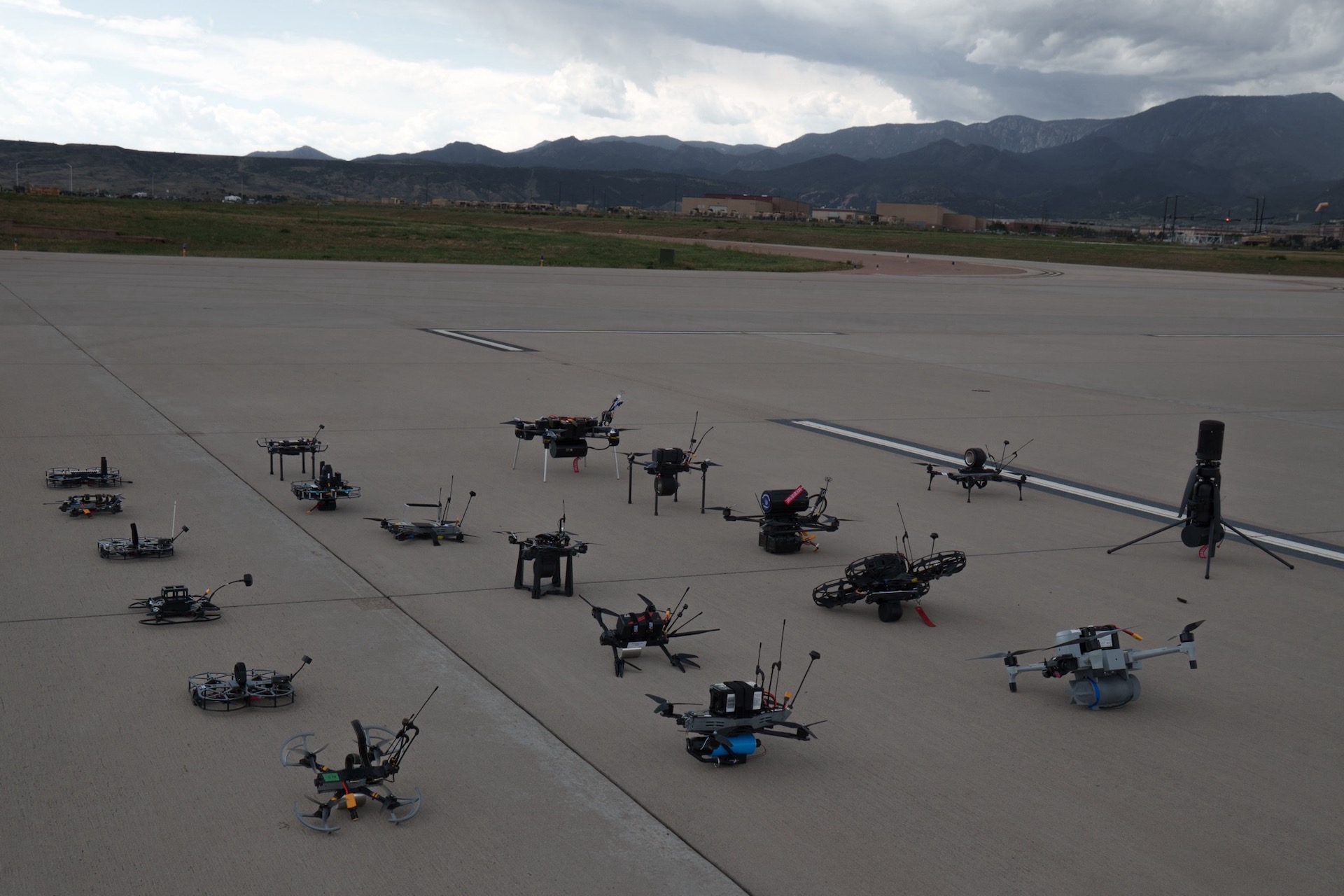
Russia’s military partnership with Iran is moving beyond Tehran’s initial supply of Shahed attack drones for the war in Ukraine, with intelligence assessments indicating that Russian upgrades to the design and Russian-provided targeting support may now be flowing back to Iran.
The exchange would mark a reversal in a relationship that accelerated after Iran began supplying Russia with Shahed-136 and Shahed-131 drones in mid-August 2022, according to the Center for Strategic and International Studies. Russia subsequently obtained a license to manufacture the Iranian-designed drones at the Alabuga Special Economic Zone in Tatarstan, initially using Iranian-supplied kits before increasingly replacing components with Russian and Chinese parts.
Russia and Iran have maintained military ties since the 1990s, but the relationship expanded sharply after Moscow’s full-scale invasion of Ukraine. A Russian defense-industry delegation traveled to Iran roughly two months after the first Shahed deliveries to finalize a $1.75 billion production agreement, CSIS said. The two countries later signed a 20-year strategic treaty in 2025 covering joint military exercises, intelligence sharing and defense-industrial cooperation, according to Reuters.
From Shahed to Geran
Over the following four years, Russian engineers developed their license-built version of the Shahed into the Geran family, adapting the platform through wartime use. The original Iranian engine was replaced with Chinese turbojets, while mesh-network radios and air-to-air missiles were added, according to the Military Times report. Russia also introduced new jet-powered airframes in the Geran-4 and Geran-5, moving the system away from the original propeller-driven configuration.
The country that has most thoroughly mastered the Shahed is not the one that built it. Russia has used its license-built variant, designated the ‘Geran,’ as a base platform for unprecedented wartime iteration.
Center for Strategic and International Studies researchers
The Institute for the Study of War assessed that, as Iran has conducted its own war against the United States and Israel since the spring, this upgraded technology is now being sent to Tehran. Russia has also begun providing Iran with upgraded munitions, satellite imagery and targeting data used against American forces in the Middle East, according to intelligence assessments made public this month.
If confirmed, this would represent a complete technological feedback loop in which Iranian-designed drones supplied to Russia were enhanced through extensive wartime use before being returned to Iran in a significantly more capable configuration.
Institute for the Study of War analysts
Production capacity and regional implications
The reported transfer comes as Russia expands production at Alabuga. Satellite imagery from early September showed construction of at least 10 new facilities there, ISW said. Ukrainian intelligence has said Russia plans to produce thousands of additional Geran drones and decoy munitions in September alone, while RBC-Ukraine reported that jet-powered models could account for about 80% of drone attacks by November.
That output could allow Russia to sustain strikes in Ukraine while also providing systems for Iran’s long-range strike campaign against American aircraft carriers and warships in the Middle East, the report said. ISW warned that Russian targeting intelligence could make future Iranian drone attacks substantially more sophisticated and improve Iran’s ability to threaten U.S. land and naval assets, including bases, command centers, logistics hubs, ammunition depots and naval infrastructure.
U.S. and Ukrainian officials have publicly raised concerns about the deepening relationship. Ukrainian President Volodymyr Zelenskyy said he provided evidence of the alliance to the White House in March. Asked at an April Senate hearing whether Russia was actively supporting Iran’s war effort against U.S. forces, Gen. Dan Caine, chairman of the Joint Chiefs of Staff, said: “There’s definitely some action there.”
The cooperation also extends beyond drones. A Financial Times investigation published Sept. 1 reported that Russian missile specialists have assisted Iran since 2023 with ramjet propulsion systems for supersonic and hypersonic cruise missiles through a covert program codenamed C430L. Together, the drone-production effort, reported intelligence support and missile work point to a more interdependent defense-industrial relationship than the original Shahed transfers that helped launch it.