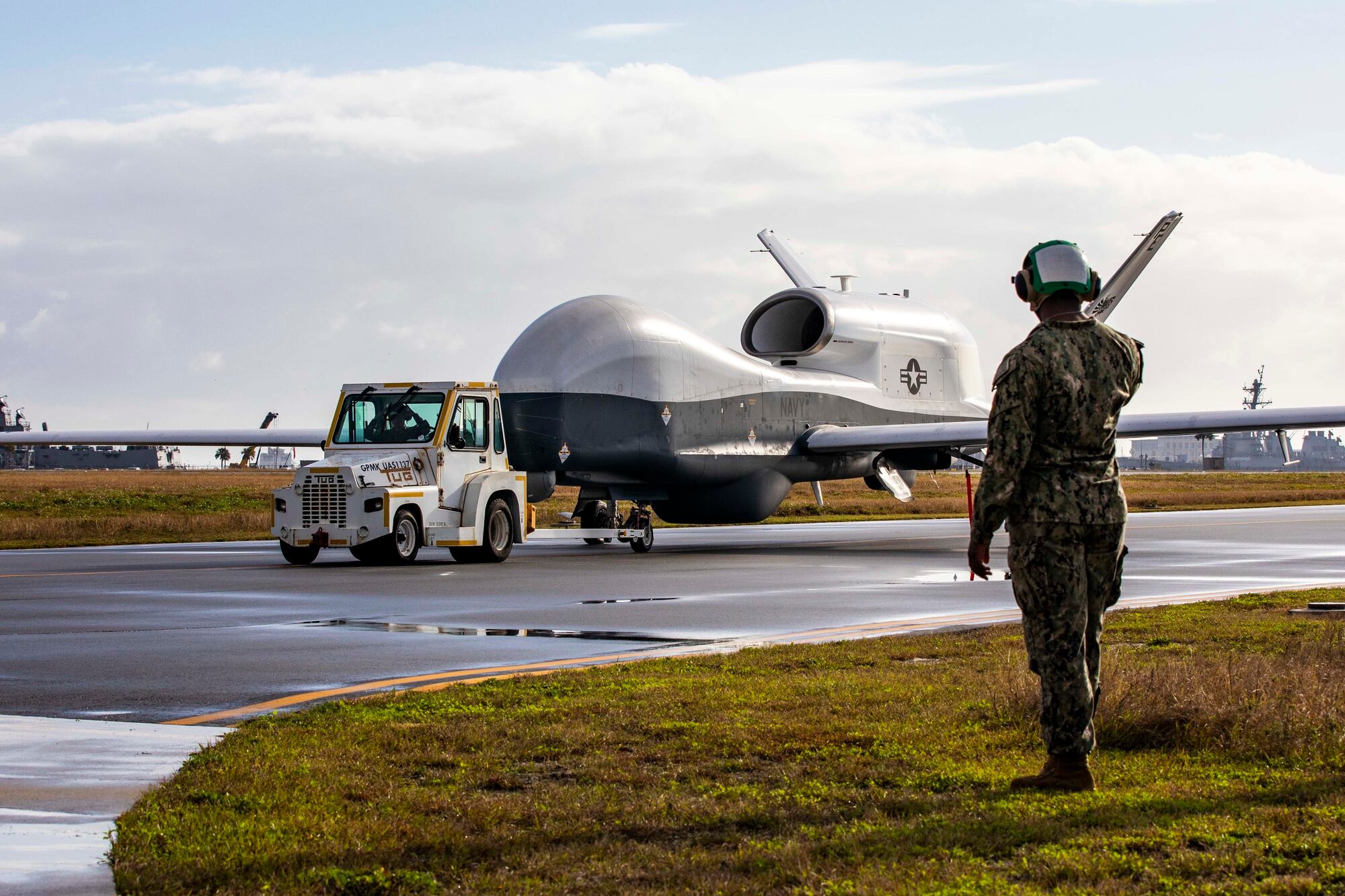
NATO plans to add up to five Northrop Grumman MQ-4C Triton unmanned aerial vehicles to its network of aerial sensors, Secretary-General Mark Rutte announced at the alliance’s Defence Industry Forum in Ankara.
The high-altitude, long-endurance aircraft are designed for maritime surveillance over large areas of ocean. Rutte said the Tritons will help the alliance detect threats earlier, protect sea lines of communication and support operations in demanding regions including the High North.
These aircraft can fly for long periods at high altitude and cover large areas, including over open water, more efficiently than most other aircraft can.
Mark Rutte, NATO secretary-general
Expanding NATO’s ISR network
Rutte characterized intelligence, surveillance and reconnaissance as a vital alliance capability, providing the situational awareness NATO needs to make decisions and stay ahead of threats. He said allies were taking a concrete step to strengthen that capability through the Triton addition.
Northrop Grumman will build the aircraft, while European industry will support mission systems, data infrastructure and related services. Rutte said the arrangement would create jobs on both sides of the Atlantic.
High-altitude maritime coverage
According to Northrop Grumman, the MQ-4C can operate above 50,000 feet for more than 24 hours and has a range of 7,400 nautical miles. The U.S. Navy and Royal Australian Air Force are current Triton users.
The planned procurement would extend NATO’s airborne surveillance capacity with aircraft intended to remain aloft for long periods while monitoring broad maritime areas, supporting the alliance’s focus on early warning and situational awareness.