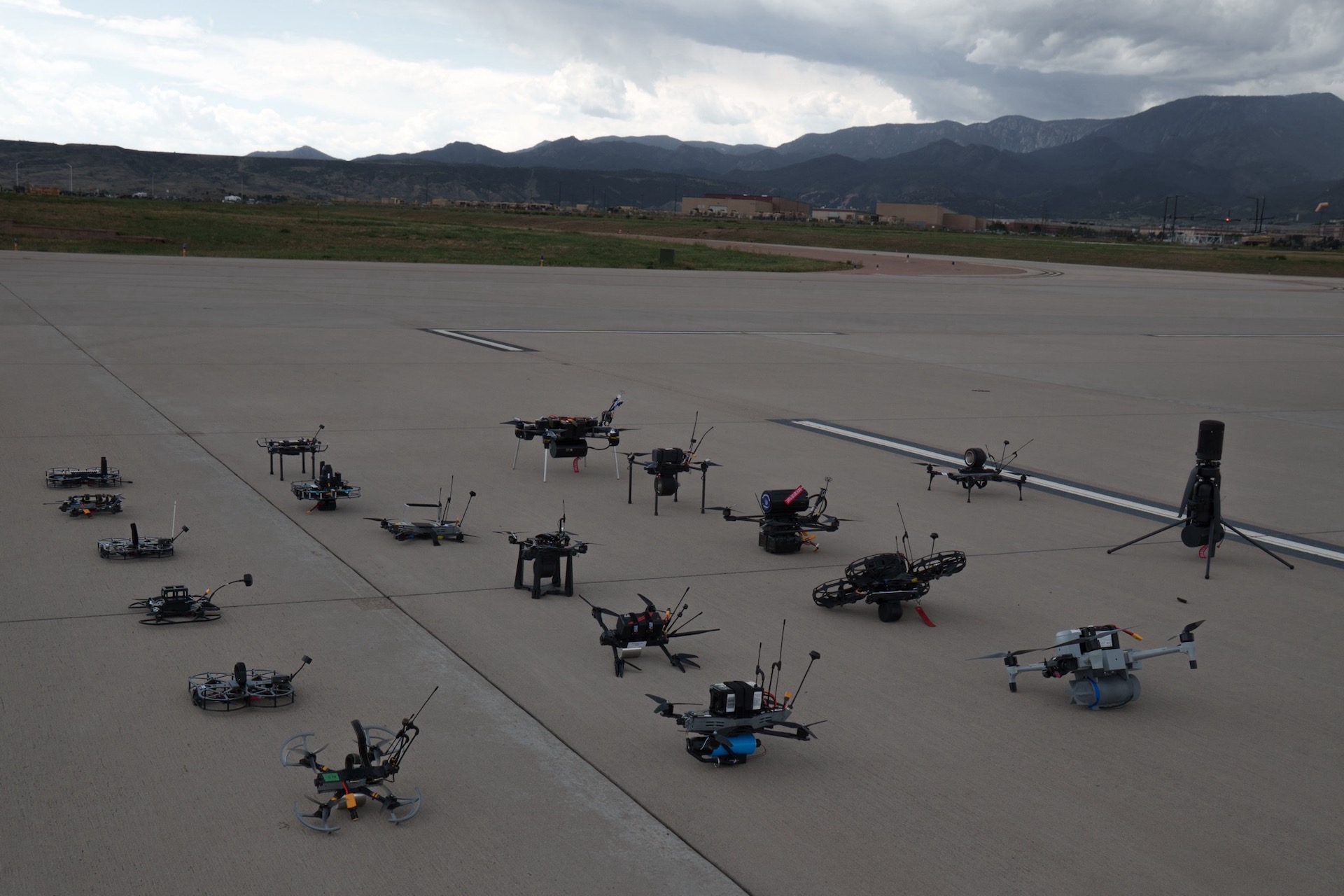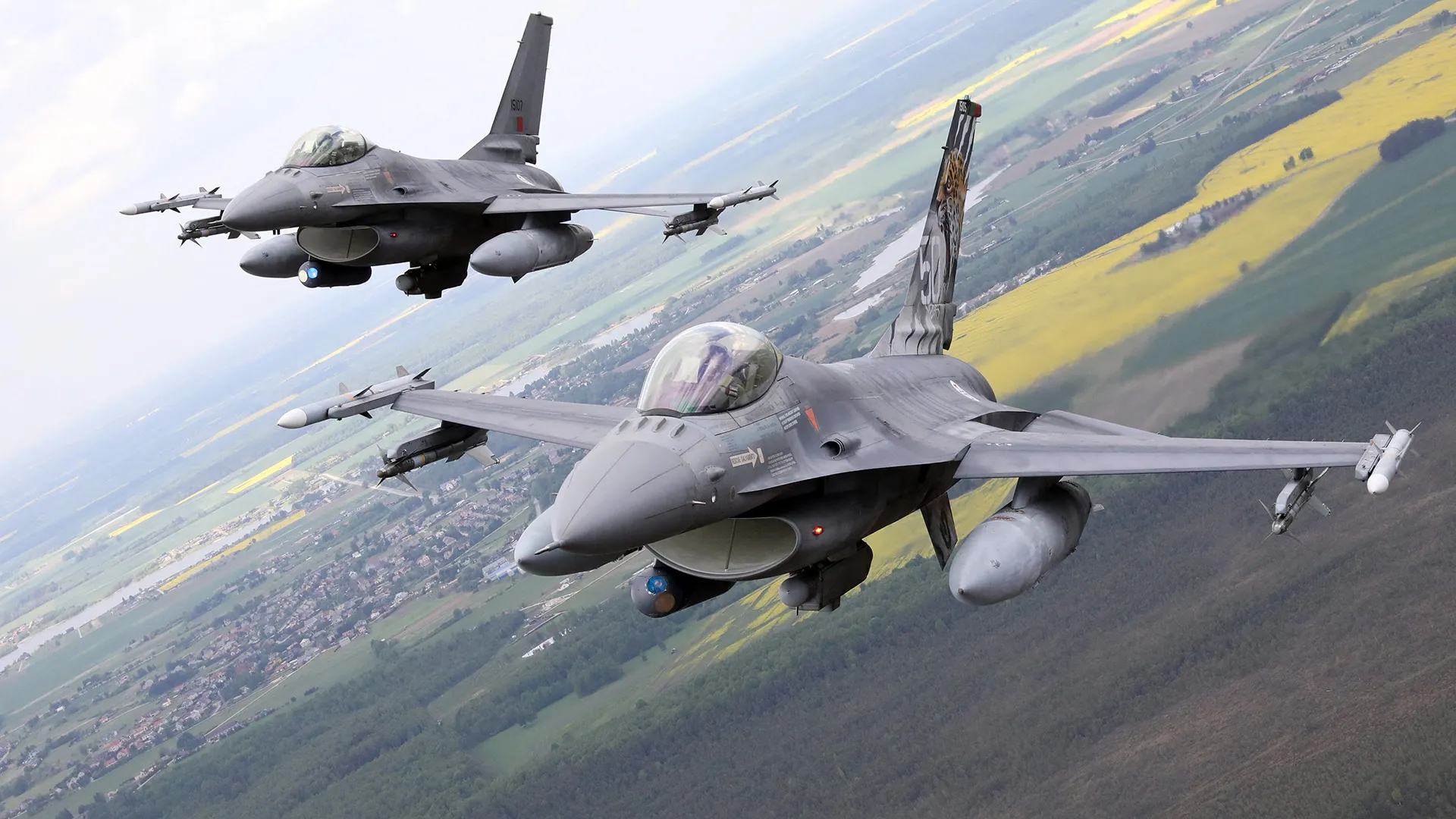
NATO’s air commander is moving to implement new alliance plans intended to improve defences against one-way attack drones and cruise missiles, following an overnight incident in which a drone entered Lithuanian airspace and was shot down. The effort combines Enhanced Vigilance Activity Eastern Sentry, a mission established in 2025, with Standing Defense Plan 12000, a new framework for integrated air and missile defence across the alliance.
Lt. Gen. Jason T. Hinds, commander of U.S. Air Forces in Europe/U.S. Air Forces Africa and NATO Allied Air Command, said he had been directed by NATO Supreme Allied Commander Europe Gen. Alexus Grynkewich to fully implement both initiatives. The goal, Hinds said, is to give member nations the capabilities needed to defend their airspace against drones such as the one involved in Lithuania and against cruise missiles.
From air policing to air defence
The Lithuanian incursion came amid Russia’s war against Ukraine and a series of alleged hybrid or gray-zone activities across Europe. European Commission President Ursula von der Leyen described the incident as part of what she called a broader pattern of Russian aggression and provocation intended to test European readiness and resolve. Hinds said he did not know the intent behind the drone’s entry, but acknowledged that such activity could amount to probing of NATO defences.
Regardless of the intent behind it, what we want to be prepared for is the second that a one-way attack drone or a cruise missile is first and foremost detected – hopefully well before it enters NATO territory – we want to know it. We want to know where it’s coming from. We want to have the capability to sense it. We want to be able to have the C2 systems to be able to decide what to do about it, and then have the right kit to be able to act.
Lt. Gen. Jason T. Hinds
Eastern Sentry was launched in September 2025 after what NATO described as an unprecedented number of Russian drones and aircraft violated the airspace of several allies. Under the mission, allies have contributed additional fighter jets, helicopters, transport aircraft, air-defence systems, surveillance aircraft and frigates, while NATO seeks to improve coordination among those assets. Standing Defense Plan 12000, meanwhile, is intended to establish integrated air and missile defence across the alliance; Grynkewich introduced the concept in congressional testimony in March.
Hinds said NATO has shifted from an air-policing posture to air defence, describing the change as one driven in part by readiness and by the need to position multi-domain capabilities in response to indications, warnings or active threats. In the Baltic region, he said, that posture is meant to enable a rapid and decisive response while also strengthening deterrence by demonstrating that NATO can detect and defend against incoming drones or cruise missiles.
Seeking a better cost curve
A central issue is the cost of countering relatively inexpensive unmanned threats. NATO’s integrated air and missile-defence system includes Patriot surface-to-air missile batteries, but Hinds said the alliance is currently relying primarily on air power against drones and cruise missiles. Fighter aircraft have proven effective in these engagements, including the shootdown connected to the Lithuanian incident, he said, but the approach is not necessarily efficient.
I want to get to the point where we’re doing it efficiently, using lower-cost interceptors, hopefully ground-based, and in some cases air-based that are cheaper to use.
Lt. Gen. Jason T. Hinds
Hinds said there had been at least five other cases in which allied nations used air power to shoot down one-way attack drones. The alliance wants options that preserve the ability to defeat those threats without relying exclusively on higher-cost aircraft and weapons. He said intelligence organizations would later assess the intent behind the Lithuanian event, while his immediate responsibility was to ensure NATO could detect, decide and act against threats entering or approaching alliance airspace.
European air forces are also pursuing lower-cost airborne options. The United Kingdom’s Royal Air Force announced in May that its Typhoon fighters had been equipped with 70mm Advanced Precision Kill Weapon System laser-guided rockets. France’s Defence Procurement Agency said it had completed integration testing of 68mm laser-guided rockets on Rafale fighters, reaching initial operational capability less than eight months after the contract award. Hinds did not identify a specific interceptor NATO would adopt, but his comments point to interest in both ground-based and air-launched systems that can be used more economically against drones.
Deterrence and escalation risks
Hinds characterized the recent incursions as limited events involving small numbers of systems, rather than signs of a direct conventional confrontation. He said NATO was not seeing massed forces opposite Finland, Poland, Latvia, Lithuania or Estonia, while noting that significant numbers of one-way attack drones have been operating in the Black Sea against Ukraine and that some have entered Romania. In his assessment, hybrid activity may be among the few available levers for Moscow because NATO holds advantages in geography, domains and readiness.
At the same time, Hinds warned that activity below the threshold of armed conflict can create a path to escalation. Responses to individual incidents may range from law-enforcement action to military measures, he said, and remain decisions for the nations involved. Allied Air Command’s role is to demonstrate deterrence daily and to ensure the alliance is positioned to detect and defeat threats should it be challenged.