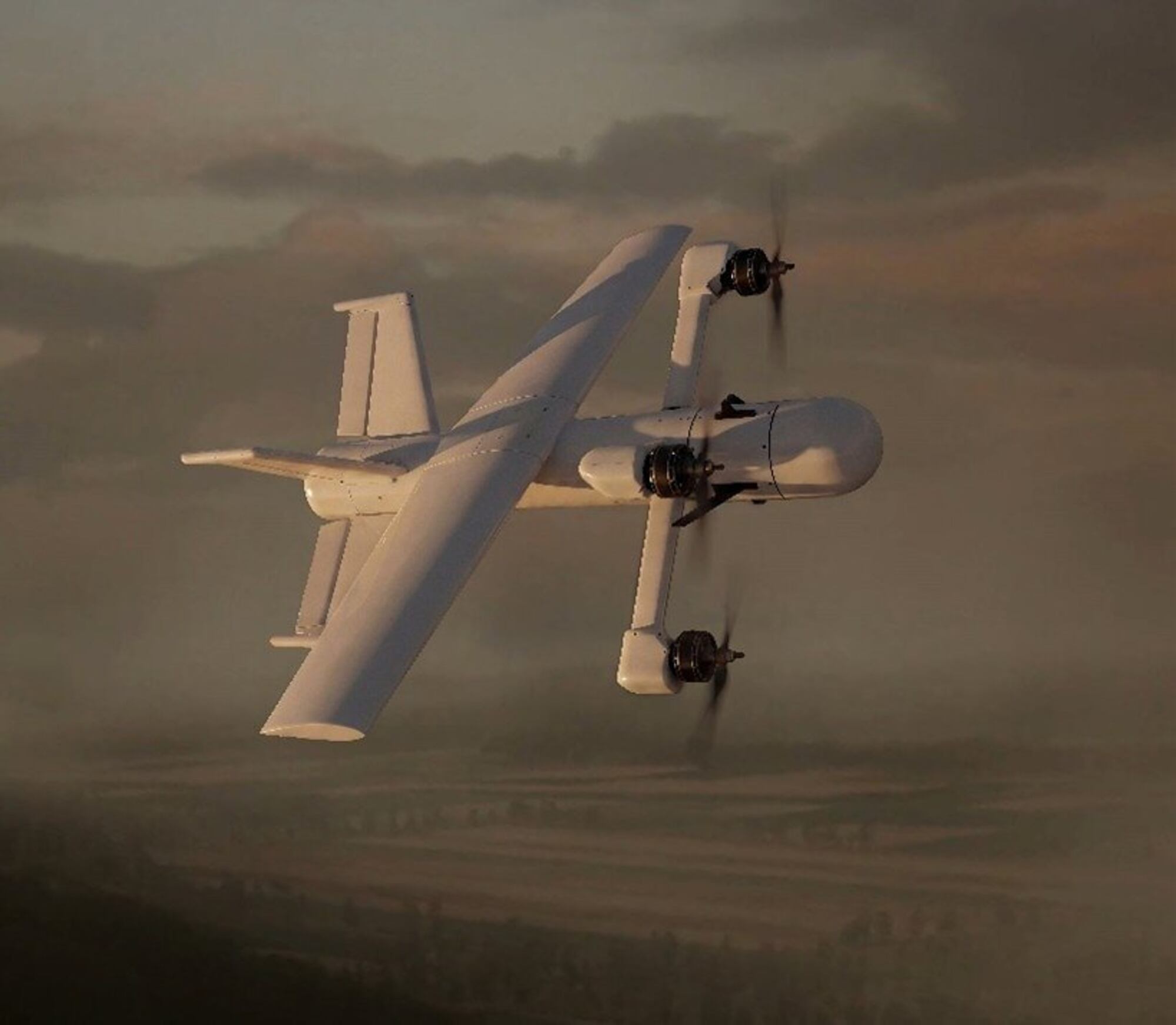
LONDON — Lockheed Martin has introduced Morfius X-Rotor, a ground-launched counter-unmanned aircraft system designed to use a high-power microwave payload against multiple hostile drones during a single flight. The company unveiled the system Monday at the 2026 Farnborough Airshow, positioning it as a potentially lower-cost option for confronting drone swarms.
One-to-many counter-drone mission
Lockheed describes Morfius X-Rotor as a “one-to-many” airborne high-power microwave, or HPM, system. The company says it can neutralize more than 50 enemy drones in one flight, an approach intended to increase the number of targets addressed per launch while reducing the cost per kill.
Morfius sets a new benchmark for counter-drone capability — delivering a high kill rate while keeping the cost per kill low.
Randy Crites, vice president and general manager of Lockheed Martin Missiles and Fire Control Advanced Programs
The system is built for recovery and reuse, according to Lockheed. It can operate with any command-and-control system and does not depend on unique sensors or fire-control radars, the company said. Crites said Lockheed is relying on a lightweight, field-reusable high-power microwave architecture in presenting Morfius as a low-cost counter-drone option.
Prototype production and testing
Lockheed said it is accelerating prototype production of both the Morfius air vehicle and its microwave payload in an effort to put the capability in the hands of frontline troops. The company said the system has recently undergone flight testing in Arizona, California and Oklahoma, including demonstrations of interception and lethal capabilities. Additional testing is planned in the coming months.
The announcement arrives amid growing pressure to find alternatives to expensive interceptors for defense against less costly drones and other munitions. U.S. forces have rapidly drawn down interceptor stockpiles while countering Iranian missiles and Shahed drones, increasing scrutiny of the cost imbalance involved in using high-value defensive weapons against cheaper threats. Lockheed also used the Farnborough event to introduce a less expensive Patriot interceptor, which it presented as another possible way to reduce reliance on costly interceptors.