Interceptor drones are often described as a cheap answer to cheap drones. That is only part of the story. An interceptor is not a standalone replacement for air defence: it is an effector inside a wider chain that must detect a target, maintain a track, decide what it is, cue the interceptor and complete an engagement before the target leaves the available window.
That distinction matters because the drone threat spans very different targets. A slow reconnaissance UAV near the front, a fast-moving one-way attack drone approaching a city and a small FPV flying at low altitude do not create the same interception problem. The same interceptor design will not be optimal for all three.
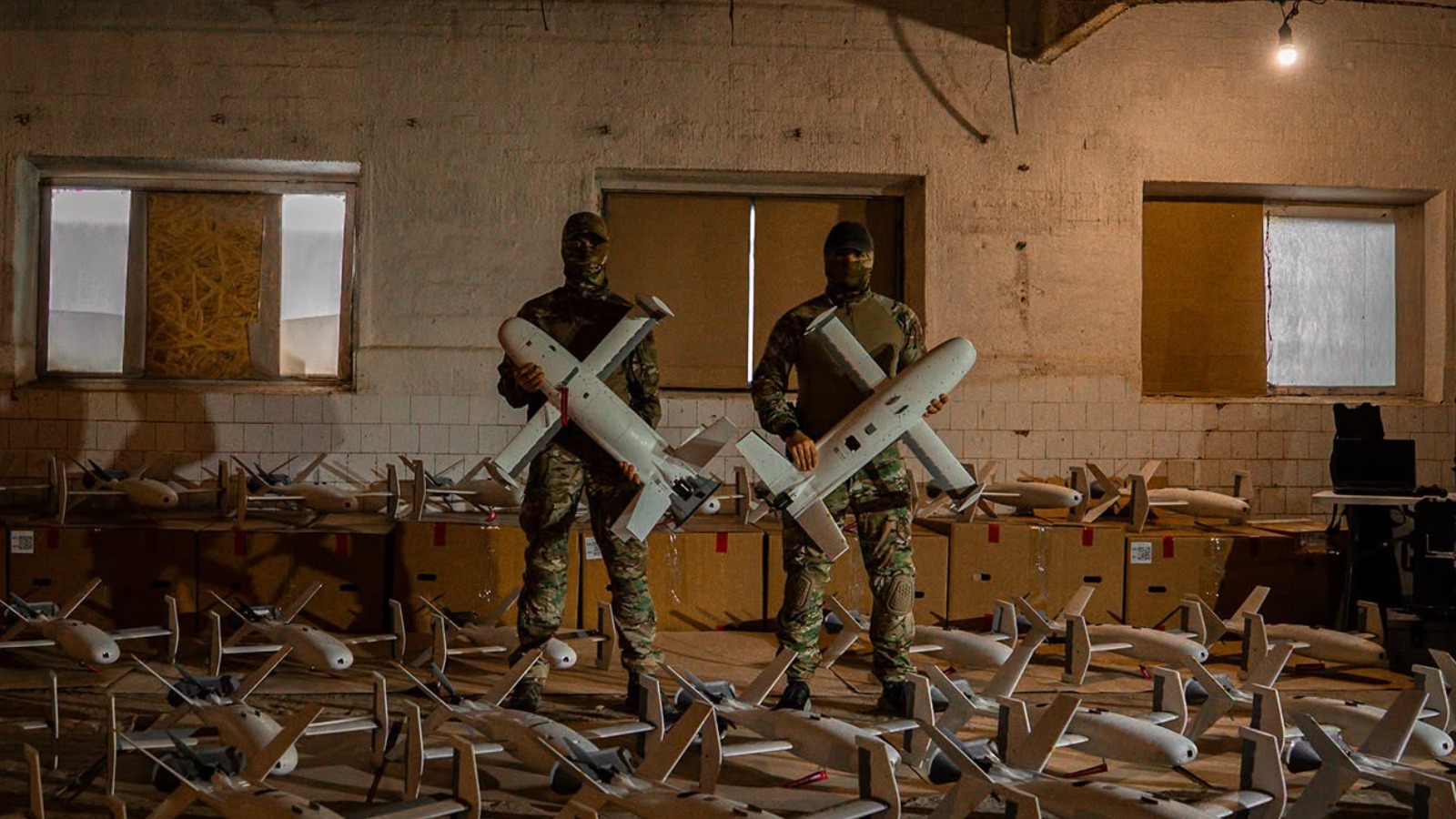
Ukraine's rapid expansion of interceptor drones makes the category unusually visible. The Ministry of Defence said units were receiving more than 1,500 anti-Shahed interceptors per day by January 2026, while tactical interceptor drones were also being supplied to frontline brigades for use against reconnaissance and strike UAVs. The growth is not simply a story about new aircraft. It is the construction of a lower-cost air-defence layer around them.
An interceptor drone is one part of a kill chain
The easiest mistake is to think of the interceptor as the entire counter-drone system.
In practice, the aircraft usually acts at the end of a larger sequence. Sensors detect something in the air. A command-and-control layer combines or validates that information. The track is classified. An operator or automated system chooses a response. The interceptor is then cued toward the target and, depending on the design, the final phase may remain manually controlled or use some degree of automatic guidance.
NATO's current counter-UAS work is built around exactly this logic. Allied Command Transformation describes counter-drone defence as an integration problem involving sensors, command-and-control systems, decision-making and effectors rather than a single technology. NCIA's TIE 26 exercise evaluated more than 60 systems and 40 C2 applications, with criteria including track stability, sensor-to-C2 integration, identification performance and the effectiveness of the engagement chain.
The interceptor becomes useful because the rest of that architecture gets it close enough, early enough, with enough confidence that the engagement is worth attempting.
| Stage | Core question | What the system needs to provide |
|---|---|---|
| Detect | Is something there? | Radar, RF, electro-optical, acoustic or other sensor data. |
| Track | Where is it going? | A stable track that can be maintained as the object moves. |
| Identify | What is it? | Enough classification confidence to support an engagement decision. |
| Cue | Which response should be used? | C2 that routes the track to an appropriate effector. |
| Intercept | Can the target be reached in time? | An interceptor with sufficient performance and guidance for that target class. |
| Assess | What happened? | Confirmation of the result and a return to the wider air picture. |
There is no single interceptor-drone design
The label covers several architectures because the target set is broad.
Some interceptors are compact high-speed multicopters intended to climb rapidly and meet incoming drones. Others use fixed wings for greater endurance and coverage. Some are designed primarily to destroy the target on contact. Others emphasize the possibility of recovery if no engagement occurs. Several Ukrainian systems combine features that would traditionally have belonged to different categories.
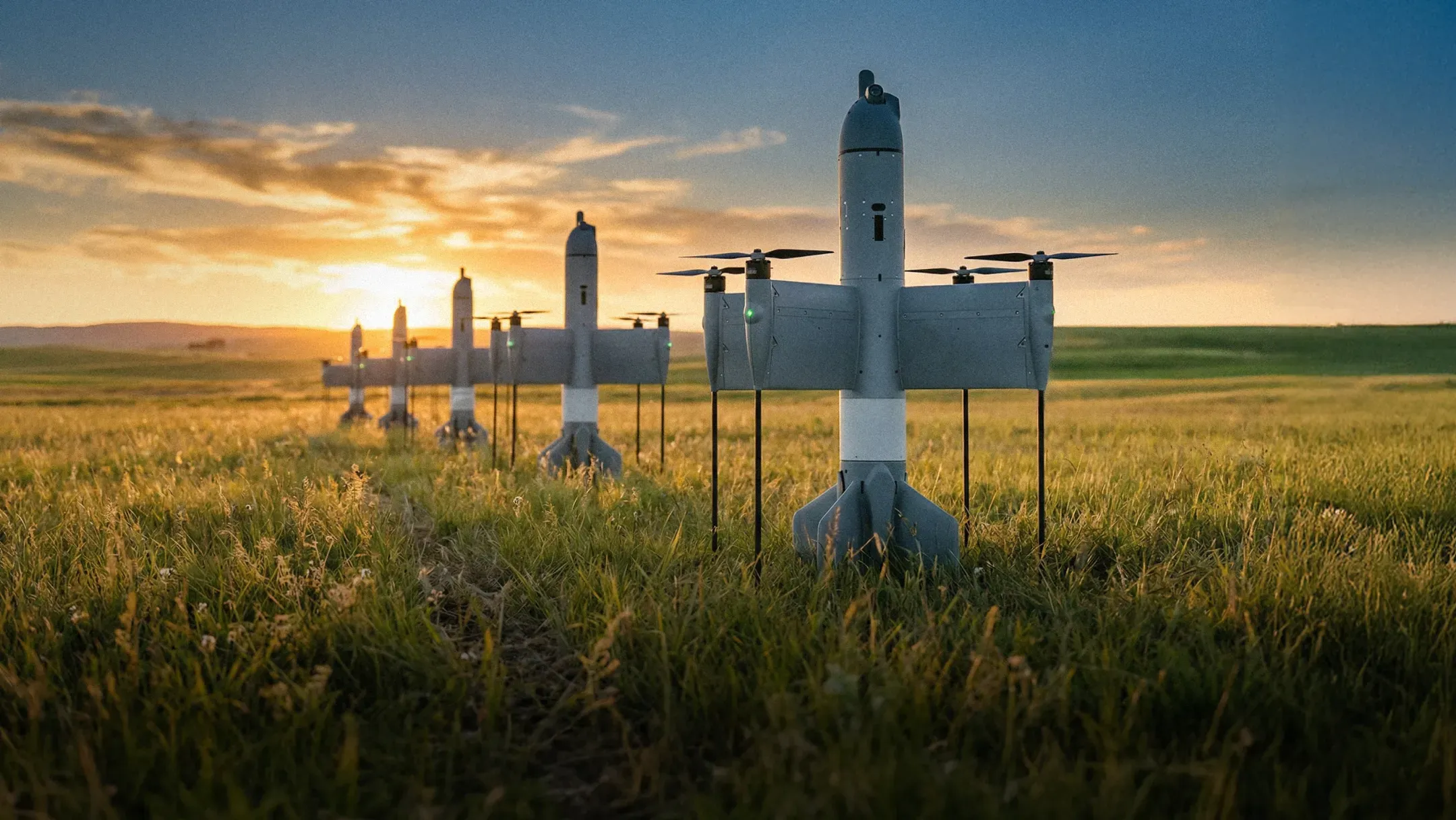
The JEDI Shahed Hunter, for example, is a high-speed vertical-takeoff interceptor. According to Ukraine's Ministry of Defence, it receives radar data automatically and can use automatic target acquisition and guidance while retaining a ground control station and day/thermal imaging. The ministry describes it as suitable against Shahed-type attack drones as well as reconnaissance UAVs such as Zala and Supercam.
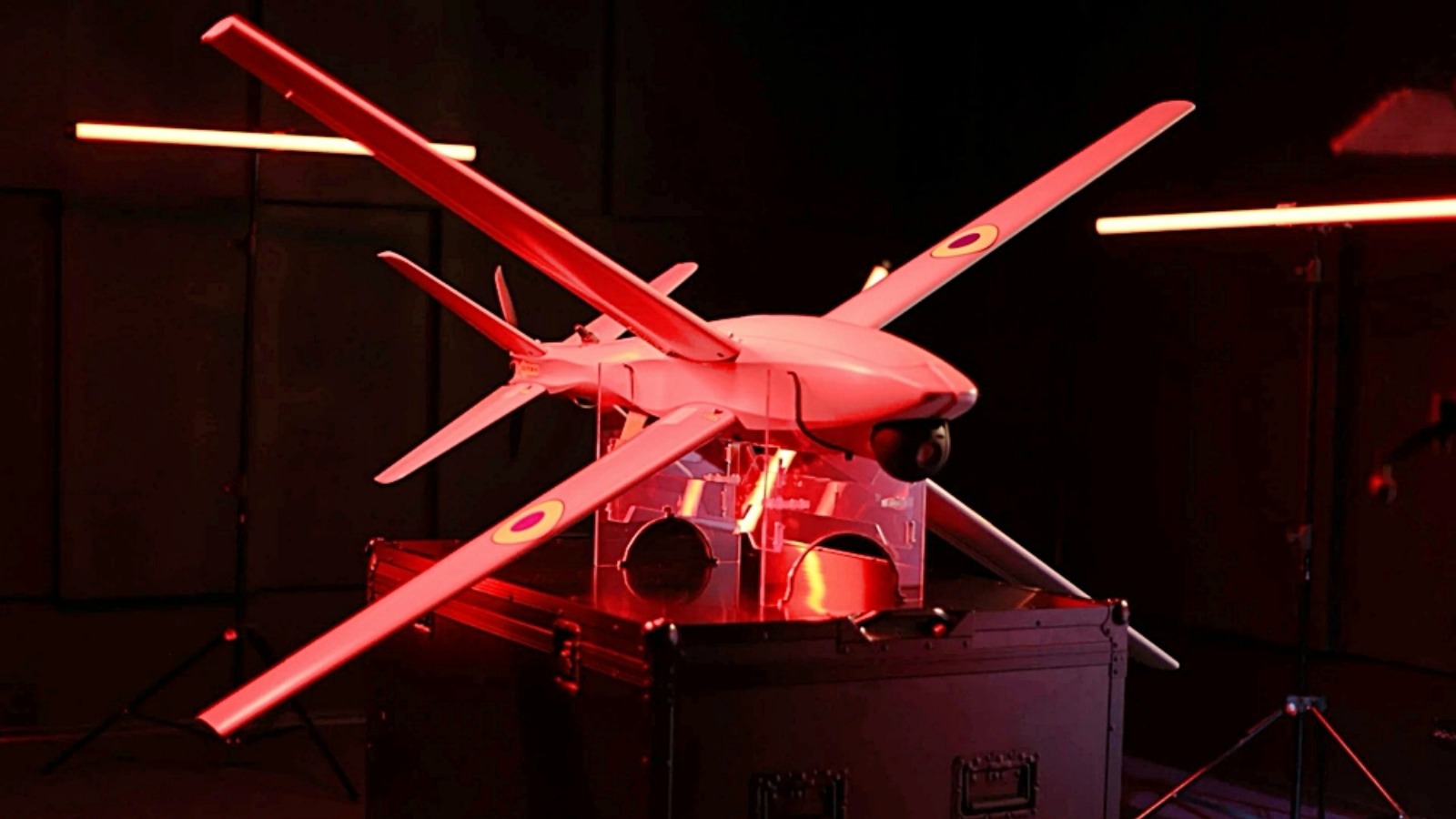
Shvidun follows a different aerodynamic approach. The Ukrainian MoD describes a roughly two-metre-span aircraft designed for high speed and endurance, with the ability to land and be used again when the target is lost. That reusability matters economically: an interceptor that can return from an aborted engagement has a different cost model from one that is necessarily consumed on every launch.
TALION illustrates another branch of the category. The MoD says it can operate in manual or semi-autonomous mode and can serve both as an aerial interceptor and, in another mission mode, as a loitering munition. The point is not that every interceptor should become multi-role. It is that the design space is still fluid.
The target determines the interceptor
A useful way to understand interceptor drones is to start with the target rather than with the interceptor.
A reconnaissance drone may loiter for a long period, operate relatively high and provide a valuable sensor feed to artillery or strike systems. An interceptor assigned to that problem benefits from reach, endurance and the ability to climb into the target's operating band.
A Shahed-type one-way attack drone creates a different problem. It follows a long route toward a defended area and may arrive as part of a larger wave. Here, the defender needs coverage, repeated engagement capacity and a cost structure that can survive sustained attacks.
Small tactical drones close to the front compress the timeline further. The interception problem becomes one of local detection and very short reaction times, often in an electronic-warfare environment saturated with friendly and hostile emissions.
This is why a mature counter-UAS force is unlikely to converge on one universal interceptor. It is more likely to field a family of effectors matched to different threat classes.
| Threat | Typical defensive problem | Interceptor priorities |
|---|---|---|
| Reconnaissance UAV | Persistent sensing and targeting support over the battlespace | Reach, endurance, altitude performance and reliable cueing. |
| One-way attack drone | Repeated long-range attacks, often in volume | Coverage, affordable engagements, night/all-weather integration and magazine depth. |
| Small tactical / FPV drone | Short timelines and low-altitude local threat | Fast local detection, rapid response and integration with point defence. |
| Mixed raid | Several drone classes arriving together | Layered C2 that can assign the right effector to each track. |
Speed matters, but geometry and information matter more
Interceptor specifications often emphasize maximum speed. Speed is important because an interceptor must create enough relative motion to reach a target before it crosses a protected area or leaves the engagement envelope.
But raw speed by itself does not solve the problem.
If detection occurs too late, even a fast interceptor may have too little time. If the target track is unstable, the interceptor may be sent toward the wrong volume of air. If the C2 system cannot move information quickly enough, the aircraft's performance is wasted while the engagement decision lags behind.
This is why NATO experimentation focuses so heavily on sensor integration and command-and-control. In a layered architecture, the interceptor does not need to carry every sensor itself. It can be cued by the wider network and use onboard sensing primarily for the terminal portion of the engagement.
That division of labour can also reduce cost. A defender does not necessarily want to put an expensive radar suite on every expendable or attritable interceptor if a ground-based sensor network can provide much of the track information.
Manual, assisted and autonomous interception are different things
The language around autonomy can become imprecise very quickly.
An interceptor may receive an automatic radar cue but still be flown manually. It may use automatic target tracking while a human remains responsible for the engagement. It may automate launch, navigation and terminal guidance while retaining human supervision elsewhere in the process. These are different levels of automation, not a single binary divide between 'manual' and 'autonomous'.
Ukraine is already testing systems that move further along that spectrum. In June 2026, the Ministry of Defence said a Brave1 participant had developed an interception technology that automates 95 percent of the process from launch to destruction of a Shahed-type UAV and had passed a combat trial in Kharkiv Oblast. That is an official Ukrainian claim and does not by itself establish a universal interception rate or fully autonomous rules of engagement.
The operational attraction is clear. Human operators are a scaling constraint. If each engagement demands continuous manual control from launch to impact, increasing the number of interceptors also requires increasing the number of highly trained pilots. Automation can shift the human role toward supervision and exception handling.
The difficult part is not merely making an aircraft follow another aircraft. A defensive system also has to manage identification, safety, coordination with friendly aviation and the authority to engage. The technical ability to automate a terminal intercept is therefore only one piece of a larger command problem.
Why interceptor drones do not replace electronic warfare
Interceptor drones are sometimes presented as the successor to jamming. In reality, the two solve different parts of the problem.
Electronic warfare can deny control links, navigation or other radio-dependent functions without physically colliding with the target. Against susceptible drones, that can be highly efficient because one EW system may affect multiple threats and can sometimes engage repeatedly without consuming a munition.
But electronic warfare is not universal. Fibre-optic-controlled FPVs reduce dependence on RF command links. Autonomous functions can allow a drone to continue a mission after losing communications or navigation aids. Some one-way attack drones can also tolerate substantial disruption.
The interceptor adds a physical defeat option when non-kinetic effects are insufficient, uncertain or inappropriate.
The correct architecture is therefore layered: electronic warfare where it works, guns or other point-defence systems where they are efficient, interceptor drones where their geometry and economics make sense, and higher-end air-defence weapons for threats that require them.
| Effector layer | Strength | Constraint |
|---|---|---|
| Electronic warfare | Potentially repeatable and low cost per engagement against RF-dependent systems | Effectiveness depends on the target's communications, navigation and autonomy architecture. |
| Guns / point defence | Physical defeat with mature weapon systems | Range, ammunition, tracking and local safety constraints. |
| Interceptor drones | Potentially favorable cost exchange with flexible coverage and recoverable designs in some cases | Require detection, cueing, flight time and a sufficient engagement window. |
| Air-defence missiles | High performance against demanding aerial threats | Expensive and limited magazines make routine use against cheap drones economically difficult. |
The economic argument is one of the main reasons the category exists
The expansion of interceptor drones is inseparable from the economics of air defence.
Ukraine's Ministry of Defence explicitly describes them as a way to preserve expensive missile stocks while increasing counter-UAV coverage. By January 2026, it said military units were receiving more than 1,500 anti-Shahed drones per day. In late 2025, tactical interceptors had also been added to DOT-Chain Defence so brigades could select systems for countering reconnaissance and strike UAVs.
Project Octopus is one of the clearest examples. In April 2026, Ukraine announced procurement of 8,000 Octopus interceptors. The MoD says the system was developed within the Armed Forces, includes automatic terminal guidance and had moved into distributed production involving dozens of licensed Ukrainian companies as well as cooperation with the United Kingdom.
The UK has framed the programme explicitly around cost exchange. Defence officials said the interceptor costs less than 10 percent of the Shahed-type system it is intended to destroy and set a target of mass production in the thousands per month.
Those figures should not be turned into a universal rule that every drone interceptor is ten times cheaper than every target. Contract prices, configurations and target costs vary. The relevant point is the design objective: create a defensive effector cheap enough to be consumed at the same scale as the threat.
Magazine depth is an air-defence characteristic now
Traditional air-defence discussions focus on range, altitude, probability of intercept and sensor performance. Drone warfare has made magazine depth equally visible.
A system that performs extremely well but can only be replenished slowly may be overwhelmed by repeated low-cost attacks. Conversely, a somewhat less sophisticated interceptor produced in very large quantities can add substantial defensive capacity if it is integrated into the wider air picture.
Ukraine's procurement numbers show the scale of the requirement. Deliveries rose from an average of nearly 950 anti-Shahed interceptor drones per day in December 2025 to more than 1,500 per day across December and January, according to the Ministry of Defence.
That volume changes the category from a specialised weapon into a consumable air-defence layer.
It also shifts industrial questions closer to operations. The defender needs not only a successful design but enough motors, batteries, sensors, airframes, ground stations, trained crews and spare parts to maintain the layer through repeated attacks.
Interceptors are becoming part of a networked air picture
The strongest interceptor programmes point toward a networked model rather than isolated pilots scanning the sky.
Ukraine's MoD says JEDI receives radar data automatically. NATO's TIE 26 testing likewise centred on whether radars, RF sensors and C2 systems from different vendors could exchange information and support an integrated engagement chain.
NSPA's 2026 counter-UAS framework contracts make the architecture explicit: radar, direction finding, electro-optical/infrared and acoustic sensors can feed a common C2 backbone, while effectors may include electronic warfare and hard-kill interceptors.
This matters because sensor coverage and interceptor coverage are different things. A defender may detect a target well before any one interceptor can reach it. Networking allows the command layer to choose which cell or effector has the best chance to respond.
NATO's Layered Counter-UAS Initiative is now experimenting with linking multiple counter-UAS cells together rather than treating each site as a self-contained bubble. That is a significant clue about where interceptor drones fit in mature air defence: not as roaming independent hunters, but as nodes inside a distributed sensor-and-effector network.
Reusability creates a second economic model
Not every interceptor has to be expendable.
Shvidun is notable because Ukraine's Ministry of Defence says the aircraft can land and be reused if the target is lost. That introduces a different trade-off. A recoverable interceptor may cost more upfront but generate multiple alert launches without being consumed every time.
This can matter in defensive environments where many tracks turn out not to require a successful terminal engagement, or where the defender wants a persistent patrol layer rather than a launch-once munition.
The trade-off is structural. Recoverability normally requires additional endurance, landing capability and enough surviving performance margin to return. An expendable design can devote more of its mass and cost to a single engagement. Neither model is automatically superior.
The likely result is another portfolio: recoverable systems for some missions, expendable interceptors for others, and hybrid designs in between.
What interceptor drones still do badly
The category is expanding quickly, but it has clear limits.
An interceptor cannot compensate for a sensor network that does not see the threat. It cannot create time that was lost to late detection. It cannot solve identification problems by itself. Weather and visibility can constrain some architectures. Communications and navigation can still be contested. A fast target or a target approaching from an unexpected direction can reduce the engagement window.
There is also a scaling problem on the defender's side. Thousands of interceptor airframes do not automatically equal thousands of simultaneous successful engagements. Operators, launch sites, C2 capacity, deconfliction, maintenance and sensor coverage all have to scale with the fleet.
This is why interception-rate claims need context. A manufacturer's or ministry's reported combat success is evidence that a system is being used, but it does not automatically tell us its probability of intercept across every threat, weather condition or deployment geometry.
For the same reason, comparing only interceptor price with target price can be misleading. The relevant cost is the defensive system required to produce a successful engagement, not only the vehicle that makes the final contact.
The category is moving toward autonomy — but the network matters more
The visible technological trend is toward more automatic cueing, tracking and terminal guidance.
The less visible trend may be more consequential: interceptors are being absorbed into integrated command-and-control systems that decide which sensor feeds matter and which effector should respond.
A highly autonomous interceptor with poor access to the wider air picture is still constrained by what it can see locally. A more modest interceptor connected to a strong sensor network can begin its engagement with a much better understanding of where the target is and how it is moving.
That is why NATO's counter-UAS experimentation repeatedly returns to interoperability. The problem is not simply how to make one drone catch another. The problem is how to create a defensive system in which detection, classification, command and engagement happen quickly enough and cheaply enough to cope with large numbers of inexpensive aerial threats.
The right way to understand drone interceptors
Interceptor drones are not miniature fighter aircraft and they are not a universal anti-drone solution.
They are a new class of air-defence effector occupying the space between non-kinetic countermeasures, guns and conventional missiles.
Their appeal comes from a combination of attributes: they can be relatively inexpensive, their performance can be tailored to specific drone classes, production can be scaled more rapidly than many traditional missile systems, and increasing automation can reduce part of the human workload.
Their limitations are equally important. They depend on sensing and command systems, their effectiveness varies by target and operating conditions, and large fleets create their own logistics and operator requirements.
The most important shift is therefore not that drones are now shooting down drones.
It is that air defence is beginning to acquire a mass-produced, software-linked, rapidly evolving layer whose economics look much closer to the threat it is designed to defeat.