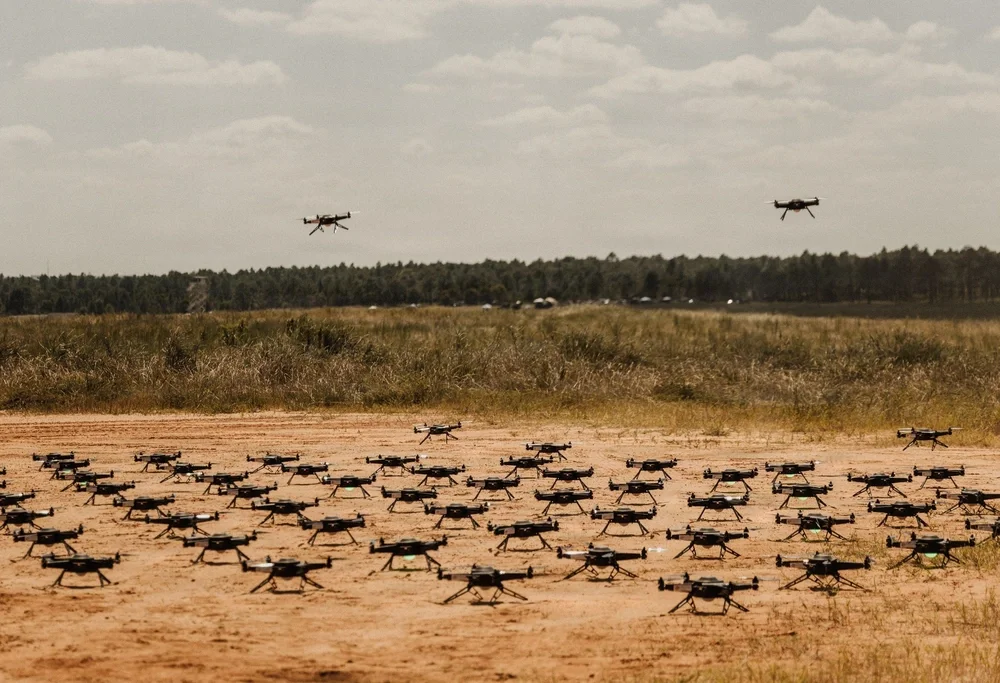
FORT BRAGG, N.C. — The U.S. Army XVIII Airborne Corps is conducting its latest Scarlet Dragon experimentation event at Fort Bragg, focusing on technologies intended to detect drone threats across several echelons.
Known as Scarlet Dragon 26.3, the event brings together a network of sensors, technologies and command-and-control capabilities. Participants are assessing their ability to compress counter-unmanned aircraft system kill chains, according to officials involved in the exercise.
Building the air picture
The experimentation uses sensors, C2 systems and algorithms to improve the air picture available to a commander. That picture is intended to support the detection of drone threats at multiple command echelons.
Scarlet Dragon 26.3 is part of the Army’s wider series of experimentation events under the Scarlet Dragon name. In this iteration, the central task is integrating the participating systems so that information from sensors and other technologies can be used through command-and-control tools in a shorter counter-UAS engagement process.
Counter-UAS focus
The exercise’s emphasis on drone detection places the assessment on the front end of the counter-UAS process: establishing a usable operational air picture and making that information available to commanders at the relevant levels. The source did not identify the specific sensors, software or command-and-control systems participating in the event.