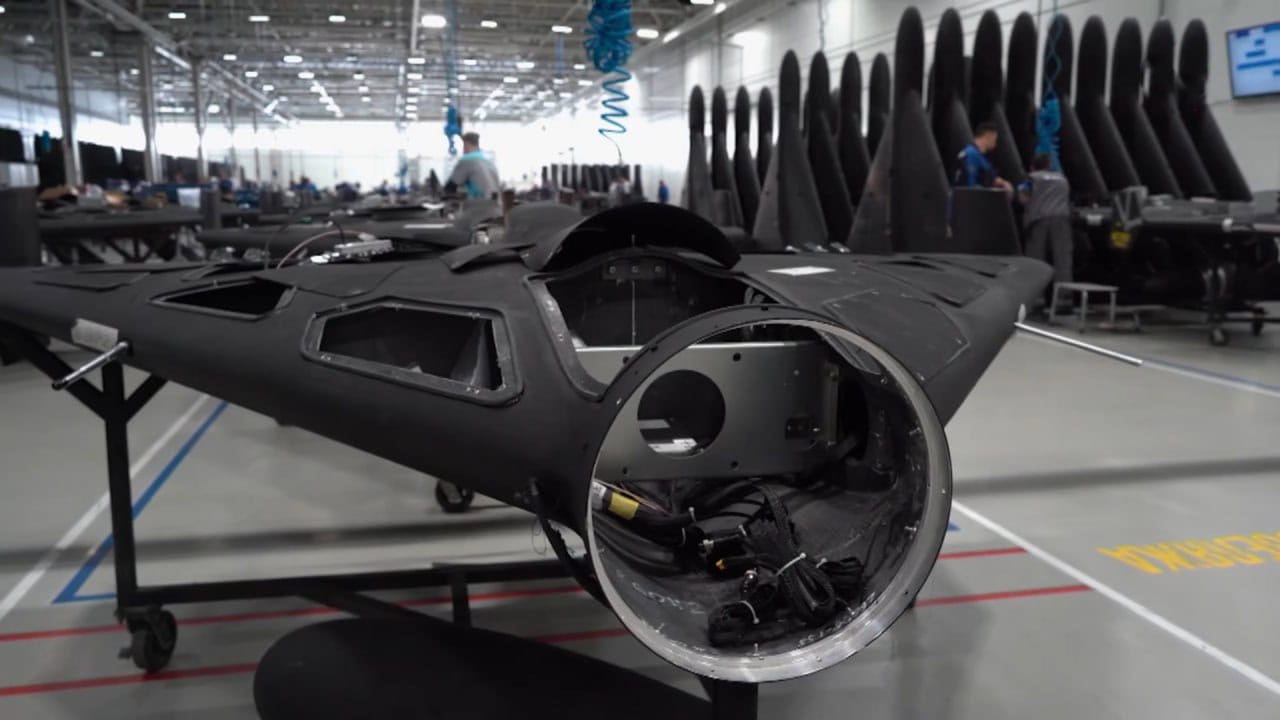
Russia is employing North Korean nationals in the production of military drones, including at unmanned aerial vehicle assembly facilities in Alabuga, Tatarstan, according to a report by the Multilateral Sanctions Monitoring Team (MSMT). Some of the workers are registered as students, the report said.
The MSMT, in a report published on September 16, 2026, estimated that as many as 25,000 North Korean nationals could be working across Russia’s drone industry. The assessment places North Korean labor directly within facilities supporting Russia’s military UAV production, though it does not specify production capacity or the functions performed by individual workers.
Workforce estimates and foreign-currency revenue
The reported drone-sector estimate forms part of a broader picture of North Korean overseas labor described by the monitoring team. According to the assessment, between 15,000 and 30,000 North Korean workers were employed in Russia at the end of 2025. It estimated that between 20,000 and 70,000 were working in China over the same period.
The report said wages available in Russia may be up to five times higher than those earned by North Korean nationals in China. North Korean workers abroad may have generated as much as $800 million in revenue for Kim Jong Un’s government last year, according to the report’s estimates.
MSMT said the revenue generated through overseas workers helps finance North Korea’s nuclear and missile programs. It also said North Korean authorities closely control their citizens’ movement and contacts abroad in an effort to prevent defections. Workers seeking to flee face the prospect of reprisals against relatives remaining in North Korea, according to the report.
Part of expanding Russia–North Korea cooperation
The deployment of North Korean labor has become part of expanding military cooperation between Moscow and Pyongyang, the report said. In the assessment’s description, Russia gains additional workers for facilities supporting its war against Ukraine, while North Korea receives foreign-currency revenue.
Russia and North Korea signed a Comprehensive Strategic Partnership Treaty in Pyongyang on June 19, 2024, during Russian President Vladimir Putin’s visit. The report said cooperation expanded after that agreement. Although Putin said the treaty did not provide for the development of military-technical cooperation, the report’s account states that the two countries have repeatedly exchanged technologies intended to strengthen their defense capabilities.
The MSMT assessment links that wider relationship to Russia’s drone-industrial workforce, identifying Alabuga in Tatarstan as a location where North Korean workers are employed at UAV assembly facilities. Its estimate of up to 25,000 North Korean nationals in the Russian drone industry remains an assessment by the monitoring team rather than a stated Russian production figure.