Lockheed Martin’s Skunk Works has begun constructing the first prototype of its Vectis collaborative combat aircraft, a tailless, single-engine uncrewed design the company is positioning as a survivable, flexible platform for air-to-air and air-to-ground missions. The advanced-projects division says it aims to fly the first aircraft by the end of next year and plans to build four additional internally funded prototypes.
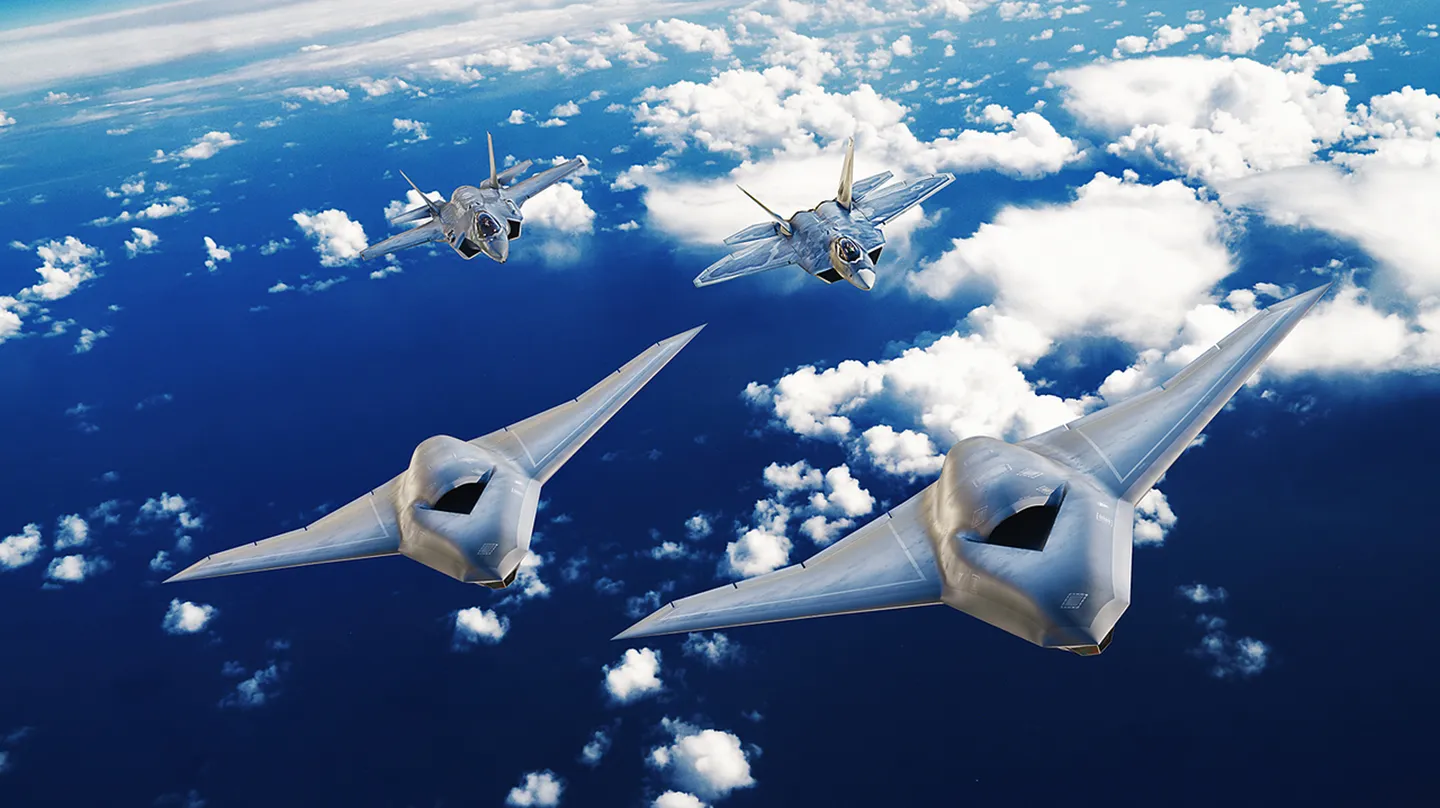
The program update adds substantial detail to a design first revealed a year earlier. Vectis retains its distinctive lambda-wing planform, top-mounted intake, forward chine line and shovel-shaped nose, but newly released material shows that its inlet is far more deeply recessed than earlier renderings indicated. Skunk Works says the feature has been part of the aircraft’s design from the start.
Ron Fehlen, Lockheed Martin vice president and general manager of Skunk Works, described Vectis as intended to be “survivable and affordable and flexible across the range of missions” required by customers. The company has not released target speed, range, payload or engine specifications, but has disclosed that the aircraft is about 34 feet long with a wingspan of roughly 38 feet.
A design centered on survivability
The submerged inlet is among the clearest new indicators of the design priorities behind Vectis. The intake sits on top of the fuselage behind a downward-sloping, V-shaped channel, rather than appearing as the more conventional exposed opening shown in prior depictions. It is not fully flush-mounted, but its near-flush arrangement is intended to reduce protrusions and manage the aircraft’s signature, according to the company’s discussion of the design.
Fehlen said the configuration reduces frontal drag, supporting performance and range by limiting components that stick into the airflow. He also pointed to an operational advantage of a top-mounted intake for austere locations: it could help reduce the risk of foreign-object debris being drawn in from a runway. That consideration aligns with the U.S. Air Force’s Agile Combat Employment concept, which emphasizes operations from dispersed and potentially support-constrained sites.
Skunk Works also confirmed that survivability was a factor in the inlet’s design, without providing further detail. Earlier company imagery showed an S-shaped inlet duct and shrouding around the exhaust, features associated with reducing a platform’s observable signature. The tailless configuration likewise offers drag-reduction benefits, Fehlen said, including for range. New renderings also show adjusted locations for conformal antennas or sensor apertures around the center fuselage.
Internal weapons, sensors and open systems
Lockheed Martin says Vectis is intended to perform both air-to-air and air-to-ground missions. A new promotional video depicts the aircraft launching munitions resembling AIM-120 Advanced Medium Range Air-to-Air Missiles and GBU-53/B Small Diameter Bomb II weapons, also called StormBreakers. The video further indicates that Vectis has an internal weapons bay capable of carrying at least two munitions of a size likely consistent with medium-range air-to-air missiles.
The same material shows an electro-optical/infrared sensor turret beneath the nose, behind a faceted enclosure. The company has not detailed the sensor suite, though the design has been associated with the potential use of compact radars and infrared search-and-track systems. Those capabilities could be relevant to an air-to-air mission, where the aircraft would need to detect and track targets while operating alongside crewed aircraft or other uncrewed systems.
Fehlen said Vectis is being developed with modularity and open-architecture systems in mind, an approach intended to make it easier to integrate upgraded equipment and functions over time. Specific autonomy, command-and-control and operational requirements would depend on individual customers, he said, and could include third-party vendors. Company imagery depicts both a conventional ground control station and a concept described as being “managed from anywhere.”
Lockheed Martin is also drawing on autonomy and crewed-uncrewed teaming work already underway elsewhere in its portfolio. Fehlen highlighted the company’s Multi Domain Combat System autonomy platform, which is central to the Navy’s plans for the MQ-25 Stingray, as well as autonomous air-intercept testing conducted with the Air Force using the X-62A test aircraft. He said that work is feeding into Vectis development. The company is separately preparing interfaces intended to allow F-22 and F-35 pilots to control future collaborative aircraft, initially through cockpit touchscreen-style interfaces that could involve tablets.
Prototype work and production ambitions
Skunk Works is emphasizing development speed as it moves from digital work into prototype construction. Fehlen said the team moved from an initial concept to wind-tunnel validation in under two months, completed its first digital build in six months and released its first part in eight months. Vectis was designed in a fully integrated digital environment, he said, creating what the company calls an unbroken digital thread from design through sustainment.
The company says it is using production-oriented processes during the prototype effort rather than treating the aircraft solely as an experimental build. Fehlen cited a method called minimal tooling determinant assembly, which he said can reduce touch labor and improve first-pass yield. Skunk Works has seen labor-hour reductions of as much as 80 percent in some applications of the technique, he said, while also reducing part counts to simplify production.
Cost remains a central issue for collaborative combat aircraft. Fehlen did not provide a projected Vectis unit price, but said the design is being developed toward a competitive CCA price point while balancing capability and survivability. His comments came in response to a question referencing the Air Force’s roughly $20 million unit-cost target for aircraft acquired under the first increment of its CCA program at full-scale production.
Vectis was not selected for the Air Force’s first CCA increment, for which the service is pursuing General Atomics’ FQ-42A Dark Merlin and Anduril’s FQ-44A Fury. Skunk Works has previously said its earlier proposal was a highly stealthy design that did not match what the service wanted at the time. The Vectis effort nevertheless suggests Lockheed Martin sees continuing demand for a more survivable, multi-mission offering among U.S. and international customers as collaborative combat aircraft requirements continue to evolve.
“Vectis is a holistic weapon system from our perspective,” Fehlen said, describing the effort as combining airframe development, open architectures, artificial intelligence, autonomy and crewed-uncrewed integration. With the first prototype now under construction, the program’s next major milestone is turning those design and manufacturing claims into a flightworthy aircraft by the company’s stated target date.