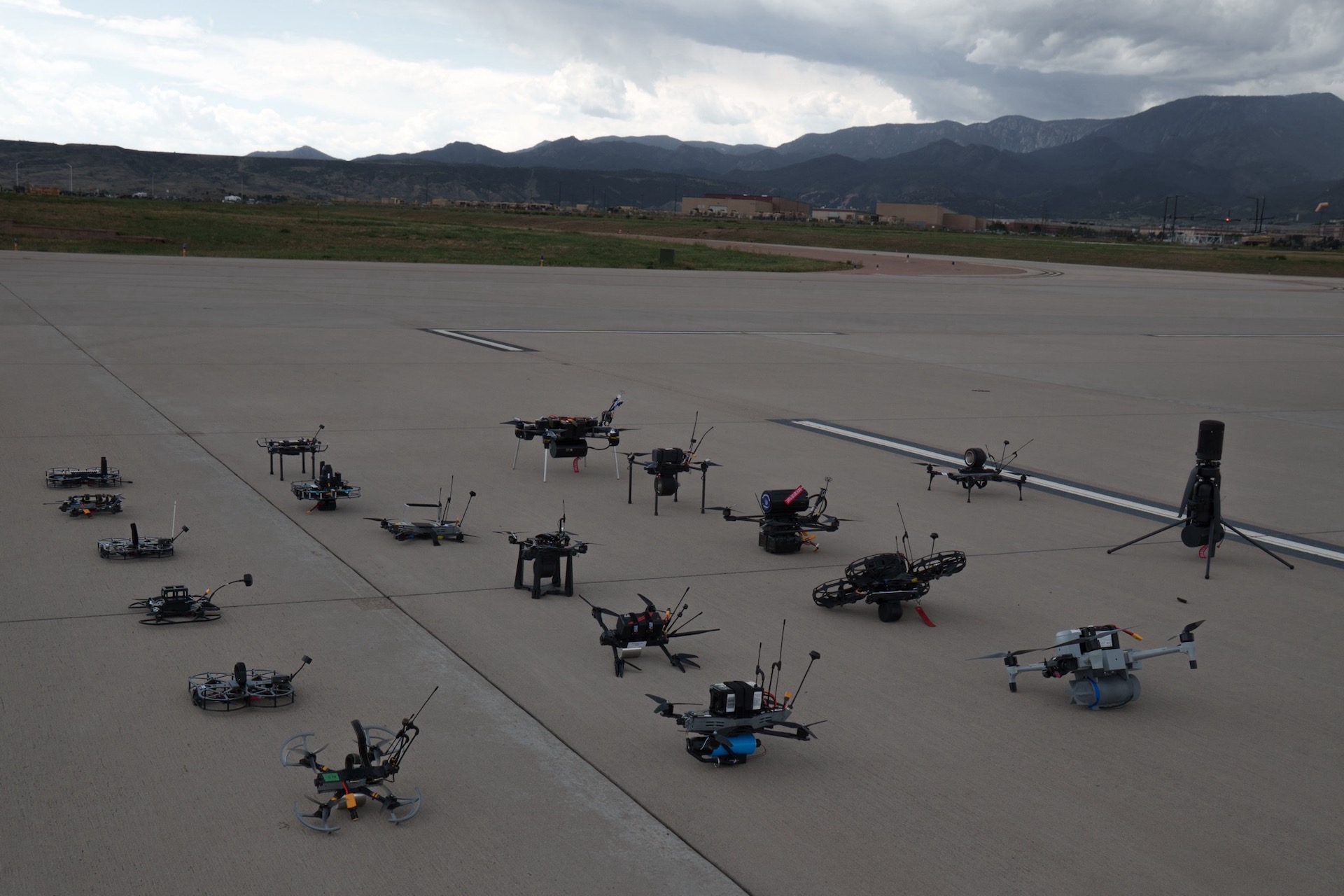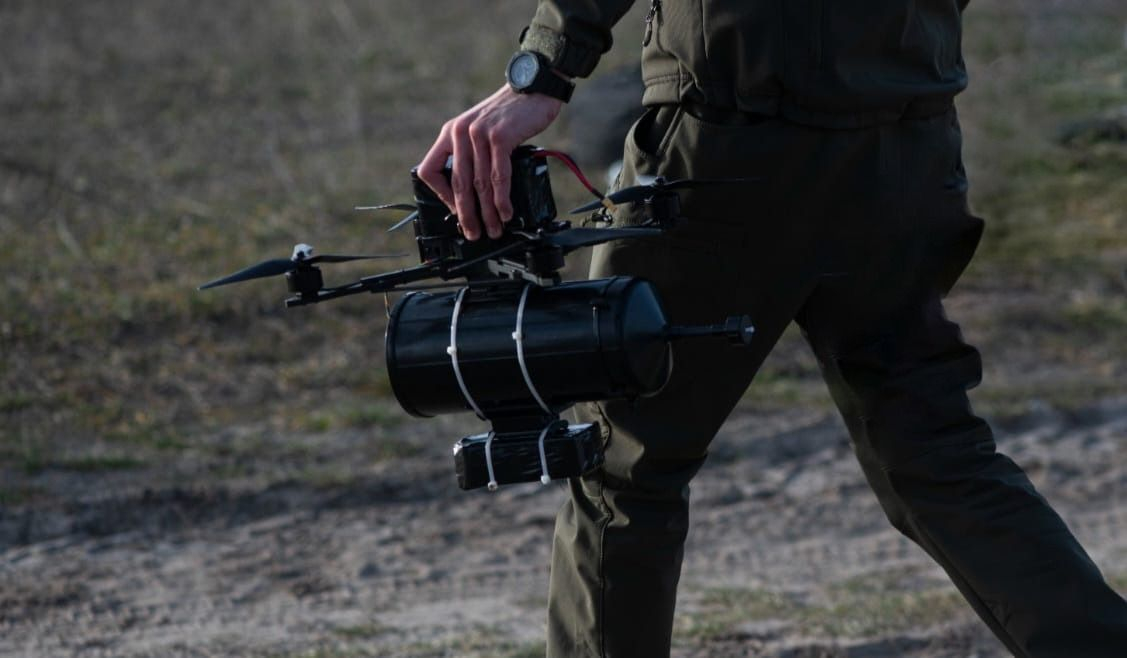
Fiber-optic FPV drones are not “magic anti-jammer drones.” But they do change one of the most important assumptions of modern drone warfare: that the control and video link can be attacked through the radio spectrum.
For most FPV systems, the pilot flies through a radio-frequency link. Commands go out by radio, video comes back by radio, and both can be disrupted, jammed or degraded. Fiber-optic FPV drones change that arrangement by replacing the wireless control/video path with a physical cable that trails behind the aircraft during flight. If the link does not depend on radio transmission, conventional RF jamming no longer breaks that link in the usual way.
That shift matters because the war in Ukraine has made electronic warfare a constant condition rather than an occasional complication. In January 2025, Ukraine’s Ministry of Defence publicly demonstrated FPV drones controlled through fiber optics for representatives of different service branches. By August 2025, the ministry said more than 80 fiber-optic-control UAV models had been authorized for operational use in the Defence Forces and that mass production and deployment had begun.
What a fiber-optic FPV drone actually is
At a basic level, a fiber-optic FPV drone is still an FPV drone. It still has an airframe, motors, power system, flight controller, payload, camera and pilot. The key difference is in the communications architecture.
Instead of relying on a conventional radio link for command and video, the drone unreels a spool of fiber-optic cable as it flies. That cable carries the control signal to the drone and the video signal back to the operator. In practical terms, the drone is connected to the operator through a very long, very light physical line.
That does not make the drone autonomous. It also does not mean it no longer depends on a control link. The difference is that the link is physical rather than wireless.
This is the core distinction: radio FPV puts the link in the electromagnetic spectrum; fiber-optic FPV puts the link in a cable. Most of the advantages and trade-offs follow from that single architectural change.
Why electronic warfare struggles against it
The main advantage of fiber-optic control is straightforward: traditional jamming of the command/video link no longer works the same way because the drone is not using that radio path. In March 2026, UK Defence Innovation described fiber-optically controlled UAS as immune to conventional radio-frequency countermeasures and opened a dedicated effort to find ways to detect and defeat them.
Ukraine’s Ministry of Defence has used similarly strong language when describing the security of the fiber-optic control and video channel. For editorial accuracy, the more precise formulation is that fiber-optic FPV drones are highly resistant to conventional RF-based electronic attack on their control/video link, because that link is no longer travelling over radio.
That is the real breakthrough. It means operators can continue to fly in environments where ordinary RF FPV systems may struggle or fail.
What this changes on the battlefield
The operational effect is not just technical. It changes where and when FPV drones remain useful.
In a heavy EW environment, a conventional radio FPV may lose control, lose video, or become too unreliable for the operator to complete the mission. A fiber-optic-controlled platform removes that particular failure mode. That gives units another option for strike or reconnaissance in precisely the type of saturated electronic-warfare environment that has become normal in Ukraine.
This is why the technology moved rapidly from demonstration to fielding. Ukraine’s Ministry of Defence has described a growing family of domestically produced fiber-optic systems and reported large numbers of models authorized for operational use.
What fiber optics do not solve
A fiber-optic FPV drone is not invulnerable. It is solving one major class of problem: vulnerability of the control/video link to conventional RF countermeasures.
The aircraft can still be physically intercepted or destroyed. The operator can still be targeted. The platform still depends on motors, power, payload and airframe performance. Terrain and obstacles still matter. The cable itself creates handling and routing constraints. Range, maneuvering freedom and flight profile can also be affected by the spool-and-cable setup.
The UK Ministry of Defence’s own counter-fiber-optic effort makes the distinction clear: once jamming the link is no longer the easy answer, the problem shifts toward detection, tracking, identification and physical defeat.
So the correct takeaway is not that electronic warfare is useless. The correct takeaway is that one of the most common electronic defeat mechanisms becomes far less effective against this specific class of drone, forcing defenders to rely more heavily on other counter-UAS layers.
Why the cable is both the strength and the weakness
The reason the system works is also the reason it is constrained.
A radio-controlled drone gets flexibility from being wireless. A fiber-optic drone gets resilience by giving up part of that flexibility. The cable trailing behind it is the enabler of the secure link, but it is also a physical object that must spool correctly and survive the flight.
That creates trade-offs in spool weight and packaging, launch and handling, route selection, and flight through cluttered terrain. Ukrainian official descriptions repeatedly frame the technology as highly effective under strong electronic countermeasures while acknowledging that it has specific operating peculiarities.
The right description is therefore effective but not frictionless.
Why these drones spread so quickly
The answer is battlefield need.
When both sides continuously improve electronic warfare and conventional radio FPV systems become easier to disrupt, any method that preserves operator control and video quality becomes valuable. Ukrainian procurement and codification data show that the technology did not remain a niche experiment: dozens of fiber-optic systems moved into operational use and mass fielding.
That speed of adoption tells us two things. First, this was not just a laboratory curiosity. Second, the battlefield reward for overcoming RF interference was large enough to justify new logistical and engineering complexity.
What defenders have to do differently
Once the control/video link is no longer the easiest point of attack, the defense problem shifts.
That is exactly what the UK MOD market-engagement document reveals. Instead of looking only for broad anti-drone ideas, it specifically asks for ways to detect, track, identify and defeat fiber-optically controlled UAS, including solutions suitable for forward tactical users.
The response therefore moves toward layered counter-UAS: better detection, faster visual or acoustic tracking, kinetic interception and other physical defeat methods. The larger lesson is that fiber-optic FPV drones do not end the counter-drone race. They move it to a different part of the problem.
The right way to understand them
Fiber-optic FPV drones are an adaptation to a jammed battlefield.
They are not a new species of autonomous weapon. They are not immune to defeat. They do not make electronic warfare irrelevant in general.
What they do is remove one of the biggest historical weaknesses of FPV operations: dependence on a vulnerable radio link.
That is why they matter.
They show how modern drone warfare evolves under pressure. Each time one side builds an effective countermeasure, the other side looks for a way around it. In this case, the workaround was not simply a better radio. It was a decision to stop depending on radio for the core control/video loop at all.
Fiber-optic FPV drones are therefore more than another drone variant. They are a clear example of how battlefield adaptation can change the technical logic of the fight.