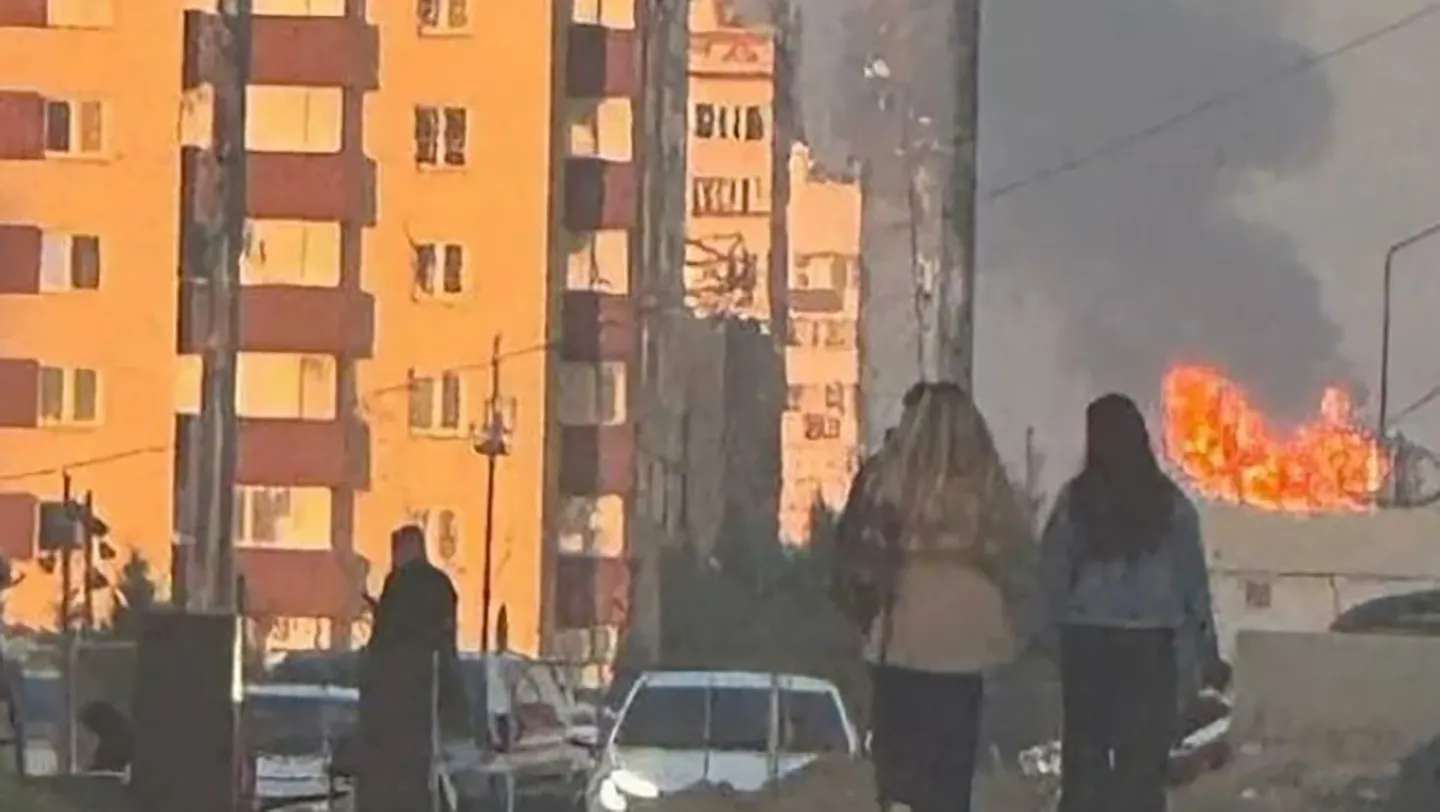
Ukraine’s military says it struck a gas-condensate processing plant in Novy Urengoy, in Russia’s Yamalo-Nenets Autonomous Okrug, in what would mark one of its deepest claimed drone attacks of the war. Russian regional officials confirmed a drone incident and a fire at a fuel-and-energy facility on September 9, 2026, but said the damage was still being assessed and did not identify the aircraft involved.
The claimed target lies more than 3,000 kilometers from the Ukrainian border, according to Ukraine’s Armed Forces General Staff. If launched from Ukrainian-controlled territory, the operation would exceed the distance of a July 2026 attack on the Omsk Oil Refinery, previously described by the Russian Mediazzzona Telegram channel as the furthest strike of the war in a straight-line comparison.
In its statement, Ukraine’s General Staff said units of the country’s Defense Forces had struck the Novy Urengoy Gas Condensate Processing Plant. It said the facility has annual processing capacity of about 19.5 million tons and produces stabilized gas condensate, petroleum fractions, diesel fuel and other petroleum products. The military added that the plant’s output is used in part to support the Russian armed forces, while saying the extent of damage was being determined.
Russian officials confirm fire, not strike effects
Dmitry Artyukhov, governor of the Yamalo-Nenets Autonomous Okrug, said on Telegram that a drone attack had been repelled against an industrial facility in Noyabrsk. He said debris from the drone caused a fire and that emergency services were at the scene. Artyukhov reported no casualties or injuries and said the nature and extent of the damage were under review.
Artem Zhoga, the Russian presidential envoy to the Ural Federal District, likewise said drone debris had caused a fire at a fuel-and-energy complex facility in the autonomous district. His statement characterized the incident as the first attack on the Arctic region of the Ural Federal District. Neither Russian statement provided a verified damage assessment, and the available footage cited in reporting showed flames or smoke at a distance without establishing the precise point of impact or the scale of destruction.
The location is strategically significant within Russia’s gas industry. The Moscow Times has described Novy Urengoy as Russia’s unofficial gas capital. Gazprom estimated the Yamal-Nenets region’s gas resources at 26.5 trillion cubic meters as of 2020, according to the outlet. Ukraine identified the purported target as a plant that prepares gas condensate and related products for transport and use.
Questions remain over the drone used
Ukrainian officials did not disclose how the operation was conducted or identify the system used. Fire Point, a Ukrainian weapons company, nevertheless suggested online that one of its drones may have been involved. The company posted a video of the fire and wrote that something had traveled more than 3,300 kilometers and reached its objective. Fire Point founder Denys Shtilierman separately posted “3200))” alongside an image of the blaze.
Those posts do not confirm Fire Point’s involvement. The company has said its FP-1 drone can travel roughly 3,400 kilometers with a 60-kilogram payload, a claimed range that would be consistent with the distance involved, but no official attribution or technical evidence was released. The incident could have involved another system, and the available information does not independently establish a launch point. Ukraine has previously used proxies for attacks deep inside Russia and conducted remotely launched drone operations against Russian strategic aviation, including the operation it called Spider Web.
Broader pressure on energy infrastructure
The Novy Urengoy incident came amid other reported unmanned-aircraft activity far from the Ukrainian border. Russia’s RIA Novosti said a state of emergency was declared in the Khanty-Mansi Autonomous Okrug because of UAV activity, and that temporary restrictions were imposed at airports in Igra, Nyagan, Uray, Sovetsky, Surgut and Khanty-Mansiysk. The report did not describe confirmed strikes, and Ukraine did not claim any there. Video circulating from the area was said to appear to show an FP-1-type drone, but that identification was not verified.
Khanty-Mansi is an oil-producing region responsible for roughly 40 percent of Russia’s crude output, according to the Ukrainian government’s United24 outlet. Its reported airspace disruptions, combined with the Novy Urengoy fire, illustrate the geographic expansion of a Ukrainian campaign focused on Russian energy facilities.
Ukraine has increasingly targeted refineries and other energy infrastructure. The Kyiv Post reported that Ukraine’s military said in July that such attacks had put 43 percent of Russian refining capacity offline, contributing to fuel shortages and export restrictions. The same report said Russia’s overall oil exports remained relatively stable from June to July, with higher crude exports and energy prices partly offsetting lost revenue.
Russia has responded with measures intended to strengthen protection of critical sites. According to reporting cited by the primary source, President Vladimir Putin signed a law in August allowing the government temporarily to take control of commercial critical infrastructure it judges insufficiently protected from drone attacks or insufficiently restored after a strike. Earlier in the year, Russia also moved to allow private companies to buy their own air-defense systems for facility protection.
For now, the Novy Urengoy episode remains defined by competing claims and limited visual evidence. Ukraine has claimed a long-range hit on a major gas-condensate facility; Russian officials have acknowledged an attempted drone attack and a resulting fire. Neither side provided a conclusive account of the platform used or a detailed assessment of the plant’s condition.